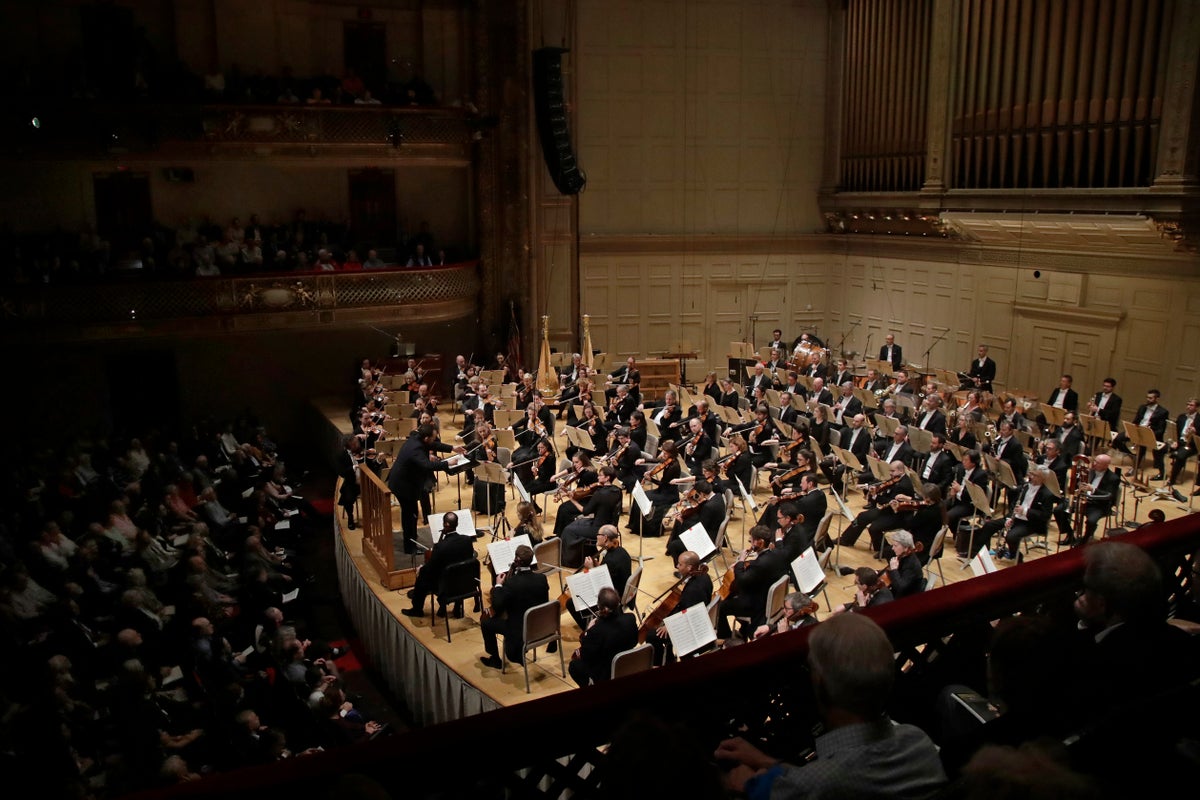
Every time elite orchestral musicians threaten to walk off the stage, the cultural commentariat crawls out of the woodwork to peddle the exact same tired narrative. You have read the standard playbook a hundred times. Headlines flash about a forty-eight-hour contract extension, frantic last-minute negotiations, and the looming tragedy of silenced concert halls. The media treats these standoffs as a moral clash between heartless bean-counters and starving artists fighting for their daily bread.
It is a comforting, lazy framing. And it is completely detached from economic reality.
I have spent years watching institutions manage high-end cultural assets, and I can tell you straight up that the standard narrative is a fairy tale. The mainstream press wants you to view a potential Boston Symphony Orchestra strike as a desperate cry for survival. But when you look at the actual balance sheets, endowment yields, and compensation structures of tier-one American orchestras, a different truth emerges. These labor disputes are rarely about poverty. They are a high-stakes turf war over asset allocation, prestige signaling, and a broken business model that refuses to adapt to modern audiences.
Stop buying the sob stories. The math tells a much sharper story.
The Endowment Illusion
Let us address the elephant in the room immediately. The public assumes that major symphony orchestras operate on the brink of financial insolvency, scraping together ticket sales to keep the lights on.
That assumption collapses the second you inspect the endowments of institutions like the BSO. We are talking about war chests valued in the hundreds of millions of dollars. When management claims they cannot meet wage demands, they are rarely talking about an empty bank account. They are talking about payout rates, investment portfolio strategies, and board policies designed to preserve principal in perpetuity rather than fund labor today.
Here is the dirty secret the boardrooms will never say out loud. Endowments are treated like sacred artifacts, guarded by wealthy trustees who care more about their names on marble plaques than the operational velocity of the music. When musicians strike, the conflict is framed as a battle over current revenue. In reality, it is a fight over how much of that massive investment cushion should be liquidized to support labor versus how much should be hoarded for future financial security.
Management plays the poorhouse card while sitting on a massive pile of invested capital. Musicians play the starvation card while occupying the top tier of professional wage earners in the classical music world. Both sides are lying to you about the true constraints.
Why Top Tier Musicians Are Not Factory Workers
The lazy consensus relies on comparing orchestral labor disputes to historical industrial strikes. Commentators lump musicians in with auto workers or steel unionists, casting them as blue-collar underdogs crushed by corporate greed.
This is an insult to both industries.
Principal players in a top-five American orchestra are elite, highly credentialed specialists. Their compensation packages, benefits, and job security place them comfortably in the upper-middle class, often out-earning the very professors, doctors, and civic leaders sitting in the audience. They operate in a hyper-exclusive labor market with an extreme barrier to entry. There are perhaps a dozen violinists in the entire world capable of stepping into a specific section chair without a drop in quality.
Because of this scarcity, a strike at this level does not function like a traditional labor stoppage. It is a tactical maneuver executed by skilled specialists who hold a monopoly on a luxury cultural product. When a factory shuts down, production halts and widget assembly stops. When an elite orchestra threatens to strike, the interruption sends shockwaves through donor networks, corporate sponsorships, and high-society boardrooms. The leverage does not come from lost ticket sales—classical concerts are notoriously subsidized loss-leaders anyway. The leverage comes from reputational damage.
Trustees hate embarrassment more than they hate deficits. Musicians know this. Management knows this. The forty-eight-hour extension is never about finding common ground on health insurance; it is a high-stakes game of chicken to see who blinks first under the glare of public relations pressure.
The Real Crisis Hiding Behind The Strike
While everyone obsesses over the minutiae of base pay increases and pension contributions, both sides are willfully ignoring the structural rot consuming the entire art form.
The classical music business model is structurally broken. It relies on a shrinking demographic of aging patrons, massive philanthropic subsidies, and an absurd cost structure that treats live acoustic performance as an untouchable museum piece. Insisting on incremental wage battles within this dying paradigm is like rearranging deck chairs on a sinking luxury liner.
Focusing exclusively on the theater of contract negotiations distracts from the questions that actually matter. Why are orchestras failing to capture younger demographics? Why is the product locked behind archaic traditions that alienate modern listeners? Why do institutions pour millions into defending a static repertoire instead of funding radical experimentation?
By fighting over the scraps of a dying funding model, both management and musicians are ensuring their own eventual irrelevance.
The Uncomfortable Solution
If you want to fix this perpetual cycle of strikes and standoff drama, you have to blow up the current operational framework entirely.
First, transparency must be absolute. Management needs to stop hiding behind creative accounting, and unions need to stop pretending their members are struggling proletariat workers. Once both sides acknowledge the actual financial parameters—including the massive endowment cushions and the realities of donor fatigue—negotiations can shift from emotional blackmail to rational asset management.
Second, compensation must be tied to institutional innovation, not just seat time. Imagine a scenario where a portion of orchestral pay is directly linked to audience growth, community engagement, and digital reach. It sounds heretical to traditionalists who view art as existing entirely outside the market economy, but absolute insulation from reality is a luxury no cultural institution can afford forever.
If musicians want premier compensation, they must become active partners in audience development and institutional survival, rather than defensive specialists waiting for the next contract cycle to launch another PR war.
The next time a major orchestra threatens to walk off the stage, do not fall for the orchestrated melodrama. Look past the headlines. Understand that you are watching a high-stakes negotiation between elite asset holders and elite labor specialists, both desperately clinging to a nineteenth-century model in a twenty-first-century world.
Stop asking who is winning the contract battle. Start asking why anyone expects the building to survive the decade.