The standard headline reporting on the Korean peninsula always follows a predictable script. A blast occurs, fingers point across the Military Demarcation Line, denials fly, and analysts on cable news channels wring their hands over an imminent escalation. Everyone focuses on the immediate theatrics of accusation and counter-accusation. It is a lazy consensus that treats the border as a static flashpoint rather than a dynamic pressure valve.
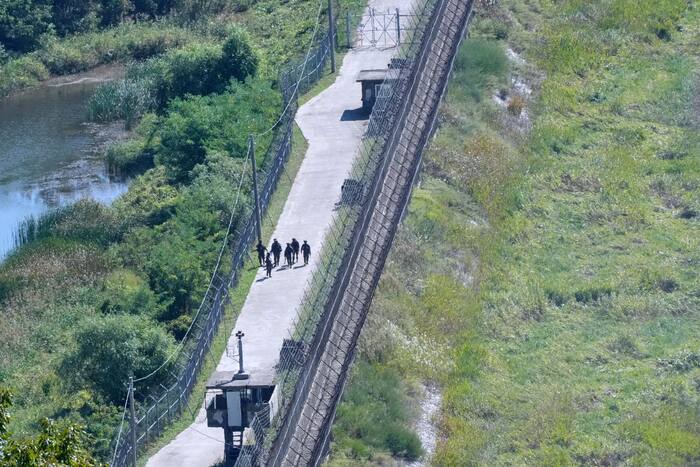
When three South Korean soldiers were injured by explosions in the Demilitarized Zone, the predictable wave of commentary assumed a standard provocation model. Seoul pointed the finger north. Pyongyang flatly denied involvement, labeling the incident a fabrication designed to manufacture tension. Observers immediately fell back on familiar talking frameworks about asymmetric warfare, psychological operations, and border volatility. If you enjoyed this piece, you might want to check out: this related article.
They missed the structural reality.
I have spent years tracking flashpoint borders where physical geography meets digitized intelligence gathering. If you evaluate border incidents through the lens of tactical malice alone, you will misread every single signal. The real motivation behind these events rarely centers on territorial acquisition or petty harassment. It revolves around information asymmetry, domestic political calibration, and the ruthless testing of command-and-control response times. For another perspective on this event, see the recent coverage from Al Jazeera.
The Myth of Random Hostility
To understand why Pyongyang operates the way it does, you have to strip away the emotional rhetoric and look at cold operational incentives. The conventional wisdom treats cross-border incidents as erratic outbursts from an isolated regime. That interpretation is comforting because it paints the actor as irrational, but it is dangerously wrong.
Every movement along the border serves a functional purpose. When legacy media outlets report on border friction, they frame it as a breakdown in communication. In reality, it is a high-stakes dialogue conducted through kinetic means. Both sides maintain a continuous, unyielding pressure test against the other's defensive architecture.
Consider the mechanics of forward-deployed engineering operations. Placing explosive devices in heavily monitored sectors is not an act of spontaneous aggression. It is a calculated probe designed to measure three specific metrics:
- Sensor grid latency in identifying subterranean or surface anomalies.
- Decision-making lag within the joint command structure during a localized crisis.
- Public communications vulnerability in a democratic state compared to a tightly controlled autocracy.
When an incident triggers injuries, the subsequent media storm acts as a fog machine. It obscures the underlying telemetry data that military planners actually care about. While politicians trade verbal blows, intelligence analysts on both sides are quietly mapping out how fast reinforcement units mobilized, which radar frequencies lit up, and how civil society reacted to the sudden spike in perceived threat levels.
The Domestic Utility of Perpetual Tension
Look past the military hardware and examine the political utility of friction. In any protracted standoff, stability is often more dangerous to institutional power than controlled volatility.
For the administration in Seoul, a border incident forces a tightening of domestic security posture, validates existing alliance commitments, and momentarily consolidates political alignment behind defense spending. For the leadership in Pyongyang, maintaining a state of perpetual external threat justifies total resource allocation toward strategic deterrence and suppresses internal dissent by framing the nation as a fortress under siege.
When a denial is issued with absolute, theatrical defiance, it is not meant to persuade foreign diplomats. Nobody expects Washington or the United Nations Command to nod and say, "Ah, mystery solved, carry on." The denial is an internal signaling mechanism. It reinforces a narrative of victimhood and state innocence for domestic consumption while preserving strategic ambiguity on the global stage.
We mistake this theater for confusion. It is actually a well-rehearsed script where both directors know the ending before the curtain rises. The mistake analysts make is trying to find the truth of who planted a specific device, as if solving that local mystery unlocks the grand strategy. It does not. The local event is merely noise generated by a massive, grinding machine of deterrence.
Redefining the Border Intelligence Paradigm
If you want to understand what is happening on the 38th Parallel, stop reading the daily police blotter of accusations. Look instead at capital allocation, infrastructure hardening, and technological upgrades in surveillance networks.
The real competition along this frontier is entirely non-kinetic. It is a silent war of electronic intelligence, counter-espionage, and psychological endurance. While infantry patrols navigate minefields, algorithms process terabytes of signals intelligence, satellite imagery, and intercepted communications.
When an explosion happens, ask a different set of questions.
- Did the timing coincide with a major domestic political milestone in either country?
- Did the incident alter long-term alliance deployment patterns, or did it just generate a 48-hour news cycle?
- What specific sensor blind spots were exposed during the aftermath?
Most commentary fails because it treats border incidents as discrete moral failures rather than continuous engineering feedback loops. As long as analysts look for heroes and villains in a geopolitical struggle built entirely on cold calculus, they will continue to be surprised by events that are entirely predictable consequences of the system itself.
The border does not bleed by accident. Every scar is measured, logged, and factored into the next iteration of strategic planning. Until