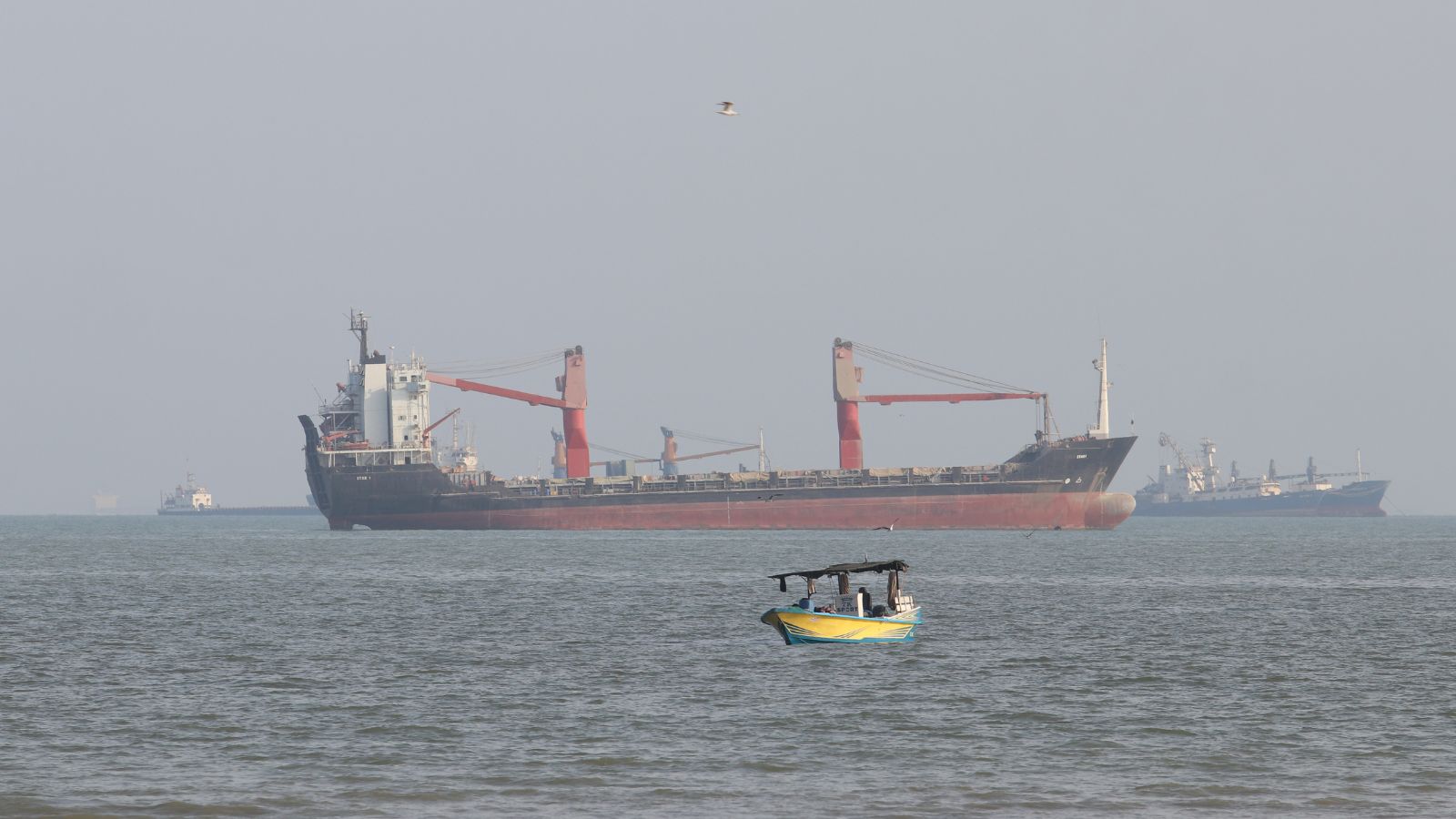
A ribbon is cut. Cameras click. Two flags flutter over a river.
And immediately, the predictable media chorus chimes in: China and North Korea open new border bridge amid deepening ties.
It sounds neat. It sounds dramatic. It is also lazy geopolitical theater.
When a photo essay or wire report frames a new China and North Korea border bridge as proof of "deepening ties," it treats concrete and steel like a mood ring. Bridge opens. Friendship grows. Sanctions weaken. Watch out, Washington and Seoul.
That is the lazy consensus. It mistakes physical proximity for political warmth, and it ignores how Beijing actually manages Pyongyang.
I have spent years watching border logistics, sanctions enforcement, and cross-border supply chains across Northeast Asia. I have seen trading companies blow millions on warehouse leases in Dandong betting on sudden normalization, only to watch customs gates slam shut over a missile test or a provincial quarantine. Physical infrastructure along the Yalu River does not move in lockstep with diplomatic affection. Often, it moves in the opposite direction.
The real question is not whether a new border bridge signals closer friendship. The real question is why a regime obsessed with ideological insulation and a superpower obsessed with strategic control would build a high-capacity conduit across one of the most heavily policed frontiers on earth.
The "Deepening Ties" Myth
Start with the premise baked into almost every headline about a new China and North Korea border bridge: that more asphalt and steel equals warmer relations.
In normal trade relationships, that assumption holds up. When two countries build a bridge, they usually want faster freight, lower tariffs, and smoother supply chains. Think of commercial corridors in Europe or North America. Volume drives investment; investment drives integration.
The China-North Korea border does not operate on normal commercial logic. It operates on asymmetric leverage and regime survival.
Beijing has been North Korea's indispensable economic lifeline for decades, accounting for the overwhelming share of Pyongyang's official trade—typically over 90 percent in recent years even under tight sanctions regimes. Yet "indispensable" is not a synonym for "intimate." Analysts who study Sino-North Korean relations—scholars like Bonnie Glaser, Scott Snyder, and Andrei Lankov—have long pointed out a structural tension that photo captions routinely flatten: Beijing wants stability on its border and a buffer against U.S. forces in South Korea, while Pyongyang wants maximum autonomy and refuses to become a mere client state.
A new border bridge does not erase that friction. If anything, it makes Beijing's leverage more visible. When goods, fuel, and construction materials flow across a modern crossing, Beijing holds the tap. Opening a bridge gives China better throughput and tighter choke points.
What People Actually Get Wrong About Border Bridges
When a story like Photos: China and North Korea open new border bridge amid deepening ties circulates, readers usually jump to a handful of standard questions. Every one of them runs into a wall of inconvenient mechanics.
Does a new bridge mean sanctions are collapsing?
No. A bridge is a piece of civil engineering, not a legal exemption.
United Nations Security Council resolutions restrict specific categories of trade—including coal, iron ore, seafood, textiles, and refined petroleum—and limit banking and shipping ties. Physical crossings do not magically suspend those obligations. What a modern bridge does change is inspection capacity, customs control, and enforcement visibility.
Think about how smuggling and gray-zone trade work on a river border. Smaller boats, informal crossings, and aging rail lines create friction, delays, and decentralized bottlenecks. A larger, modern crossing with dedicated lanes, scanners, and customs facilities can speed up permitted goods while allowing authorities to centralize checks. A bridge can facilitate legitimate food, medicine, or humanitarian supplies just as easily as it can support state-sanctioned commerce. Assuming "new bridge equals sanctions collapse" confuses capacity with lawlessness.
Why did projects like the New Yalu River Bridge stall for years?
History is the best antidote to romanticism here.
Consider the New Yalu River Bridge linking Dandong in China and Sinuiju in North Korea—a massive project built largely by China starting around 2010 and completed years later, yet famously left sitting idle on the North Korean side because Pyongyang lacked the connecting road and customs infrastructure to make it functional.
That episode exposed a truth that glossy photo spreads rarely highlight: Pyongyang often fears opening the door too wide.
For North Korea's leadership, uncontrolled contact with the outside world is an existential threat. Prices, consumer goods, information, and foreign workers moving freely across a border can undermine domestic control. Even when Beijing builds a bridge to project readiness or support regional development, Pyongyang has repeatedly dragged its feet on connecting roads, customs plazas, or quarantine protocols.
A bridge cannot force traffic across if one side refuses to build the on-ramp.
Is China trying to prop up North Korea's economy permanently?
Beijing wants a stable neighbor, not a runaway economic miracle on its doorstep that triggers chaos or nuclear brinkmanship.
Imagine a scenario where a new border crossing opens with fanfare, only for customs clearances to remain slow, quotas to stay tight, and trade volumes to creep upward rather than explode. That scenario is not a failure of the bridge; it is standard operating procedure. China has historically calibrated its economic pressure and relief like a thermostat—turning up heat when Pyongyang provokes, easing slightly when stability is threatened, and never handing over unconditional blank checks.
Calling every infrastructure milestone a sign of "deepening ties" misses how transactional and cautious that thermostat really is.
The Mechanics Behind the Photos
Photography is great at emotion. It is terrible at throughput.
A wide shot of a bridge spanning water gives the viewer a sense of connection. You see two banks linked by a single span. What you do not see in a single frame is everything that determines whether that bridge actually moves meaningful cargo:
- Approach infrastructure: Highways, rail spurs, and bridges are only as fast as the narrowest road on either side.
- Customs and inspection bottlenecks: X-ray gantries, manifest checks, and security clearances dictate daily truck counts far more than lane width.
- Regulatory quotas: Even when physical capacity exists, diplomatic agreements and sanctions rules cap what crosses and how much.
- Political timing: Ceremonies happen on political calendars—anniversaries, summit cycles, or diplomatic signals—regardless of whether full commercial operations are ready.
In cross-border trade and infrastructure, throughput—the actual volume of goods or people moved reliably over time—matters infinitely more than ribbon-cutting optics. A bridge can be open for photos and half-empty in practice.
A Better Way to Read Border News
If you follow Northeast Asia, trade compliance, or geopolitical risk, stop treating border openings as love letters. Treat them as operational data points.
Here is how to read the next story about a China and North Korea border bridge without falling for the surface narrative:
- Check the approach roads, not just the span. Look for satellite imagery, logistics reports, or customs notices showing whether roads, rail links, and customs facilities on both sides are actually finished and staffed.
- Track commodity categories, not just headlines. Watch what moves first—agricultural goods, construction materials, raw inputs, or specialized equipment—rather than assuming across-the-board trade expansion.
- Watch for diplomatic signaling. Ask who is getting a message. Sometimes a border opening signals to Seoul or Washington that Beijing still has cards to play; other times it signals to Pyongyang that Beijing expects order and predictability.
- Price in sudden reversals. Never treat cross-border momentum on this frontier as irreversible. A single policy shift or security flare-up can freeze movement overnight.
There is a catch to taking this cold-eyed view, and I will own it directly: cynicism can blind you to real shifts. If you assume every border opening is pure theater, you risk missing a genuine inflection point when trade, diplomacy, or regional alignment actually does change. Over-correcting into permanent skepticism is just another kind of lazy thinking.
The fix is simple. Do not guess from the photos. Look at the freight, the customs rules, and the incentives on both sides of the river.
A bridge is just steel and concrete spanning water. What crosses it—and who controls the gates—tells the real story.