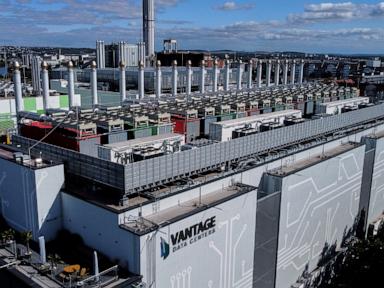
Europe is waking up late to a race it can't afford to lose. The European Union just put 10 billion euros, roughly $11.4 billion, on the table to fund seven massive AI gigafactories.
You've probably heard the complaints before. Silicon Valley builds the models. China builds the infrastructure. Europe writes the rulebooks. Brussels wants to change that narrative right now.
Leadership across the 27-nation bloc is terrified of digital colonization. If you rely entirely on American cloud providers and Chinese hardware, you don't actually have an independent economy. You have a dependency.
The harsh math behind the European AI gap
Let's look at the actual numbers. The plan aims to squeeze another 20 billion euros out of private investors to match the public funds. That brings the total potential war chest to roughly 30 billion euros.
It sounds like a lot of cash. But in the grand scheme of artificial intelligence spending, it is a drop in the ocean. American tech giants drop that kind of money on a single fiscal quarter of data center expansion.
European electricity prices don't help either. Power costs across the continent routinely run double or triple what operators pay in the United States or China. When you need massive electrical loads to run hundreds of thousands of advanced chips, high energy prices act as a permanent tax on innovation.
What these gigafactories will actually look like
Brussels isn't just funding minor server upgrades. Companies can now bid for contracts to build facilities packing at least 100,000 cutting-edge processors.
That spec sheet matters. These new hubs will operate at roughly four times the power of existing EU data centers. Right now, a scattered network of 19 centers stretching from Finland down to Spain handles the heavy lifting. These seven new gigafactories will more than double that total computational output.
France has a head start here. Companies like Mistral operate major campuses near Paris, trying to rival OpenAI and DeepSeek. But local champions face an uphill battle. The top five cloud providers operating in Europe are entirely American entities.
Bureaucracy versus raw compute
You can't code your way out of a power shortage with strict regulations. That's the core tension inside the European Commission.
Officials insist that models built inside these new gigafactories will strictly adhere to local safety, security, and ethics laws. That means complying with heavy legislative frameworks like the Digital Services Act.
Critics argue these rules choke local startups before they can even scale. Why build an ambitious artificial intelligence firm in Berlin or Paris when you can move to Austin or San Francisco and avoid the administrative red tape?
The bloc hopes owning the physical compute layer changes the equation. If local developers can access high-end chips locally, they won't need to ship their data overseas.
Can Europe actually catch up
Honesty is required here. Throwing billions at infrastructure won't instantly create a homegrown rival to ChatGPT or Claude.
Money helps, but culture and capital markets matter more. American venture capitalists throw money at high-risk ideas with reckless abandon. European banks prefer safer, traditional investments. Until that risk appetite changes, public subsidies have to carry the weight.
These seven gigafactories represent a defensive shield rather than an offensive weapon. They ensure Europe keeps a seat at the table instead of becoming a digital vassal state.
Watch how fast these bids clear administrative hurdles over the next year. If bureaucratic delays eat up the timeline, the U.S. and China will pull away entirely. If builders break ground quickly, Europe might just salvage its digital future.