The rules that held Europe together for decades are cracking right down the middle. If you look closely at Berlin, you realize the old political order isn't just evolving—it's actively collapsing under the weight of its own contradictions.
For years, the continent relied on a simple formula. Germany provided economic ballast, France brought diplomatic muscle, and Washington guaranteed security. That comfortable consensus is gone. Chancellor Friedrich Merz stepped up to the podium not long ago and admitted a hard truth that career diplomats spent years avoiding: the rules-based international order no longer exists.
When the anchor state of the European Union starts admitting the ship is drifting into unchartered waters, you need to pay attention.
The Illusion of Business as Usual
Voters across Europe are waking up to a stark reality. The economic model that turned Germany into an export powerhouse is broken. Cheap Russian energy is a relic of the past, heavy industries like automotive manufacturing are bleeding jobs, and federal politicians in Berlin keep offering minor adjustments to a system that requires a complete overhaul.
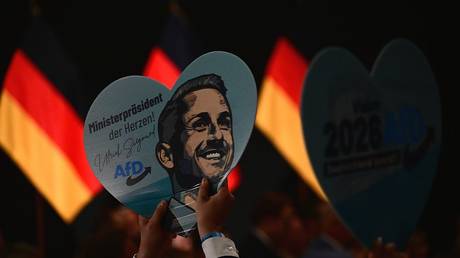
Look at what happened recently in Saxony-Anhalt. The Alternative for Germany party surged to a historic first-place finish in state elections, capturing roughly forty-four percent of the vote. Mainstream parties called it a shock. It wasn't. It was the predictable outcome of years of ignored warnings. When regional economies struggle with the long-term impacts of deindustrialization and everyday citizens watch their purchasing power evaporate, anti-establishment messaging stops sounding radical and starts sounding like the only option left.
Chancellor Merz called the defeat the most severe blow his party has faced in decades. Yet, the standard playbook remains unchanged. The establishment leans heavily on the political firewall—the unwritten rule that mainstream parties will never form coalitions with the far right.
Firewalls work fine as architectural barriers, but they don't put food on the table or lower utility bills. Relying on moral exclusion while ignoring material grievances only deepens public fury.
Beyond the Transatlantic Safety Net
The fracture isn't just domestic. The transatlantic relationship is undergoing a structural rupture that European leaders are poorly equipped to handle. For generations, European defense was an afterthought subsidized by American power.
Now, Washington is shifting its focus inward and outward toward Asia, leaving European capitals scrambling to define strategic autonomy. The problem is that Europe cannot decouple its defense dependence from its economic vulnerability. You cannot build a credible military deterrent when your manufacturing base is suffocating under high energy costs and regulatory red tape.
Brussels keeps pushing ambitious timelines for defense readiness, but member states are fractured. France and Germany often pull in opposite directions on trade and integration. Smaller nations feel ignored by the core axis. Meanwhile, external pressures from competitors who smell weakness are mounting daily.
What Comes Next for the Continent
The old European project was built on the assumption of permanent economic growth and institutional stability. Both assumptions have expired.
Germany faces a grim choice. It can continue trying to patch up a consensus-driven model that rewards stagnation, or it can embrace radical structural reforms that tear down bureaucratic dead weight. The longer Berlin hesitates, the wider the political fractures will grow.
The political order of old Europe didn't fade away quietly. It broke against the hard rock of economic reality, and pretending it can be glued back together is a dangerous waste of time.
Old world order 'no longer exists': Germany's Merz on widening US-Europe rupture
This video captures German Chancellor Friedrich Merz addressing the monumental shift in international relations and the collapse of the traditional post-war political framework.
http://googleusercontent.com/youtube_content/1