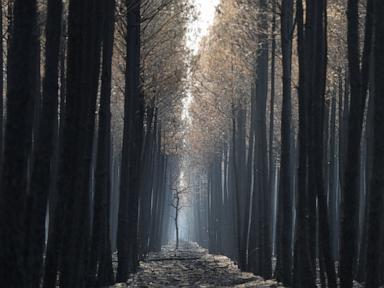
Europe is burning. The continent's wildfire crisis is no longer a seasonal anomaly or a temporary inconvenience for holidaymakers; it has evolved into a structural emergency that is reshaping the physical geography and economic stability of southern nations. While approximately 200,000 evacuees recently returned to their homes in parts of France after ferocious blazes scorched thousands of hectares, the sense of relief remains painfully short-lived. New fires continue to erupt across the Mediterranean basin, forcing thousands more to flee on a weekly basis. This relentless cycle exposes deep vulnerabilities in modern emergency response models, local infrastructure, and land management policies that have failed to adapt to a changing climate.
Decades of fire suppression policies have left dense accumulations of dry underbrush across rural regions. Foresters call this fuel loading. When combined with prolonged heatwaves and severe droughts, these neglected woodlands turn into powder kegs waiting for a spark. Traditional firefighting tactics, relying heavily on water-dropping aircraft and ground crews deployed after ignition, are increasingly obsolete. Fire behavior has turned erratic. Megafires now create their own weather systems, generating fire tornadoes and spreading embers miles ahead of the main front. Governments are throwing billions of euros at suppression, yet the math remains simple and brutal: you cannot out-water an environment built to burn.
The Human Cost of Displacement
Evacuation orders are disruptive. For small agricultural communities in southern France, Spain, Greece, and Italy, displacement means more than a temporary disruption to daily life. It threatens centuries-old traditions of viticulture, pastoralism, and localized forestry. When families are forced to flee repeatedly, the economic fabric frays. Insurance premiums skyrocket. Rural depopulation accelerates as younger generations abandon ancestral lands that are increasingly deemed uninsurable and unlivable.
Local municipalities shoulder the immediate burden of housing thousands of displaced residents in makeshift shelters, school gymnasiums, and community centers. Emergency funds drain rapidly. Local mayors report that regional budgets cannot sustain the mounting costs of recovery, debris clearance, and infrastructure repair. Roads melt. Power grids collapse under extreme heat. Water treatment facilities fail when contaminated by ash and runoff. The financial liability trickles upward to national governments and the European Union solidarity funds, which are already stretched thin by concurrent economic pressures.
The Policy Failure
For years, European Union agricultural subsidies unintentionally incentivized high-risk land management practices. Direct payments often rewarded the clearance of diverse, fire-resilient mixed woodlands in favor of monoculture plantations of pine and eucalyptus. These commercial species grow fast and burn hotter. Furthermore, rural depopulation left millions of hectares of private forest unmanaged. Without grazing animals or regular controlled burns to clear dead biomass, nature accumulated its own inventory of destruction.
European civil protection mechanisms, known as rescEU, have improved cross-border resource sharing. When French or Greek firefighting fleets are overwhelmed, specialized aircraft from Italy or Sweden arrive to assist. Cooperation has never been stronger. However, resource sharing is a reactive band-aid. It addresses the symptom while ignoring the systemic failure of prevention. Shifting funds from emergency suppression to long-term landscape restoration requires political courage that many elected officials lack, particularly because preventative clearing yields no immediate electoral dividends.
Rethinking Mitigation
Mitigation requires a complete overhaul of how rural landscapes are inhabited and managed. Controlled burning, often termed prescribed fire, is one of the most effective tools available to reduce fuel loads. Yet, public opposition remains fierce. Citizens panic when they see smoke near their properties, leading to strict regulatory hurdles that prevent environmental agencies from executing necessary burns during optimal weather windows. Public education campaigns must catch up to ecological science.
Agroforestry offers another path forward. Reintroducing livestock grazing into high-risk forest zones creates natural firebreaks. Goats and sheep eat the fine fuels, such as grasses and low shrubs, that allow ground fires to climb into the forest canopy. Traditional pastoralists who were once pushed out of protected forests are now recognized as essential ecological actors. Integrating local farmers into fire management frameworks bridges the gap between conservation goals and economic survival.
The Economic Reckoning
The economic fallout of recurring wildfires extends far beyond immediate property damage. Tourism, which forms the economic backbone of many coastal and rural European regions, suffers immensely. Booking cancellations surge whenever smoke fills the sky or evacuation orders flash across international news screens. Tourists are beginning to rethink summer travel plans, opting for cooler northern destinations instead of traditional Mediterranean getaways. This shift threatens the livelihoods of hoteliers, restaurateurs, and tour operators who depend on a predictable summer season.
Insurance markets are reacting with defensive severity. Major underwriters are withdrawing from high-risk zones entirely or imposing prohibitive deductibles on property owners. Without access to affordable insurance, mortgage lending freezes. Property values in vulnerable rural districts risk collapse. Governments are forced to consider state-backed reinsurance pools to prevent housing markets from seizing up completely, introducing complex moral hazards where taxpayers subsidize development in indefensible locations.
The firefighting profession itself is experiencing a severe retention crisis. Crews work exhausting shifts under extreme thermal stress, battling blazes that burn hotter and longer than anything seen a generation ago. Equipment wears out faster. Mental health impacts, including post-traumatic stress disorder, remain largely unaddressed among emergency responders. Relying on volunteer firefighters, who form the backbone of rural response teams in France and elsewhere, is becoming unsustainable as rural populations age and younger workers migrate to urban centers.
Europe’s wildfire crisis is a mirror reflecting decades of ecological mismanagement and delayed political action. Returning home after an evacuation order is no longer a return to normalcy. It is a temporary pause before the next ignition. Until structural prevention takes precedence over frantic suppression, the continent will continue to watch its heritage go up in smoke.