The chattering classes are mourning the death of European "credibility." Former foreign policy chiefs are lining up to tell anyone with a microphone that Brussels has lost its seat at the high table because it cannot speak with one voice on Gaza, Ukraine, or the South China Sea.
They are wrong. They are mourning a ghost that never existed.
The premise that the European Union is "losing" credibility assumes it once had a coherent, unified geopolitical identity to lose. It didn’t. More importantly, the obsession with "geopolitical credibility"—the ability to play Risk with the Americans and the Chinese—is a trap. The EU is not a failed superstate; it is a successful regulatory cartel. Its power doesn't come from "credibility" in the halls of the UN. It comes from the quiet, boring, and utterly ruthless ability to set the rules for global trade.
While pundits cry about diplomatic impotence, the rest of the world is still forced to build their products to European standards. That isn't a loss of power. It’s a pivot.
The Consensus Trap
The standard critique of EU foreign policy usually sounds like this: "Because the 27 member states can’t agree on a single stance, the EU is a paper tiger." This line of thinking is lazy. It treats the EU as if it’s a slow-moving version of the United States.
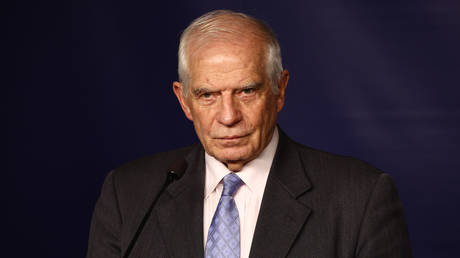
The EU was never designed for speed or singular moral clarity. It was designed as a peace treaty disguised as a trade bloc. When critics like Josep Borrell or his predecessors lament a lack of unity, they are fundamentally misunderstanding the DNA of the institution they served. The "lack of credibility" they cite is actually the feature, not the bug.
In a polarized world, the EU’s inability to act as a monolithic military power is its greatest shield. It allows individual nations to hedge their bets while the collective body maintains the most lucrative market on earth. If the EU suddenly became a streamlined, decisive geopolitical actor, it would lose the very ambiguity that allows it to survive between the grinding tectonic plates of Washington and Beijing.
The Brussels Effect is the Only Metric That Matters
Let’s talk about real power. I have spent years watching lobbyists in DC and Shenzhen scramble to react to directives coming out of Brussels. They don’t care if the EU has a "unified stance" on a border dispute in the Caucasus. They care about REACH, GDPR, and the Carbon Border Adjustment Mechanism (CBAM).
Political credibility is a vanity metric. Regulatory hegemony is a hard asset.
When the EU passes a law, the world follows. Not because they like the EU, but because the cost of non-compliance is exile from a $17 trillion market. This is what Columbia Law professor Anu Bradford famously dubbed "The Brussels Effect."
- Data Privacy: Silicon Valley spent years mocking European privacy laws. Now, every major tech firm has rewritten its global terms of service to mirror EU standards.
- Chemicals: If you want to sell a detergent in Brazil, you’re likely following EU safety standards because the manufacturer doesn't want to run two separate production lines.
- Green Finance: The EU Taxonomy is becoming the default dictionary for "sustainable" investment globally.
The "insider" secret is that the EU is most powerful when it is at its most technical and least "political." The moment it tries to act like a traditional superpower, it fails. When it acts like a global inspector-general, it wins.
The Myth of the Unified Voice
Critics argue that the veto power of member states (like Hungary) destroys the EU's "voice."
Again, this assumes a voice is necessary. Look at the data on foreign direct investment (FDI). Capital doesn't flow to "credible" geopolitical actors; it flows to stable, predictable legal environments. The EU’s internal bickering is a noisy sideshow that has almost zero impact on its structural economic gravity.
In fact, the veto is the pressure valve that prevents the entire project from exploding. Forcing a "unified voice" on sensitive foreign policy issues would require a level of centralization that would trigger immediate exits from more member states. The price of "credibility" on the world stage is the disintegration of the union at home. Only a bureaucrat would think that’s a fair trade.
Stop Asking if the EU is "Relevant"
People often ask: "Can the EU survive without a central military?"
The question itself is flawed. It’s like asking if a bank can survive without a navy. The EU is a financial and legal infrastructure. It outsourced its security to NATO (effectively the US) decades ago. While this creates a dependency, it also freed up trillions of euros to build the most sophisticated social and regulatory infrastructure in human history.
The trade-off was deliberate.
If you want to measure the EU's standing, stop looking at how many times it gets invited to peace summits. Look at the "People Also Ask" sections of any trade forum:
- "How do I make my product CE compliant?"
- "What are the EU's new ESG reporting requirements?"
- "Can I access the Single Market if I don't follow X directive?"
The answers to these questions move more markets than a hundred "strongly worded statements" from a foreign policy chief ever will.
The Danger of Chasing "Grand Strategy"
There is a movement within Brussels to achieve "Strategic Autonomy." It’s a seductive phrase. It sounds like something a real superpower would say.
It is also a recipe for disaster.
The moment the EU tries to build a "European Army" or a "Grand Strategic Vision," it enters a game it cannot win. It cannot out-spend the US on defense, and it cannot out-maneuver China on long-term authoritarian planning.
By chasing "credibility," the EU risks abandoning its post as the world's premier referee. The referee doesn't need to be the strongest player on the field; the referee just needs to be the only one who can hand out red cards.
I’ve seen this mistake in the private sector. Companies that are dominant in their niche get bored and try to "pivot" into being a generalist platform. They lose their specialized edge and get crushed by the incumbents of that new space. The EU is currently trying to pivot from being the world's most powerful regulator to being a second-rate geopolitical actor.
The Brutal Reality of Middle-Power Status
Let’s be honest about the downsides.
The cost of being a regulatory superpower without military teeth is that you are occasionally humiliated. You will be ignored during high-stakes military escalations. You will be mocked by leaders in Moscow and Ankara.
But who cares?
The citizens of the EU live in the most prosperous, safest, and most egalitarian societies in history. The "credibility" the pundits want is an ego trip for diplomats. It doesn't improve the life of a worker in Lyon or a developer in Tallinn.
The obsession with "credibility" is a relic of the 19th-century mindset where prestige was measured in territory and bayonets. In the 21st century, prestige is measured in the ability to dictate the chemical composition of a microchip or the data rights of a billion people.
Redefining the Win
The EU is losing the "geopolitical credibility" game because it shouldn't be playing it.
If you are waiting for the EU to become a unified military force that can stare down a superpower, you will be waiting forever. If you are waiting for it to stop being "irrelevant" in the Middle East or the Pacific, you are looking at the wrong map.
The real map of power is the one where the EU's standards are the default settings for the global economy.
Don't fix the EU's foreign policy. Stop having one. Lean into the regulatory autocracy that actually works.
Be the boring, technical, inescapable bureaucracy that the world loves to hate but cannot live without. That isn't a loss of credibility. It’s a total monopoly on the rules of the game.
Accept the fact that the EU is a "low-energy" superpower. It doesn't bark. It just rewrites the code while everyone else is busy shouting. That is how you win in a world that is too loud to listen to anyone anyway.
Stop worrying about the seat at the table. Just own the table.