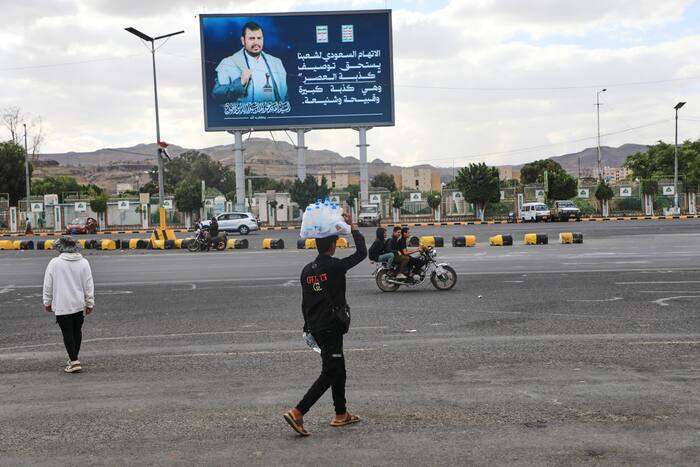
The announcements out of Riyadh regarding renewed security breaches at two southern Saudi airports are not merely isolated security incidents. They are the visible symptom of a fragile, deteriorating regional equilibrium. When regional infrastructure becomes a recurring target amid shifting military postures, the broader diplomatic architecture designed to maintain a fragile truce faces immediate peril.
For years, international observers tracked the formal diplomatic channels aimed at winding down direct military engagements along the southern frontier. Yet, the persistence of drone and missile threats exposes the immense gap between diplomatic communiques and ground reality. Air
The Fractured Truce Over the Red Sea Skies
news
The diplomatic machinery built to freeze the war in Yemen is grinding against a harsh reality. Two airports in Saudi Arabia were struck amid renewed hostilities, shattering the fragile quiet that had held since the regional diplomacy kicked into gear. Decades of reporting on this conflict reveal a stark pattern. Whenever the architecture of regional peace is tested, the edges fray first through the smoke of drone strikes and intercepted ballistic ordinance.
For months, the narrative presented to international observers was one of containment. Direct talks between Riyadh and the Houthi movement suggested an exit ramp from a decade of attrition. Yet, infrastructure targeted far from the frontlines signals that the underlying mechanics of the war remain entirely unaddressed. The strikes on Saudi aviation hubs are not isolated tactical events. They are calculated signals sent across a diplomatic chasm, proving that a localized ceasefire cannot survive the broader currents of regional volatility.
The Anatomy of a Breaking Deterrence
Strategic deterrence in the southern Arabian Peninsula has always rested on a razor's edge. When the Houthis target civil-military dual-use infrastructure like airports, they exploit the high economic and political cost of disruption. Saudi Arabia spent years pivoting toward a domestic transformation agenda predicated on stability and open skies. Every explosive-laden drone intercepted over Khamis Mushait or Abha is a reminder that Vision 2030 cannot outrun geography.
The mechanics of these attacks have evolved. The systems used are rarely crude imports anymore. They represent an indigenous assemblage of guidance technology and propulsion smuggled through porous maritime corridors or built with modular components. Intelligence assessments from regional monitors indicate a steady refinement in targeting capabilities. When air defense batteries light up the night sky over the kingdom's southern provinces, they are intercepting a mature threat network, not a makeshift militia annoyance.
The diplomatic track championed by Oman and facilitated by backchannel negotiations in Riyadh and Sanaa was designed to bypass the intractable core issues. It focused on humanitarian paychecks, port reopenings, and revenue sharing. But wealth distribution and salary allocations cannot substitute for a political settlement. When the talks stall over the sequencing of troop withdrawals or the control of central banking assets, the military wing of the movement picks up the slack on the launchpads.
The Regional Multiplex
To understand why these airport strikes occurred now, one must look beyond the immediate Saudi-Yemeni bilateral track. The theater is interconnected with the wider geopolitical posture stretching from the Red Sea to the Levant. The Houthis have transformed from a localized insurgency into an active node in a multi-front pressure campaign. Their actions at sea and in the air are calibrated to respond to pressures facing their allies across the region.
This creates a severe structural vulnerability for Riyadh. Saudi Arabia's primary objective is economic insulation. The kingdom needs a predictable security environment to attract foreign capital, build giga-projects, and execute its modernization blueprint. The Houthis, conversely, operate on a doctrine of perpetual mobilization where external friction validates their internal authority.
When international shipping lanes in the Bab el-Mandeb strait face ongoing disruption, the insurance premiums spike, supply chains shudder, and the security umbrella provided by foreign navies reveals its limits. The Kingdom finds itself caught between the necessity of projecting regional calm and the reality of a neighbor that measures leverage by its capacity to disrupt.
The Illusion of Containment
Western capitals often treat the Yemen conflict as a peripheral crisis that can be managed through low-level diplomacy and selective arms sales oversight. That perspective is dangerous. The weaponry hitting Saudi runways is a symptom of a wider proliferation crisis that has metastasized over the past ten years.
Sanctions enforcement has repeatedly failed to plug the leak of sensitive components. Dual-use goods cross multiple jurisdictions before reaching assembly points in territory controlled by the Ansar Allah movement. Until the international community treats the supply chain for drone and missile manufacturing with the same severity applied to nuclear programs, these intermittent escalations will remain a permanent feature of the landscape.
Riyadh's response to these provocations has shifted dramatically compared to the early years of the intervention. Instead of launching immediate, sprawling air campaigns that risked unraveling the entire diplomatic process, the kingdom's leadership has prioritized calibrated defense and quiet channels. This restraint prevents total war, but it also normalizes a state of perpetual low-intensity conflict. An airport hit here, an interception there, and the cycle resets without ever moving closer to a durable political resolution.
The architects of the peace process are running out of runway. If the basic security guarantees required to keep Saudi airspace safe and regional trade flowing continue to erode, the fragile consensus will collapse under its own weight. The smoke over the southern airports is a warning that shortcuts in diplomacy rarely survive contact with an unresolved war.