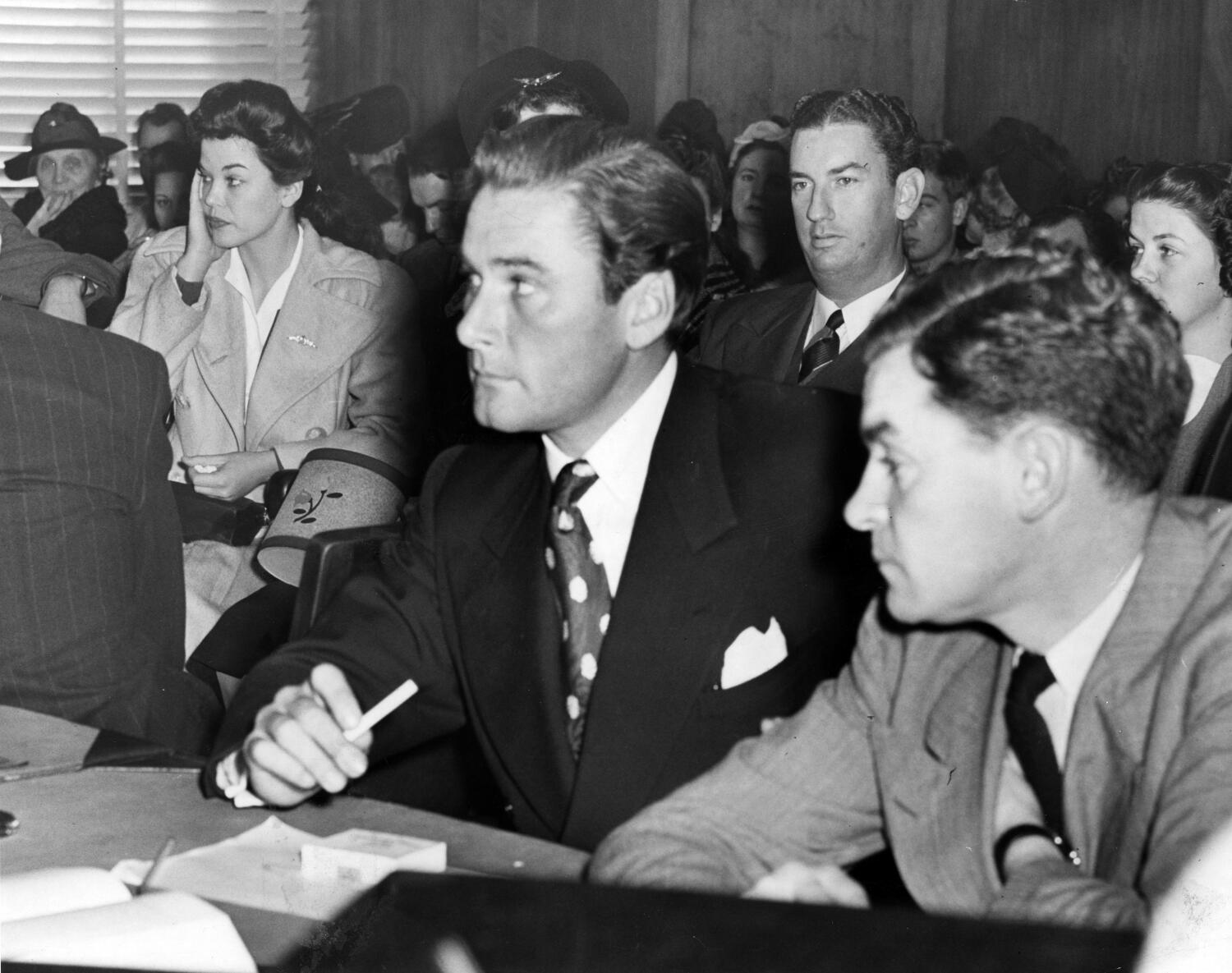
The 1943 statutory rape trial of Errol Flynn serves as a primary historical case study in how elite cultural capital, institutional backing, and audience psychology insulate high-value assets from reputational destruction. When two teenage girls, Betty Hansen and Peggy Satterlee, accused the Warner Bros. swashbuckling star of statutory rape, conventional expectations predicted a career termination. Instead, Flynn secured an acquittal and saw his box-office draw remain largely intact. Deconstructing this outcome requires moving past moral outrage to examine the structural mechanics of the defense, the economic incentives of the studio system, and the sociology of fan allegiance during wartime America.
The Studio System Economic Function
In 1942, Errol Flynn was not merely an employee of Warner Bros.; he was a high-yield capital asset. Studios operated on a vertically integrated studio-system model where profit margins depended on continuous theatrical distribution. A blockbuster star generated the liquidity required to finance secondary pictures and maintain theater chains.
When criminal charges surfaced, Warner Bros. faced a binary risk matrix: absorb the sunk costs of unreleased Flynn films or deploy institutional resources to protect the asset. The studio chose the latter, retaining Jerry Giesler, Los Angeles's premier defense litigator, and funding a defense strategy designed to preserve the commercial viability of the brand. The legal defense was an economic intervention to protect corporate shareholder value.
The Architecture of the Defense Strategy
Giesler executed a systematic dismantling of the prosecution’s case by exploiting procedural rules of the era and weaponizing physical evidence. The defense strategy rested on three distinct vectors: logical contradiction, moral framing, and jury selection dynamics.
The first vector dismantled witness testimony through physical verification. Hansen alleged that Flynn locked a bedroom door during the assault. Giesler removed the actual door from the Bel Air mansion and entered it into evidence, proving the lock was broken. Satterlee testified that she observed the moon through a cabin porthole during the alleged assault on a yacht. Giesler introduced astronomical and navigational data demonstrating that the boat's orientation made such an observation impossible. By converting abstract accusations into verifiable physical impossibilities, the defense eroded the credibility of the prosecution's narrative.
The second vector utilized the legal standards of 1940s California, which permitted extensive examination of the accusers' sexual histories and personal backgrounds. The defense introduced evidence and testimonies regarding the accusers' past relationships and credibility gaps. In an era where societal definitions of victimhood were rigidly coupled with traditional morality, establishing these discrepancies served to nullify the legal standard of proof required for conviction.
The third vector optimized jury selection. Giesler gambled on selecting an overwhelmingly female jury, composed of nine women and three men. Standard legal intuition suggested female jurors would be hostile to a man accused of predatory behavior toward minors. Giesler calculated that the parasocial allure of a major cinematic star, combined with the cultural framework of female attraction to dominant male archetypes, would override punitive impulses. The calculated risk succeeded, as the demographic profile of the jury favored the defendant’s public persona over the state's abstract legal arguments.
Wartime Public Psychology and Fan Allegiance
The public reaction to the trial cannot be understood without factoring in the geopolitical context of 1943. The United States was deeply engaged in World War II. Audiences sought escapism through cinema, and Flynn personified wartime bravado, heroism, and untamed masculinity on screen.
For millions of fans, the cognitive dissonance of reconciling the heroic silver-screen persona with criminal misconduct was resolved through rationalization. Public sentiment viewed the accusations through a cynical lens, often suspecting financial extortion motives from the accusers' families or viewing the prosecution as an overreach by a newly elected district attorney seeking political visibility. The cultural appetite for heroic symbols during a national crisis created an environment where the audience actively resisted any narrative that threatened to strip them of their cultural icons.
The Long-Term Trajectory of Moral Hazard
The immediate aftermath of the trial established a dangerous precedent regarding personal conduct and structural immunity. Rather than experiencing professional exile, Flynn capitalized on the notoriety. The trial birthed the popular idiom "in like Flynn", transforming a criminal accusation into a badge of cultural audacity.
The mechanism of survival relied on audience compartmentalization. Fans separated the art from the artist, a psychological phenomenon that persists in modern entertainment economies. While Flynn's subsequent decline was driven primarily by chronic substance abuse, physical ailments, and premature death at age fifty rather than direct box-office boycotts, the 1943 trial proved that systemic institutional protection could successfully neutralize severe legal and moral threats.
Execute the strategic playbook by auditing modern talent management frameworks. Independent risk assessment models must account for the reality that high-earning entities often operate under separate behavioral rules, where legal defense expenditures scale proportionally with corporate revenue generation rather than ethical standards.