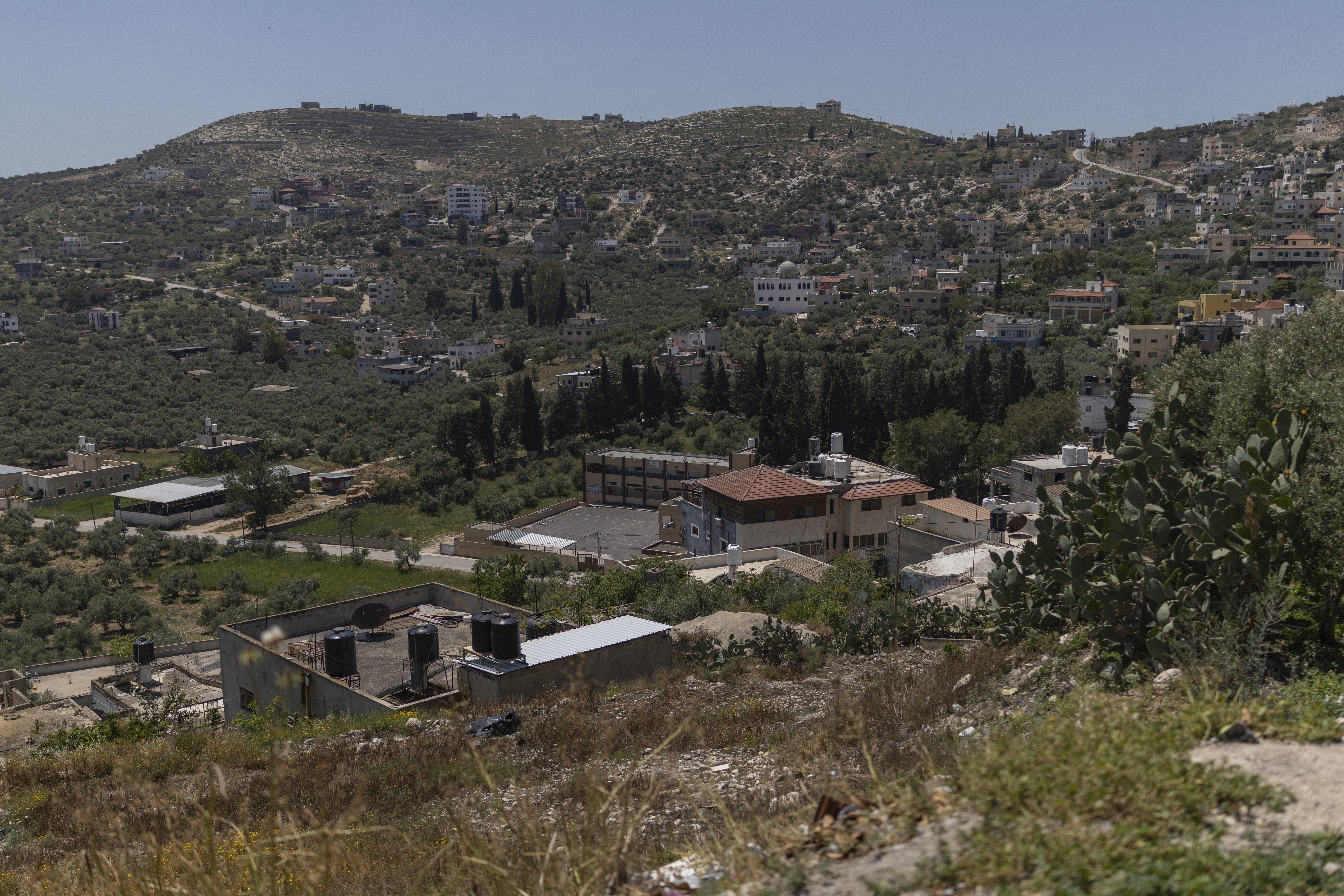
The displacement of Palestinians in the West Bank has moved beyond the seizure of homes and the uprooting of olive groves. It has reached the cemetery. In a recent and harrowing escalation of territorial pressure, Israeli settlers forced a Palestinian family in the village of Kafr ad-Dik to exhume their recently deceased father and move his body to a different location. This is not merely a dispute over land use or zoning permits. It is the tactical application of psychological warfare designed to signal that even in death, a Palestinian presence on the land is temporary and subject to revocation.
When a family is forced to dig up their own kin, the message is clear. You do not belong here. Not now, and not forever.
The Mechanics of the Exhumation
The incident centered on the death of a patriarch whose family sought to bury him on private land they own. In the West Bank, land ownership is a complex, overlapping web of Ottoman-era records, British Mandate maps, and modern Israeli military orders. Settlers from nearby outposts, often acting with the tacit or explicit protection of the military, claimed the burial site was too close to areas designated for future settlement expansion or within "Area C"—the 60% of the West Bank under full Israeli security and administrative control.
The confrontation did not end with a legal summons or a court-ordered stay. It ended with threats of violence and the arrival of heavy machinery. Faced with the prospect of their father’s remains being desecrated by strangers or bulldozed by the state, the family chose the lesser of two horrors. They performed the exhumation themselves.
This act serves as a grim milestone in the "creeping annexation" of the West Bank. By targeting the dead, settlers strike at the very root of Palestinian sumud, or steadfastness. A grave is a permanent marker of history. It is a physical claim to the past. By forcing its removal, the settlement movement seeks to rewrite the future of the landscape.
A Pattern of Sacred Desecration
This is not an isolated event of emotional cruelty. It is a documented strategy. For decades, the struggle for the West Bank has been viewed through the lens of checkpoints and housing units. However, the "war of the cemeteries" has been simmering in the background.
- The Mamilla Cemetery: In Jerusalem, the ancient Muslim burial ground of Mamilla was largely cleared to make way for the Museum of Tolerance.
- The Hebron Corridor: In the divided city of Hebron, Palestinian access to ancestral graves is frequently blocked during Jewish holidays or security lockdowns.
- Village Outposts: Small, unofficial outposts often target village fringes where cemeteries are located, effectively cutting off residents from their mourning rituals.
These actions create a "coercive environment." The goal is to make life—and now death—so difficult that the indigenous population chooses to leave for more urbanized, crowded areas like Ramallah or Nablus. When the dead are moved, the living usually follow.
The Legal Grey Zone of Area C
To understand how an exhumation can be forced without a formal eviction notice, one must look at the administrative vacuum of Area C. Under the Oslo Accords, this land was intended to be gradually transferred to Palestinian jurisdiction. Instead, it has become a laboratory for settlement expansion.
The Israeli Civil Administration rarely grants building permits to Palestinians in these zones. This restrictive policy extends to "structures" as simple as a garden wall, a shed, or a tomb. When a settler group reports "illegal construction"—even if that construction is a final resting place—the military is often compelled to intervene.
Critics of the settlement movement argue that the military operates as a private security force for the outposts. When settlers demand an exhumation, the military often presents the Palestinian family with a choice: move the body now, or we will declare the area a closed military zone and seize the entire plot. It is a form of bureaucratic extortion that leaves families with no legal recourse and no time to appeal to the High Court.
Psychological Warfare and the Collective Memory
The trauma of exhumation is designed to be infectious. It is meant to be shared, filmed, and whispered about in neighboring villages. If the sanctity of the grave is no longer a red line, then nothing is safe.
Settler ideologies, particularly among the "Hilltop Youth" and more radical factions, view the presence of Palestinian markers—be they mosques, ancient trees, or graves—as obstacles to the "redemption" of the land. In their view, the land is being "cleansed" of foreign elements. By forcing a son to dig up his father, the settler movement achieves a total psychological victory. They break the spirit of the individual while simultaneously erasing a piece of the village’s physical history.
This is the "invisible" side of the occupation. It doesn’t always involve gunfire or air strikes. Sometimes, it involves a shovel and a grieving family in the middle of the night.
The Complicity of Silence
International law is explicit regarding the treatment of the dead and the protection of private property in occupied territories. The Geneva Conventions mandate respect for the customs and religious practices of the occupied population. Forcing the movement of remains is a violation of these fundamental tenets.
Yet, the international community’s response remains trapped in a cycle of "deep concern" and "monitoring." Without consequences, the boundary of what is permissible continues to shift. Today, it is a single grave in Kafr ad-Dik. Tomorrow, it is an entire village cemetery.
The settlement movement is highly observant of these reactions. They test the waters with small-scale provocations. When the world looks away, the provocation becomes the new baseline. The exhumation is a trial balloon for a future where Palestinian heritage is treated as a temporary zoning violation.
The Soil as a Battleground
In the West Bank, the soil is more than just dirt. It is a repository of identity. For the Palestinian farmer, his connection to the land is validated by the generations buried beneath it. When those generations are forcibly moved, the chain of continuity is snapped.
This policy of displacement is effectively "archaeological cleansing." By removing the physical evidence of long-term habitation, the state and the settlers can more easily argue that the land was "empty" or "underutilized" before their arrival. It is a violent reimagining of the landscape that requires the active destruction of the existing social fabric.
We are witnessing a shift from the occupation of land to the occupation of the soul. The logistical details of the exhumation—the permits, the borders, the "security needs"—are a smokescreen for a much simpler, more brutal reality. This is about the power to decide who counts as a human being with a right to a permanent rest, and who is merely a squatter in their own home.
The family in Kafr ad-Dik now has a father buried in a different spot, but the original hole remains. That empty grave is a testament to a system that views the dignity of the dead as a negotiable asset in a real estate deal. As long as the world treats these incidents as isolated "skirmishes" rather than a coherent policy of erasure, the shovels will keep moving.