The declaration of an Ebola virus disease outbreak in the eastern Democratic Republic of the Congo (DRC) has exposed critical structural vulnerabilities in international public health deployment. While historical commentary frames these crises through a lens of recurring trauma, an operational analysis reveals that the rapid escalation of cases is driven by a predictable confluence of three systemic factors: zero baseline structural immunity to this specific viral strain, severe diagnostic latency, and an active civil conflict that destroys the trust required for epidemiological interventions.
The current outbreak, centered in Ituri province and expanding into North and South Kivu as well as neighboring Uganda, is caused by the Bundibugyo virus ($BDBV$). Unlike the Zaire Ebola virus ($EBOV$) strain responsible for the devastating 2018–2020 Kivu epidemic, $BDBV$ lacks an approved vaccine or targeted therapeutic protocol. Containment cannot rely on pharmaceutical interventions like ring vaccination. Instead, mitigation is entirely dependent on non-pharmaceutical interventions: rapid case identification, absolute isolation, strict contact tracing, and safe, dignified burials. When these protocols are introduced into an environment characterized by protracted armed conflict and administrative collapse, the operational friction guarantees a non-linear transmission trajectory. If you found value in this piece, you might want to check out: this related article.
The Tri-Provincial Transmission Vector
The geometric expansion of the outbreak across Ituri, North Kivu, and South Kivu highlights an infrastructure designed for trade but wholly unequipped for bio-surveillance. To evaluate the trajectory of the virus, the region must be analyzed through a network-node framework.
[Spillover Epicenter: Ituri (Mongbwalu/Rwampara)]
       │
       ▼ (Population Displacement / Trade Routes)
[Transit Hubs: Bunia / Goma]
       │
       ▼ (Cross-Border Mobility Network)
[International Destinations: Kampala, Uganda]
Ituri acts as the primary spillover epicenter, specifically within the mining and rural hubs of Mongbwalu and Rwampara. These areas feature highly mobile, transient populations working in informal extractive industries. The lack of historical exposure to Ebola in Ituri means local clinical staff lack the baseline training to differentiate early-stage hemorrhagic fever symptoms from endemic malaria or typhoid. This diagnostic delay allowed the initial transmission chains to multiply undetected. For another look on this event, check out the recent coverage from WebMD.
Once the virus reaches primary transit hubs like Bunia and Goma, the transmission dynamics shift from localized clusters to a regional network. Goma, a high-density urban center on the Rwandan border, operates as a thermodynamic amplifier for viral transmission due to its intense population density and cross-border commerce. The confirmation of cases in Kampala, Uganda, directly linked to travelers from the DRC, demonstrates that the geographic boundary of the risk profile is dictated entirely by commercial transit times rather than political borders.
The Diagnostic Latency Bottleneck
The primary impediment to bending the epidemiological curve is the profound gap between suspected and confirmed cases. This diagnostic latency can be quantified as a function of sample collection transit time, laboratory throughput limits, and reagent supply volatility.
$$\text{Total Latency} = T_{\text{collection}} + T_{\text{transit}} + T_{\text{processing}}$$
In Ituri, the centralized testing facility infrastructure requires blood samples to be transported through conflict zones to functional laboratories in Bunia or Kinshasa. Security-related road closures and flight restrictions at the Bunia airport mean samples frequently sit in transit for days.
The backlog of hundreds of unprocessed samples invalidates real-time contact tracing. Contact tracing requires an actionable 24-to-48-hour window from symptom onset to be effective. When laboratory confirmation takes up to a week, the contact network of a single active case expands exponentially, outstripping the tracking capacity of available surveillance teams. Consequently, official metrics underrepresent the true burden of disease, creating a false sense of security that delays the mobilization of international emergency funding.
The Conflict-Distrust Loop
Public health interventions fail when they treat medical delivery in isolation from local security dynamics. In eastern DRC, a history of geopolitical abandonment and active militia violence has created a rational, systemic distrust of centralized authority and external medical entities among the population.
When international responders arrive in high-consequence personal protective equipment (PPE) and seize the bodies of the deceased, it disrupts deeply ingrained community funeral customs. In local traditions, physical contact with the deceased is a vital component of communal grieving. The sudden prohibition of these practices, enforced by foreign actors, generates immediate friction. This friction manifests in three distinct ways:
- Underreporting of Illness: Families actively conceal symptomatic relatives to prevent them from being taken to isolation wards, which are widely perceived as places of death rather than recovery.
- Decentralized Care Seeking: Patients bypass formal triage systems and seek care from informal, unmonitored traditional practitioners, converting local clinics into amplification points for the virus.
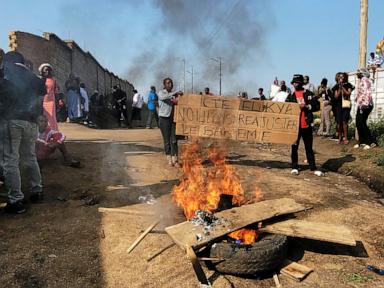
- Direct Tactical Resistance: Civil unrest in Mongbwalu and Rwampara, alongside targeted attacks on isolation facilities, forces medical NGOs to suspend operations, leaving transmission chains to grow unchecked.
The economic reality of international aid funding exacerbates this distrust. Local populations observe millions of dollars flowing into specialized Ebola treatment centers while basic healthcare infrastructure, clean water access, and security remain systematically underfunded. This disparity leads to a prevailing community hypothesis that the outbreak is either manufactured or monetized by external actors, a sentiment that armed militia groups exploit to mobilize resistance against response teams.
Resource Allocation Asymmetry
The containment strategy is severely restricted by a sharp decline in global health funding. Structural budget cuts by major international donors have thinned out the local healthcare safety net. The remaining facilities face chronic shortages of basic PPE, clean water, and isolation space.
┌────────────────────────────────────────────────────────┐
│ Total Response Budget Required: $318 Million            │
├───────────────────────────────┬────────────────────────┤
│ DRC & Uganda Operations       │ Neighboring Readiness  │
│ $264 Million                  │ $54 Million            │
└───────────────────────────────┴────────────────────────┘
The African Union estimates that the response in the DRC and Uganda requires $264 million, with an additional $54 million needed to secure neighboring borders. Current funding levels are a fraction of this requirement. The lack of sovereign financial resources forces local clinics to make impossible trade-offs. Staff are deployed to Ebola triage lines without adequate training or bio-safety gear, resulting in high rates of nosocomial infection among frontline medical personnel, including fatal cases among first-responding Red Cross volunteers.
Furthermore, the focus on Ebola creates a catastrophic diversion of medical resources. Maternal care, routine immunization campaigns, and regular treatments for measles and cholera are suspended as clinics are repurposed or abandoned due to fear. This operational shift triggers a secondary mortality wave that often surpasses the direct death toll of the viral outbreak itself.
Decentralized Risk Mitigation
Because the Bundibugyo strain cannot be neutralized via immediate vaccination campaigns, containment depends on a complete operational pivot from a top-down, centralized medical model to a decentralized, community-led containment strategy.
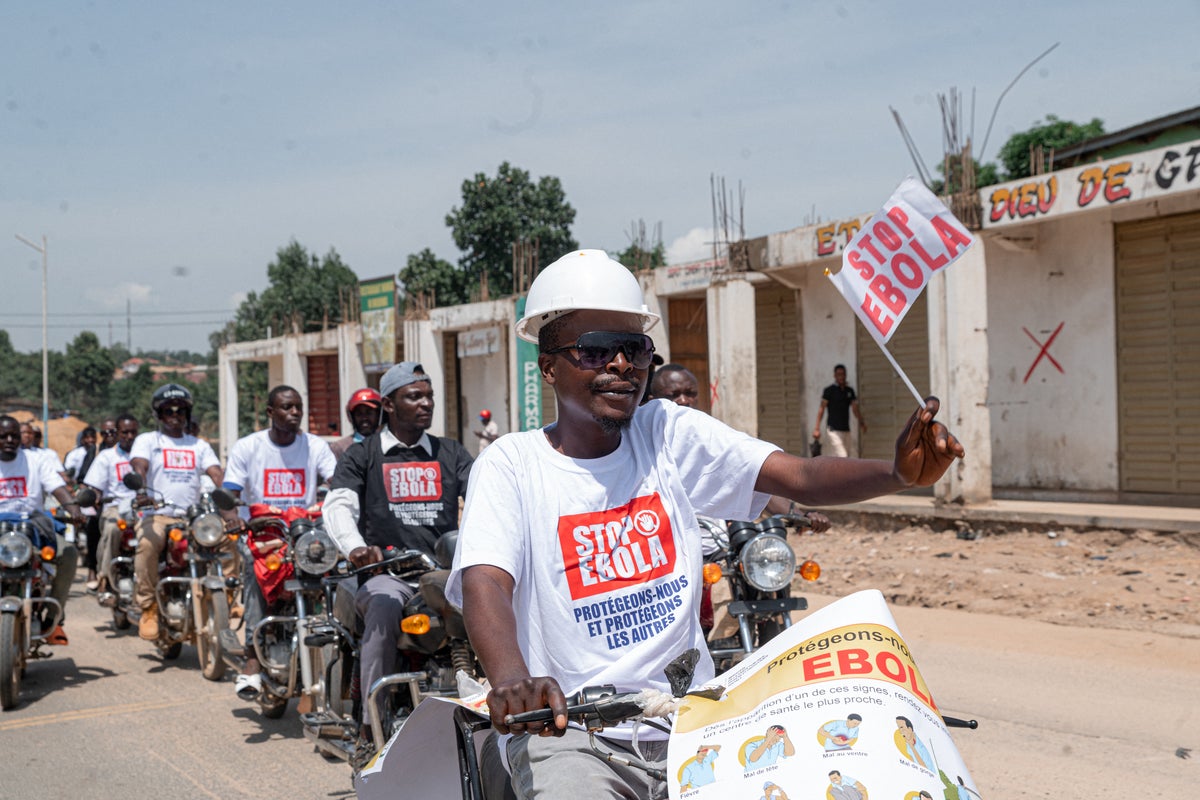
The first step requires embedding epidemiological protocols within existing local governance and faith-based networks. Established religious leaders and community organizers possess the social capital required to negotiate behavioral modifications. Rather than banning traditional burials outright, response teams must co-design alternative, non-infectious rituals with local elders. This approach preserves communal dignity while stopping the transmission vector of post-mortem fluid contact.
The second priority is the immediate deployment of point-of-care diagnostics. Waiting for centralized laboratory clearance in Bunia is an untenable strategy. Distributing mobile, automated RT-PCR diagnostic platforms directly to rural triage centers eliminates the sample transit bottleneck. This cuts processing times down to under four hours. Rapid identification allows immediate isolation of true positives, minimizes the cross-contamination of uninfected patients in crowded holding areas, and provides contact tracers with actionable data when it is most effective.
Finally, international financing models must shift from reactive emergency disbursements to proactive, flexible core funding for local health systems. Reversing the recent cuts to disease-surveillance budgets allows for the permanent maintenance of frontline triage networks. Without this foundational capability, the international community will remain trapped in a cycle of reactive crisis management, running a step behind a rapidly evolving pathogen.