The extension of the United States’ waiver on Russian oil transactions is not a diplomatic olive branch; it is a calculated response to a fragile global energy equilibrium threatened by simultaneous friction in the Middle East. Policymakers face a trilemma: maintaining downward pressure on Russian state revenue, preventing a domestic inflationary spike, and stabilizing emerging markets currently reeling from the price shocks of the Iran-Israel conflict. When geopolitical volatility in the Strait of Hormuz increases the risk premium of Brent crude, the marginal utility of strict Russian sanctions diminishes in favor of market liquidity.
The Tri-Axis Constraint Model
To understand why the Treasury Department continues to permit these transactions, one must analyze the three competing vectors that dictate US energy foreign policy.
1. The Inflationary Feedback Loop
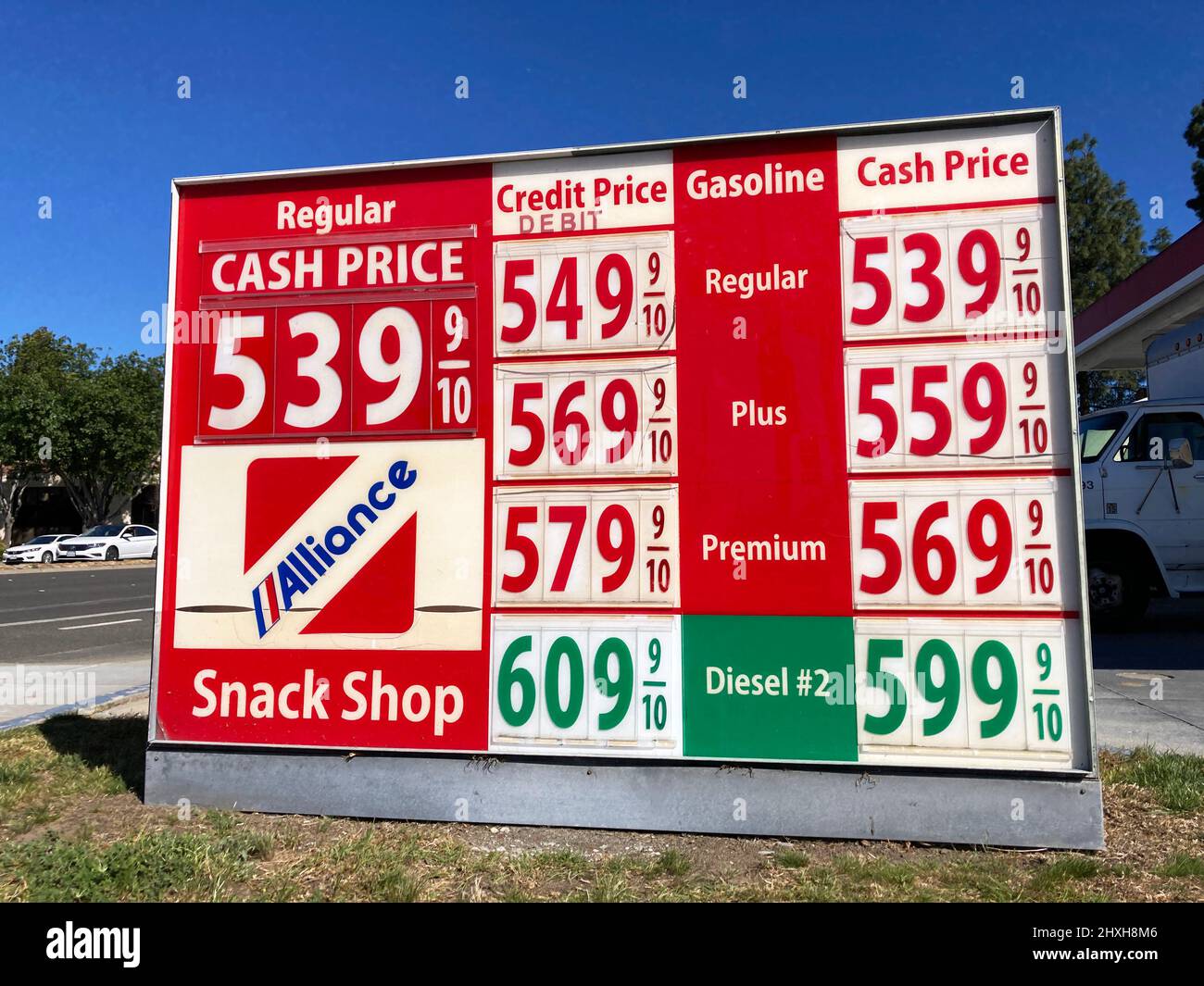
Energy prices act as a foundational input for almost every sector of the global economy. When the cost of crude rises, it triggers a non-linear increase in logistics, manufacturing, and agricultural costs. For the US administration, the political cost of $5.00 per gallon gasoline often outweighs the strategic benefit of a total Russian energy embargo. The waiver serves as a pressure valve, ensuring that Russian barrels—which represent approximately 10% of global production—do not exit the market abruptly.
2. The Emerging Market Default Risk
Countries in the Global South, particularly those with high debt-to-GDP ratios and significant energy import requirements, are uniquely vulnerable to price shocks. The conflict involving Iran has already introduced a "war premium" to oil prices. If the US were to layer a hard ban on Russian oil atop this existing volatility, it would risk triggering sovereign debt crises in multiple developing nations. By renewing the waiver, the US prevents a scenario where these nations are forced to choose between economic collapse or open defiance of Western sanctions.
3. The Revenue vs. Volume Paradox
The primary objective of the G7 price cap and associated waivers is to decouple Russian export volume from Russian export revenue. The goal is to keep the oil flowing (to stabilize prices) while ensuring the profit margin remains below the cost of funding a sustained military campaign.
The Mechanism of Selective Enforcement
The renewal of the waiver operates through a system of licensed intermediaries and specific financial channels. This is not a blanket permission; it is a gated architecture designed to monitor capital flows.
The Correspondent Banking Bottleneck
Most international oil trades are settled in USD, requiring access to the SWIFT network and US correspondent banks. The waiver specifically allows for the "clearing" of these transactions provided they meet certain criteria, such as the G7 price cap. This creates a bottleneck where the US Treasury maintains visibility into the transaction volume without having to execute the "nuclear option" of freezing the accounts entirely.
Verification Logistics
The burden of proof rests on the financial institutions. To utilize the waiver, banks must obtain "attestations" that the Russian oil was purchased at or below the price cap. This creates a tiered system of compliance:
- Tier 1: Direct purchasers with access to invoice data.
- Tier 2: Financial institutions providing trade finance.
- Tier 3: Insurers and shippers who must verify the legality of the cargo.
Failure to maintain this documentation removes the protection of the waiver, exposing the entity to secondary sanctions.
The Iran Variable: Compounding Volatility
The decision to renew the waiver cannot be viewed in isolation from the escalating tensions between Iran and Israel. The Strait of Hormuz handles roughly 20 million barrels of oil per day. Any disruption there creates an immediate supply deficit that cannot be filled by OPEC+ spare capacity in the short term.
This creates a "Strategic Substitution" effect. If Iranian barrels are threatened by kinetic conflict or tighter sanctions, the global market becomes even more dependent on the 7-8 million barrels per day exported by Russia. Removing the Russian waiver during an Iranian supply scare would be equivalent to an intentional supply-side shock, likely driving prices toward $120 per barrel.
The Architecture of Shadow Fleets
A significant limitation of the waiver policy is the growth of the "shadow fleet"—a decentralized network of aging tankers with opaque ownership structures that operate outside Western insurance and financial jurisdictions.
- De-linking from Western Services: As the US tightens or renews waivers with specific conditions, more Russian oil migrates to vessels that do not use Western P&I (Protection and Indemnity) insurance.
- Transshipment Hubs: Oil is frequently transferred between ships in international waters to obfuscate its origin, a process known as ship-to-ship (STS) transfers.
- The Compliance Discount: Because these shadow vessels operate at higher risk, Russian oil often sells at a steeper discount to Brent, which paradoxically helps achieve the US goal of limiting Russian revenue even when the official waiver isn't the primary vehicle for the trade.
Quantifying the Strategic Compromise
The decision-making process for the waiver renewal can be expressed as a cost-benefit function where the primary variables are:
- $R_{f}$: Russian Federal Budget requirements.
- $P_{g}$: Global price of crude.
- $S_{v}$: Domestic political sensitivity to inflation.
The US continues the waiver as long as the marginal decrease in $R_{f}$ from a total ban is less than the marginal increase in $S_{v}$ caused by the resulting spike in $P_{g}$.
The Structural Shift in Energy Diplomacy
The recurring nature of these renewals suggests a shift from "Shock and Awe" sanctions toward a "Long-Term Attrition" model. This strategy acknowledges that the global energy infrastructure is too interconnected for a total decoupling from a major producer. Instead, the US is building a permanent regulatory infrastructure to manage a permanent state of restricted trade.
This creates a new "Normal" for commodity markets:
- Bifurcated Markets: A transparent, Western-compliant market and a gray, high-risk market.
- Increased Transaction Costs: The legal and compliance overhead for oil trading has increased by an estimated $2 to $3 per barrel.
- Weaponized Interdependence: The US leverages its control over the financial system (the USD) to dictate the terms of trade for a commodity it does not fully control (oil).
Strategic Recommendation for Global Operators
Entities operating in the energy and financial sectors must move beyond a binary view of sanctions. The renewal of the Russian oil waiver is a signal that the US prioritizes "Controlled Volatility" over "Absolute Isolation."
The strategic play is to build high-fidelity monitoring systems for the Iran-Russia nexus. If tensions in the Middle East escalate, expect the US to broaden the scope of these waivers to prevent a global recession. Conversely, if Iranian exports remain stable, the US will likely narrow the waiver's definitions to further squeeze Russian margins.
The most critical metric to watch is the spread between Ural crude and Brent crude. If this spread narrows, the waiver will be tightened through administrative guidance. If the spread widens significantly, the waiver will remain broad to satisfy the needs of emerging economies. Compliance departments should prepare for a "sliding scale" enforcement regime rather than a static list of prohibited entities.