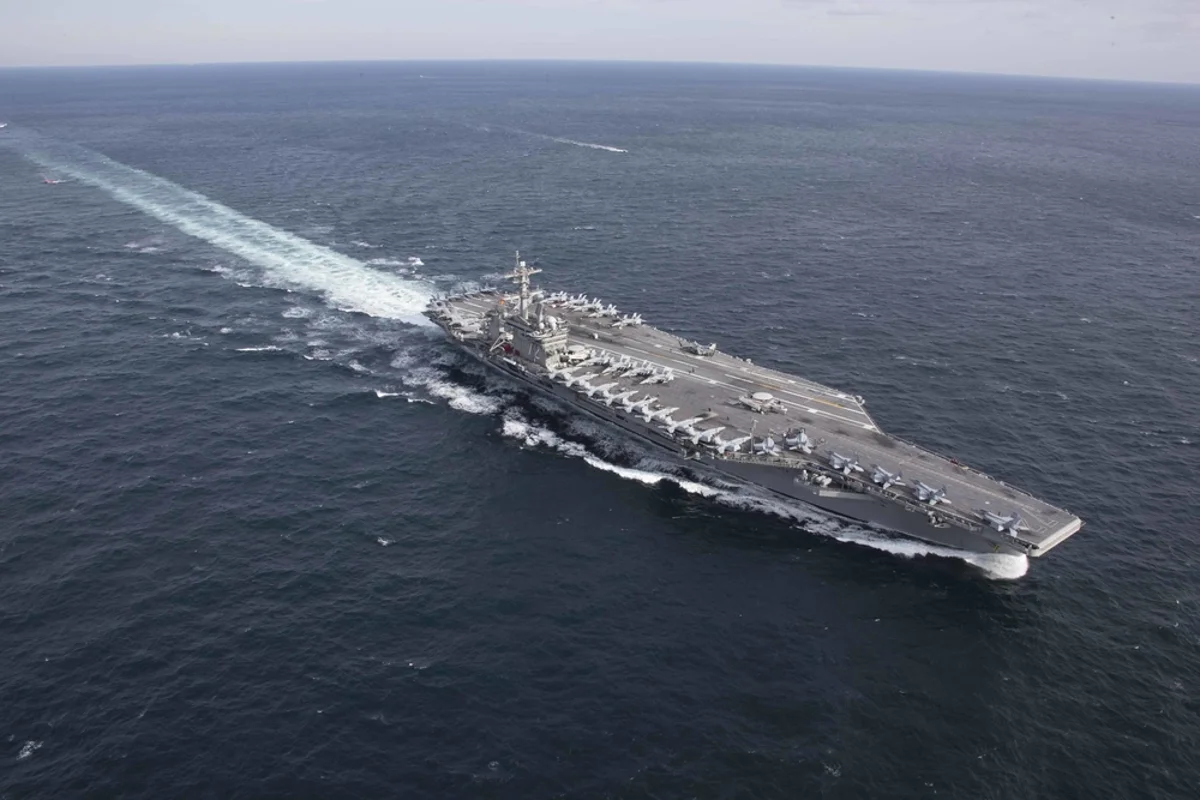
The headlines write themselves like a tired liturgy. Another carrier strike group extended. Another wave of anxious family members warning of broken spirits, sleep deprivation, and plummeting morale on a floating city parked off the coast of Iran. The narrative is as predictable as it is lazy: overworked sailors trapped in an endless loop of geopolitical brinkmanship, suffering under the crushing weight of modern naval operations.
It makes for compelling television. It plays well to an audience looking for a sympathetic human angle on great power competition.
It is also fundamentally wrong about how military psychology, organizational momentum, and combat readiness actually function.
I have spent decades watching defense commentators project civilian corporate burnout models onto hyper-specialized military units. They look at a 280-day deployment extension on the USS Abraham Lincoln and see a crisis. I see an organization experiencing the acute, high-friction reality of modern deterrence. The mistake isn't in acknowledging that life on a Nimitz-class carrier is grueling. The mistake is assuming that fatigue equates to systemic failure, or that the solution is a gentler, more predictable cruise schedule.
Let us dismantle the comfort blanket of the standard critique.
The Myth of the Broken Sailor
The core premise of the conventional media coverage is that prolonged deployment leads to a linear degradation of human capability. Sailors are tired, therefore combat effectiveness plummets. Morale is low, therefore the mission is compromised.
This is civilian logic applied to an institution built to reject it.
Military organizations do not function like tech startups or logistics firms. When you measure a crew's performance solely through the lens of comfort, you miss the entire psychological architecture of the deployment cycle. A carrier strike group operating in a high-threat zone like the CENTCOM area of operations is not suffering from a lack of purpose; it is drowning in the raw, unfiltered friction of immediate relevance.
Ask any master chief who has lived through multiple extensions: morale does not drop because a deployment drags past the six-month mark. Morale drops when the crew believes their presence is pointless.
When a carrier is parked within striking distance of regional proxies and ballistic missile arsenals, the friction of daily operations is tethered directly to survival and deterrence. That changes the neurological calculus of fatigue. A tired sailor who knows their division is actively tracking real-world vectors processes exhaustion very differently than an office worker staring at a quarterly spreadsheet.
Conflating physical tiredness with psychological despair is a category error. The former is a biological constant of sea service. The latter is a leadership failure. And while the Lincoln’s families are understandably voicing the very real pain of separation, projecting that pain onto the operational readiness of the ship misreads the mindset of the modern enlisted force.
The Friction of Modern Deterrence
Let us look at what is actually happening when a deployment stretches.
The critics point to deferred maintenance, cascading supply chain bottlenecks, and the sheer monotony of flight deck operations under a brutal Middle Eastern sun. All of this is real. I have seen multi-million-dollar readiness programs grind to a halt because a single specialized valve failed in the Persian Gulf and the logistics tail couldn't catch up for three weeks.
Admitting the downside of our current posture is vital. The tempo is punishing. Retention metrics in high-demand ratings—nuclear operators, electronic warfare technicians, aviation boatswain's mates—suffer when extensions become the default mode of operation rather than the emergency exception.
Here is the contrarian truth that the comfortable analysts miss: Predictability is the enemy of tactical surprise.
If adversaries like Iran, China, or Russia can map out exact six-month rotation windows down to the calendar week, our presence ceases to be a deterrent and becomes a scheduling inconvenience. The very agony of the extended deployment—the uncertainty, the friction, the disrupted timelines—is precisely what injects ambiguity into adversary planning.
When a carrier strike group lingers past its scheduled return, every regional calculation in Tehran shifts. They cannot calibrate their provocations against a predictable departure date. They are forced to sustain a high-alert defensive posture indefinitely, bleeding their own resources while our crews adapt to a grinding, permanent baseline of readiness.
We are not accidentally breaking our people through mismanagement. We are trading the comfort of predictability for the hard currency of strategic ambiguity.
Re-Engineering the Question
People ask: "How much longer can we torture these families and sailors before the system breaks?"
It is the wrong question. It assumes the system is static, waiting to snap.
The right question is: "What kind of force do we build when deterrence requires permanent friction?"
The answer requires stripping away the sentimentality that infects modern defense debates. You cannot optimize a global naval power projection force for work-life balance without surrendering the oceans to competitors who care nothing for labor standards. The moment the United States Navy decides that crew comfort supersedes presence, the Pax Americana in the maritime commons officially ends.
This does not mean we ignore the human element. It means we stop pretending that naval warfare can be sanitized into a neat, predictable nine-to-five deployment schedule.
The sailors on the Lincoln are not victims of a broken system; they are the blunt instruments of an empire trying to hold a fracturing world order together with fewer hulls than it actually needs. They know the stakes. They bear the cost.
Stop patronizing them with narratives of helpless exhaustion. They are doing the work.