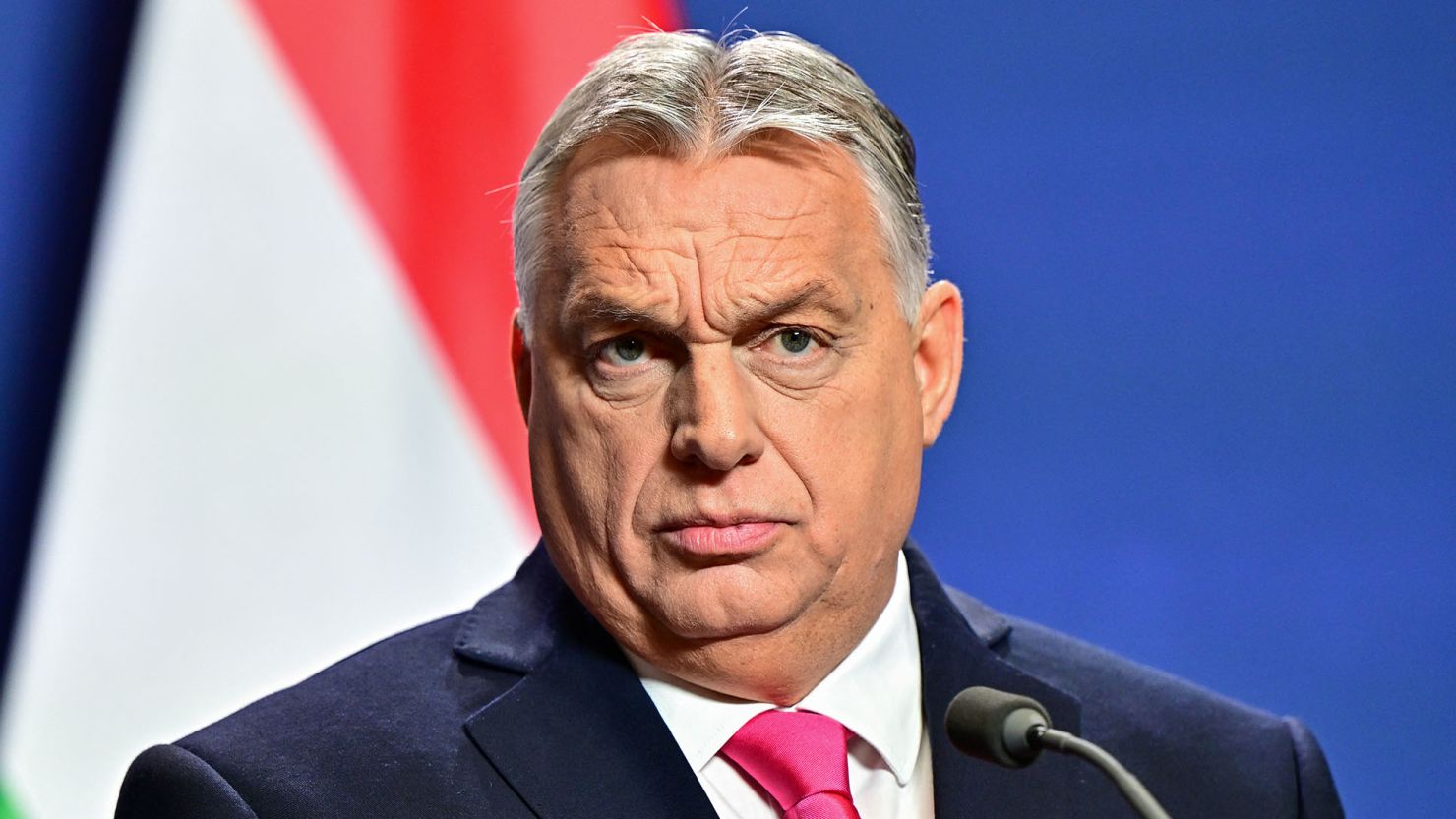
The sixteen-year reign of Viktor Orbán, a man who transformed Hungary into a laboratory for illiberal democracy and served as the North Star for the global far-right, collapsed on Sunday night. The finality of the defeat was not just in the numbers—though they were staggering—but in the identity of the man who delivered the blow. Péter Magyar, once an invisible cog in the Fidesz state apparatus, led his fledgling Tisza Party to a crushing 53% of the popular vote, securing a 138-seat supermajority that effectively grants him the power to dismantle the very system he helped build.
By midnight in Budapest, the streets around the Parliament building were a sea of red, white, and green. The atmosphere was less like a standard political victory and more like the breaking of a long fever. Orbán, who had weathered every previous storm by painting the opposition as foreign-funded puppets, found his playbook useless against a man who spoke his own language, understood his own secrets, and held a mirror up to the regime’s moral decay. If you liked this post, you should read: this related article.
The Defector Who Knew Too Much
Magyar’s rise was not a slow burn. It was an explosion triggered by a specific moment of systemic failure. Until early 2024, Magyar was known primarily as the husband of Judit Varga, the hardline Justice Minister who defended Hungary’s legal record in Brussels. He was a creature of the establishment, holding lucrative positions in state-owned companies and navigating the upper echelons of the Fidesz elite.
The breaking point arrived with a presidential pardon scandal involving the cover-up of a child abuse case. While the government sacrificed Varga and President Katalin Novák to contain the fallout, Magyar refused to go quietly. He didn't just resign; he turned state’s witness against the entire political culture of his social circle. For another angle on this story, check out the recent update from The New York Times.
His weapon was not a traditional political platform but a raw, unfiltered critique of the "national, sovereign, bourgeois Hungary" that Fidesz claimed to represent. He called it a "political product"—a hollow shell designed to mask the enrichment of a narrow oligarchy. Because he came from the inside, his accusations of corruption carried a weight that decades of liberal opposition protests never could. He wasn't an outsider trying to storm the gates; he was an officer opening them from within.
Breaking the Propaganda Monopoly
For over a decade, the Orbán government maintained its grip through a sophisticated media machine that dominated 80% of the country’s news outlets. The strategy was simple: flood the zone with narratives about George Soros, Brussels interference, and the threat of migration.
Magyar bypassed this blockade with a relentless, low-budget campaign that leaned heavily on social media and massive, grassroots rallies in rural strongholds—territory Fidesz had long considered untouchable. He spoke with a weary, conservative confidence that resonated with voters who were tired of being told they were under siege.
The TISZA party strategy focused on a "third way" that rejected both the Orbán regime and the fragmented, ineffective left-wing opposition. By positioning himself as a conservative reformer, Magyar successfully peeled away the "soft" Fidesz voters—middle-class families and rural workers who still identified with nationalist values but were disgusted by the blatant cronyism of the ruling elite.
The numbers from Sunday suggest a total realignment. Fidesz plummeted to roughly 38% of the vote, losing over half of its seats in the National Assembly. This was not just a swing; it was an exodus.
The Architecture of a Supermajority
With 138 seats in the 199-member parliament, Magyar now wields a two-thirds majority. In the Hungarian system, this is a nuclear weapon. Orbán used this same power to rewrite the constitution, pack the courts, and tilt the electoral map in his favor. Now, the new government has the legal authority to undo those changes with the same efficiency.
The immediate priorities are clear but daunting:
- Restoring the Rule of Law: Reversing constitutional amendments that weakened judicial independence.
- Unlocking EU Funds: Ending the multi-year freeze on billions of euros in cohesion and recovery funds by meeting Brussels' anti-corruption demands.
- Accountability: Pursuing criminal investigations into the "oligarchy" that benefited from state contracts over the last 16 years.
- Geopolitical Pivot: Moving Hungary back into the European mainstream and cooling the cozy relationship Orbán cultivated with the Kremlin.
However, winning an election is not the same as winning a state. The civil service, the media regulators, and the heads of state-owned companies remain populated by Orbán loyalists with long-term contracts. Magyar is walking into a house where the previous owner changed all the locks and left the pipes ready to burst.
The Conservative Trap
There is a lingering tension in Magyar’s victory that the international community has yet to fully reckon with. While he is hailed as a pro-EU savior, he remains a staunch conservative. He has been vocal about maintaining firm positions on migration and national sovereignty, even as he promises to be a "critical" but cooperative partner in Brussels.
He is not a liberal in the Western European sense. His appeal lies in the fact that he offered a version of the Fidesz dream—national pride and traditional values—without the systemic theft and authoritarian drift. For many Hungarians, this was the only acceptable alternative. They didn't want a revolution against their values; they wanted a revolution against the people who had hijacked them.
The 79% turnout, the highest in over two decades, proves that political apathy in Hungary was never about indifference. It was about a lack of choice. When a viable challenger appeared who could talk to a villager in the Great Plain as easily as a lawyer in Budapest, the supposedly invincible Orbán machine simply stalled.
Viktor Orbán’s concession on Sunday night was uncharacteristically brief. He called the result "clear" and "painful." For the first time in nearly twenty years, the man who claimed to speak for the "true Hungary" found himself in the minority. The "system of national cooperation" has been replaced by a mandate for total reconstruction. Magyar has the votes, the momentum, and the legal authority. Now he has to prove that a defector can also be a builder.