Sarah sits in a chair that cost her company eight hundred dollars, staring at a flickering cursor that costs them nothing. It is 3:14 PM on a Tuesday. Her inbox is a hydra; for every three emails she slashes away, five more sprout in their place. She spent the morning in three back-to-back video calls where people used words like "alignment" and "bandwidth" while she secretly formatted a spreadsheet under the table.
She is exhausted. But she hasn't actually done anything yet.
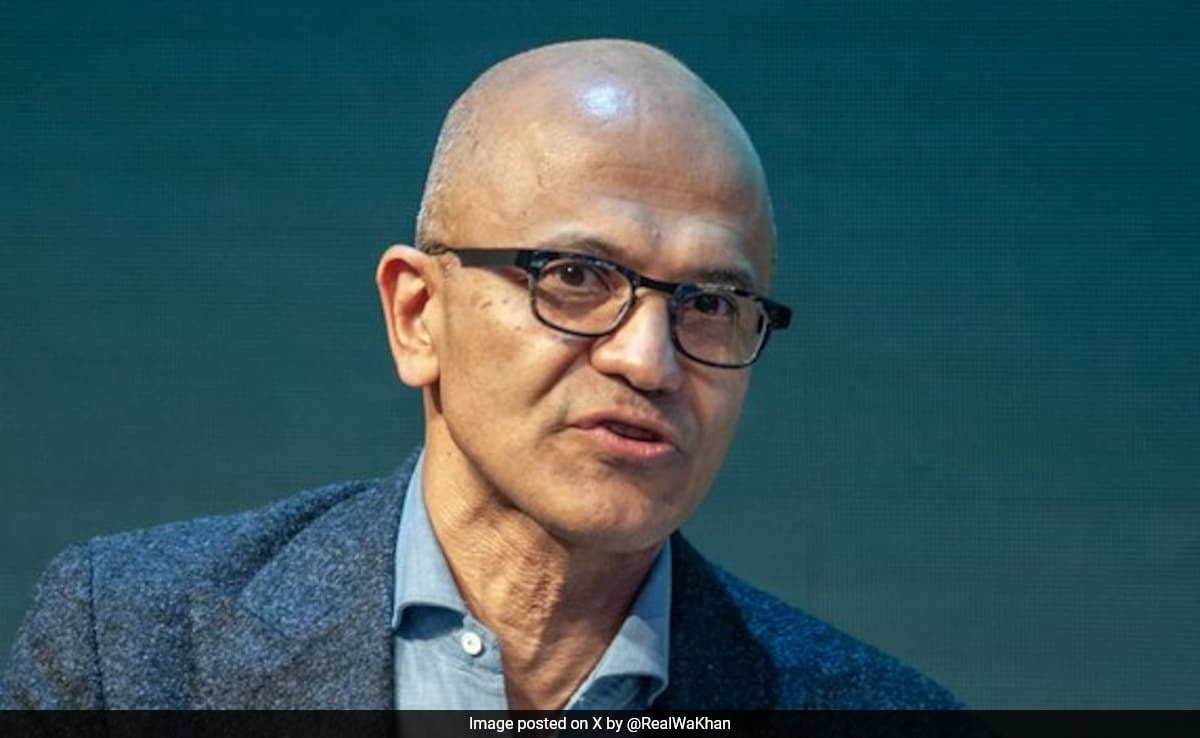
This is the "drudgery" that Satya Nadella wants to kill. When the Microsoft CEO stands on a stage and suggests that we need to "reconceptualize work," he isn't just talking about software updates or faster processors. He is talking about Sarah. He is talking about the quiet, soul-crushing weight of the digital debt we have all spent the last two decades accruing. We are drowning in the very tools that were supposed to set us free.
The Ghost in the Machine
The problem started with a promise. We were told that the internet would make us faster. It did. Then we were told that the cloud would make us more connected. It did. But speed and connection turned out to be a double-edged sword. We didn't use the saved time to think deeper or rest longer. We just crammed more "work about work" into the gaps.
Now, we face a crisis of agency.
Nadella’s argument hinges on a simple, uncomfortable truth: we have reached the limit of human cognitive endurance in the current office framework. According to internal data from Microsoft’s Work Trend Index, the heaviest users of communication tools spend over fifty percent of their day just managing their presence. They are professional communicators who occasionally find time to do their actual jobs.
This isn't work. It’s theater.
AI is being positioned not as a replacement for the worker, but as a shield against the noise. Think of it as a sophisticated filter for the modern soul. When Nadella speaks of "reconceptualizing," he is suggesting that the core unit of work is no longer the "task" or the "email," but the "intent."
Imagine Sarah again. Instead of spending forty-five minutes summarizing a meeting she was too busy to attend, she asks a digital co-pilot to extract the three moments where her name was mentioned and the two deadlines that shifted. The machine handles the data. Sarah handles the judgment.
The Great Unlearning
The transition won't be easy. It requires us to abandon the fetishization of "busy." For a century, we have measured productivity by the visible sweat on a brow or the number of hours a car sat in a parking lot. In the digital age, we replaced the parking lot with the green "active" dot on a chat app.
We are addicted to the notification.
To shift toward a world where AI handles the mundane, we have to admit that much of what we do all day is actually worthless. That is a terrifying realization for a middle manager whose entire career is built on being a human router for information. If the information routes itself, who are they?
This is where the human element becomes the only thing that matters.
Nadella’s vision isn't a cold, robotic future. It is a return to the craft. By automating the "drudgery," we are forced back into the arena of human-to-human interaction, high-level strategy, and creative leaps that no Large Language Model can replicate. A machine can predict the next word in a sentence, but it cannot feel the tension in a room during a delicate negotiation. It can’t understand why a specific design choice might make a customer feel nostalgic or safe.
The Stakes of the New Literacy
We are entering an era of "AI aptitude." It will soon be as fundamental as reading or typing. But this new literacy isn't about learning to code. It’s about learning to direct.
Consider the difference between a painter and a gallery curator. For years, we have all been painters struggling to find enough pigment and clean brushes. AI provides the pigment and cleans the brushes instantly. Our new job is to be the curator—the person who decides which story is worth telling and which vision is worth pursuing.
There is a risk, of course. The "invisible stakes" lie in the potential for a new kind of laziness. If we let the machine do our thinking, our cognitive muscles will atrophy. If we let the machine write our apologies and our thank-you notes, we lose the friction that makes human relationships meaningful.
The goal isn't to outsource our humanity. It is to outsource the things that prevent us from being human.
The Architecture of Tomorrow
What does a company look like after it has been "reconceptualized"?
It looks less like a factory and more like a laboratory. It values "deep work" over "rapid response." It rewards the person who spends four hours thinking and ten minutes prompting, rather than the person who spends eight hours clicking and dragging.
Nadella points out that every previous industrial revolution has initially caused fear about the "end of work," only to result in the creation of entirely new categories of human endeavor. We didn't stop working when the steam engine arrived; we just stopped pulling the carts ourselves.
We are currently the ones pulling the digital carts.
The shift is already happening in small, quiet ways. It’s the architect who uses AI to run structural simulations in seconds, allowing them to spend the rest of the day obsessing over how light hits a hallway. It’s the doctor who uses a machine to transcribe notes, finally looking their patient in the eye for the first time in years.
These aren't just efficiency gains. They are moments of reclaimed dignity.
The Weight of Choice
We have a choice to make. We can use these tools to squeeze more "output" from ourselves until we snap, or we can use them to redefine what "output" actually means.
If we choose the former, we are simply building a faster treadmill. If we choose the latter, we might actually find our way back to the reason we started working in the first place: to build things that matter, to solve problems that hurt, and to connect with each other in ways that machines never will.
Sarah shuts her laptop. The cursor has stopped flickering because she has decided what the spreadsheet needs to say. She didn't spend the afternoon fighting the hydra. She spent it thinking about the one thing the hydra couldn't understand: why the data mattered to the person on the other side of the screen.
The sun is setting, hitting the glass of the office buildings in a way that feels intentional. For the first time in a long time, Sarah isn't thinking about her inbox. She is thinking about tomorrow.
The machine is quiet. The human is just getting started.