The cabin lights dim just before takeoff, throwing the interior of the Airbus into a soft, synthetic twilight. Outside the window, the tarmac at Bangkok’s Suvarnabhumi Airport shimmers under a heavy tropical heat. A young woman in seat 24B adjusts her headphones, oblivious to the ledger sheets balancing on a knife’s edge just a few feet beneath her sneakers. She bought her ticket for less than the cost of a decent dinner in downtown Singapore. To her, this flight is a bridge to a weekend getaway, a routine luxury of the modern age.
To the airline executives sitting in a glass boardroom three floors above her, that same ticket is a terrifying mathematical impossibility.
For the past two decades, we have lived through a golden age of hyper-mobility. Asia, in particular, built an entire economic miracle on the back of the budget carrier. Blue-collar workers could fly home to see their families in Manila or Dhaka every few months instead of once a year. College students could hop between Kuala Lumpur and Bali on a whim. The skies were democratic.
But the cheap flight was always an illusion. It required a perfect alignment of economic stars to exist at all. Now, those stars are burning out.
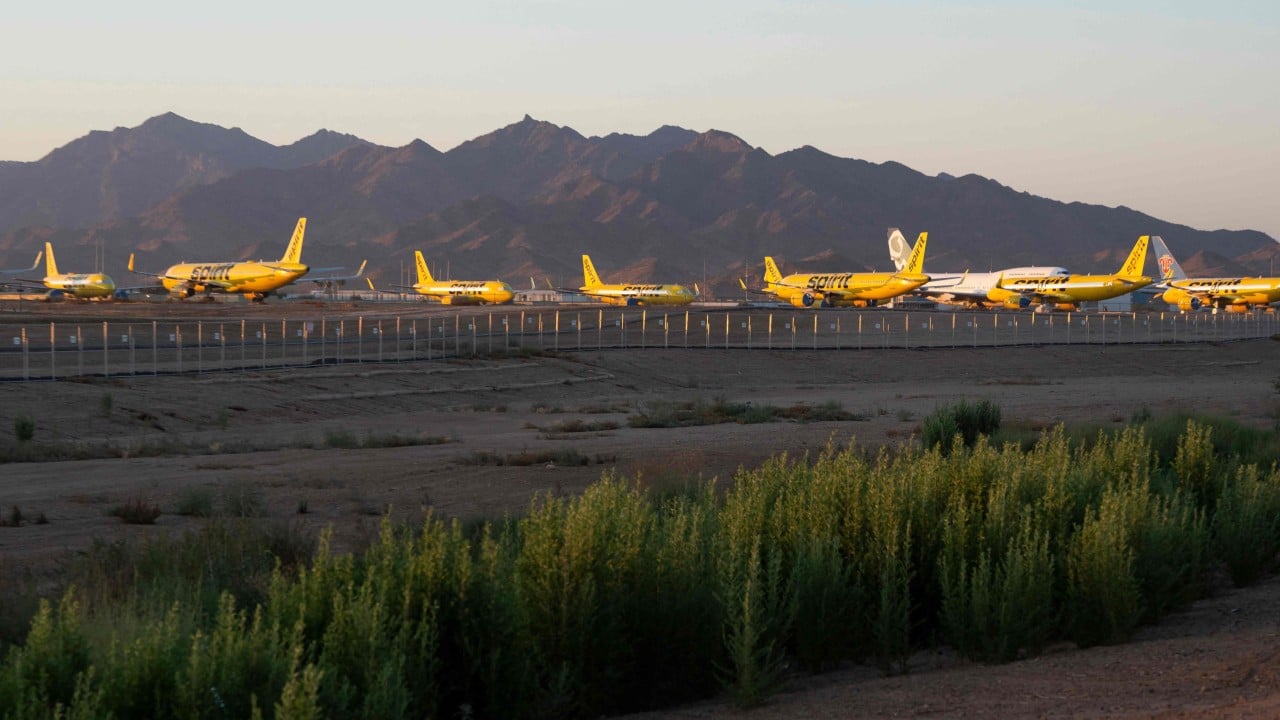
The aviation world shook recently when Spirit Airlines, the pioneer of ultra-low-cost travel in the United States, filed for bankruptcy protection. It was a stark warning that the music had stopped for carriers that rely on razor-thin margins. While the headlines focused on the American market, a much quieter, far more dangerous crisis is brewing across the Asia-Pacific region. Without intervention, several Asian airlines are staring down the exact same barrel of collapse.
The culprit is not a lack of passengers. The terminals are packed. The true threat is an invisible, volatile fluid that governs everything we do: jet fuel.
The Tyranny of the Barrel
To understand why a regional airline in Southeast Asia is on the verge of choking, you have to understand the brutal, unforgiving nature of aviation economics.
Think of an airline as a massive restaurant where the price of ingredients changes every single hour, but you have already sold the menus to your customers six months in advance. That is the reality of the fuel market. For a standard legacy airline—the kind that charges you for checked bags and offers a hot meal—fuel accounts for roughly 30 percent of total operating costs. For a budget carrier, where every other expense has been aggressively shaved down to the bone, that number can easily soar past 40 or 50 percent.
When jet fuel prices spike, budget airlines have nowhere to hide. They cannot cut costs further because they are already operating on a skeleton crew, using single-model fleets to save on maintenance, and charging for everything down to a cup of water.
Consider a hypothetical regional carrier based in Jakarta. Let us call it Nusantara Air. It is a fictional entity, but its balance sheet is stitched together from the very real financial pressures currently facing dozens of actual operators across Vietnam, Indonesia, and India. Nusantara Air operates forty planes. It connects secondary cities—places without high-speed rail or massive highways—to the capital.
When crude oil prices hover around seventy dollars a barrel, Nusantara Air makes a modest profit of perhaps three or four dollars per passenger. It is not much, but multiplied by millions of travelers, it keeps the lights on.
Then, geopolitical tensions flare in the Middle East. Refineries in East Asia face supply bottlenecks. The price of Singapore jet kerosene—the benchmark for the region—surges. Suddenly, that three-dollar profit per seat transforms into a seven-dollar loss.
Seven dollars does not sound like a catastrophe. But an airline is a machine that burns cash to create motion. When you fly a hundred thousand passengers a day at a seven-dollar loss per seat, you are bleeding nearly three-quarters of a million dollars every twenty-four hours. Within three months, your cash reserves are gone. Within six, you are calling bankruptcy lawyers.
The Invisible Geography of Suffering
When an airline dies, the obituary is usually written in the business section. It talks about debt restructuring, aircraft lessors, and fleet groundings.
The real tragedy unfolds elsewhere.
It happens in places like Clark in the Philippines, or Da Nang in Vietnam, or Tiruchirappalli in southern India. These are not global financial hubs; they are communities that were pulled into the global economy because budget airlines gave them a lifeline.
I spent years traveling through these secondary Asian hubs during the height of the aviation boom. I watched how a single daily flight from a budget carrier could transform a sleepy provincial town. Small hotels would pop up. Local farmers would start selling organic produce to cafes catering to weekend travelers. Young professionals could live in their hometowns while commuting to the capital for a few days a week via a cheap forty-minute flight.
If these carriers collapse like Spirit, those connections vanish overnight. The larger, state-backed legacy airlines will not step in to fill the void—at least not at prices regular people can afford.
This is the human core of the crisis. The loss of an airline is not just a corporate failure; it is a contraction of human horizons. The world becomes larger, more expensive, and harder to navigate for the people who had just barely managed to conquer distance.
The Illusion of Government Life Support
There is a common misconception that governments will always step in to save their national wings. It is easy to look at the history of aviation and assume that airlines are too big, or too symbolic, to fail.
That assumption is a trap.
While flag carriers like Singapore Airlines or Japan Airlines enjoy deep institutional support, the scrappy, low-cost operators that actually move the masses are often left to fend for themselves. In the eyes of central banks and ministries of finance, budget airlines are expendable private enterprises.
But leaving them to drown ignores the broader economic fallout.
In many parts of Asia, geography dictates that aviation is not a luxury; it is public infrastructure. You cannot build a highway across the Indonesian archipelago. You cannot run a high-speed train from Manila to Cebu. The sky is the only road that connects these islands. When a budget carrier goes under, it is the equivalent of a government tearing up hundreds of miles of interstate highway and telling the population to buy boats.
The solutions available to these struggling airlines are few, and none of them are pleasant.
They can raise ticket prices, but doing so destroys the very demand their business model is built upon. The moment a flight costs two weeks' worth of wages instead of two days', the cabins empty out.
They can attempt to hedge their fuel costs—essentially buying insurance against rising oil prices. But hedging requires massive upfront capital, something these cash-strapped regional players simply do not possess. They are forced to buy fuel at the spot price, leaving them completely exposed to the whims of global oil markets.
The Looming Consolidation
The next phase of this crisis will not look like a sudden, dramatic grounding of fleets. It will look like a slow, painful retreat.
We will see routes dropped. First, the flights to smaller cities will disappear. Then, the frequencies between major hubs will be cut. The industry will undergo a brutal consolidation, leaving just a few massive, dominant players who have the scale to survive the fuel crunch.
For the traveler, this means the era of the spontaneous weekend trip is drawing to a close. The industry will become more exclusive, reverting to what it looked like in the 1980s—a playground for corporate travelers and the wealthy.
The young woman in seat 24B has no idea that her flight might be one of the last of its kind. She feels the plane tilt as it climbs into the night sky over the Gulf of Thailand. Below her, the lights of the coast recede into the darkness.
The engines hum with a steady, reassuring power, consuming thousands of gallons of expensive fuel every hour, burning through the financial runway of the company that owns them. The flight is smooth, but the ground beneath the industry is crumbling.


