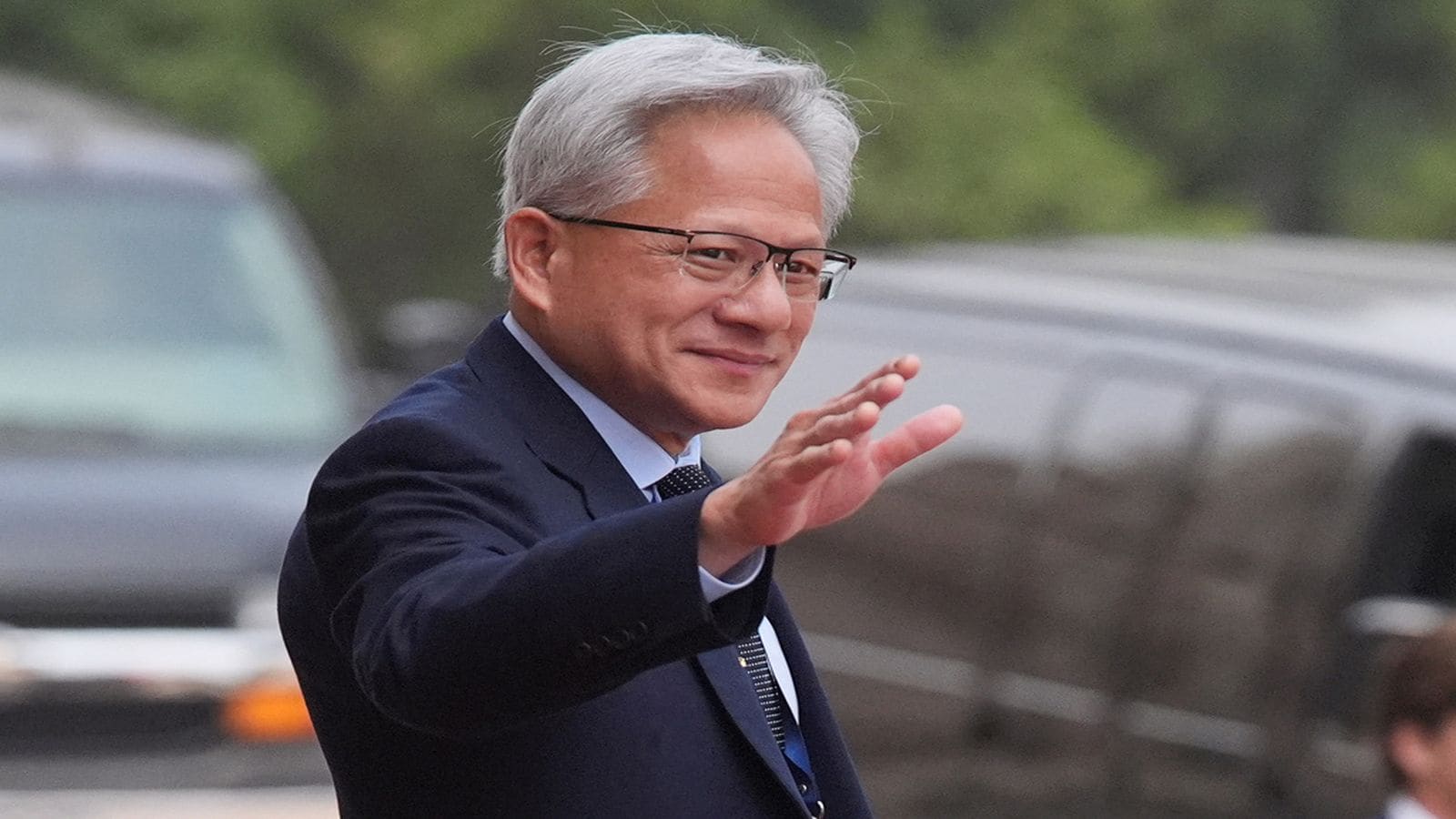
Elon Musk recently amplified an online call to bring Jensen Huang back as the CEO of Nvidia, sparking confusion among casual observers and intense debate across Silicon Valley. The confusion stems from a simple reality: Jensen Huang never left. Having co-founded the graphics chip maker in 1993, Huang remains its active president and chief executive officer. Musk’s public endorsement of a nonexistent leadership change was not a factual blunder by one of the world’s sharpest tech executives, nor was it an accidental misfire on his own social media platform. Instead, it was a calculated piece of internet theater designed to highlight a deeper anxiety gripping the artificial intelligence sector—the fear that corporate bureaucracy, regulatory pressure, and hardware bottlenecks could slow down the most important compute supplier on earth.
To understand why a tongue-in-cheek meme about "bringing back" a sitting CEO resonated with Musk, you have to look at the mechanics of modern tech leadership and the specific pressures squeezing Nvidia right now. On X, engagement thrives on absurdist humor and inside jokes. When a user posts a mock petition demanding the return of a founder who still sits in the corner office, it satirizes the revolving door of corporate governance seen at other tech giants. Think of OpenAI’s chaotic boardroom ouster and rapid reinstatement of Sam Altman, or Apple’s historic exile and rescue of Steve Jobs. By replying in support of "reinstating" Huang, Musk was signaling his alignment with founder-led governance while subtly mocking the institutional boards that frequently destabilize high-growth technology companies.
The Anatomy of a Viral Tech Satire
Social media algorithms reward friction and confusion. When Musk interacts with a post suggesting Jensen Huang needs to be brought back to Nvidia, two distinct audiences react immediately. The first group rushes to the comments to correct the premise, pointing out that Huang has held the CEO title continuously for over three decades, making him the longest-serving chief executive in the semiconductor industry. That pedantic impulse drives massive algorithmic reach. The second group—composed of engineers, venture capitalists, and insiders—immediately grasps the subtext.
The joke relies on a specific trope in Silicon Valley lore. It suggests that the current version of a massive, multi-trillion-dollar public company has become too cautious, too polished, or too constrained by Wall Street expectations, and that it needs the scrappy, hungry version of its founder to take over again. Nvidia’s transformation from a niche supplier of PC gaming cards into the foundational infrastructure provider for global artificial intelligence has been staggering. With that scale comes inevitable friction. Supply chain constraints, geopolitical export controls, and antitrust scrutiny have forced Huang to spend as much time acting as a global diplomat as he does acting as a chip architect.
Musk knows this dynamic intimately. Running Tesla, SpaceX, and xAI simultaneously has made him the ultimate avatar of the wartime CEO who resists traditional corporate guardrails. When he backs a satirical call to bring Huang back, he is tipping his hat to a peer who still operates with the urgency of a startup founder despite sitting atop one of the most valuable enterprises in human history. It is a nod to the leather-jacketed engineer who famously tells his staff that their company is always thirty days away from going out of business.
Why Musk Needs Nvidia Moving at Maximum Velocity
Beneath the humor lies a massive financial and operational dependency. Elon Musk is not merely an impartial spectator commenting on semiconductor leadership; he is one of Jensen Huang’s largest, most demanding customers.
Building competitive artificial intelligence models requires staggering amounts of parallel compute. Through his AI venture, xAI, Musk has raced to assemble some of the largest graphics processing unit clusters in the world, such as the massive Colossus supercomputer facility in Memphis. Simultaneously, Tesla’s autonomous driving ambitions and humanoid robotics programs depend heavily on massive neural network training runs powered by Nvidia hardware. While Tesla develops its own custom Dojo silicon for specific training workloads, its near-term survival and execution in AI remain tethered to Nvidia’s Hopper and Blackwell architectures.
This creates a delicate power dynamic between the two men. Musk publicly praised Huang’s execution and work ethic because xAI’s roadmap depends entirely on Nvidia hitting its aggressive annual product cadence. Historically, Nvidia operated on a two-year architectural cycle. Under Huang’s relentless push, the company compressed that timeline into a one-year rhythm, promising a new generation of data center chips every twelve months.
If Nvidia were ever to lose its founder-driven intensity and slip into the comfortable, defensive posture that plagued legacy chipmakers like Intel in the 2010s, Musk’s own artificial intelligence ambitions would hit a brick wall. A hypothetical post-Huang Nvidia run by a traditional finance-oriented executive would almost certainly prioritize margin protection, safe incremental updates, and strict adherence to conservative supply forecasts over reckless speed. For Musk, whose entire business philosophy revolves around compressing timelines to the edge of physical possibility, a cautious Nvidia is an existential threat.
The Myth of the Irreplaceable Founder
Silicon Valley has a long, documented obsession with founder mode, a management philosophy popularized by essayist Paul Graham and championed relentlessly by Musk. The core thesis is simple: professional managers hired to scale mature companies often destroy the very instincts that made those companies successful. They introduce layers of middle management, rely on abstract metrics rather than product intuition, and optimize for predictability rather than breakthroughs.
Nvidia is frequently held up as the ultimate proof of concept for this theory. Unlike traditional corporate hierarchies where a CEO manages a handful of direct reports through rigid departmental silos, Huang famously maintains an unusually flat organizational structure. Dozens of executives report directly to him. He avoids traditional one-on-one meetings in favor of large, transparent group discussions where bad news is shared openly so the entire company can pivot immediately. He does not use status reports, preferring instead to read raw emails from employees across all levels of the hierarchy to keep his finger on the pulse of engineering bottlenecks.
How Nvidia Avoided the Semiconductor Graveyard
To appreciate why observers treat Huang’s leadership as almost mythical, look at the graveyard of 1990s graphics companies. When Nvidia was founded in 1993, dozens of competitors—3dfx, S3 Graphics, Matrox, ATI—were fighting for dominance in the nascent 3D acceleration market. Almost all of them are gone or absorbed into larger entities.
Huang survived by making high-risk, non-consensus bets years before the market validated them:
- The CUDA Gamble: In 2006, Nvidia introduced CUDA, a software platform allowing developers to use graphics chips for general-purpose parallel computing. Wall Street hated it. For years, CUDA depressed Nvidia’s gross margins because the company was shipping expensive, complex silicon to gamers who had no use for scientific computing features. Yet when deep learning researchers realized in 2012 that GPUs were vastly superior to CPUs for training neural networks, Nvidia had a six-year software moat that competitors still have not crossed.
- Full-Stack Integration: Rather than just selling individual chips, Huang pushed Nvidia to design entire data center architectures, including networking interconnects (via the acquisition of Mellanox), server racks, and proprietary software libraries.
- Relentless Cannibalization: Nvidia routinely renders its own profitable product lines obsolete by accelerating new architectures, denying competitors the breathing room needed to catch up on price or performance.
A conventional CEO beholden to quarterly institutional investors would have killed the CUDA investment within twenty-four months to boost stock buybacks. Only a founder with total authority and deep technical conviction could absorb that kind of short-term pain for a decade-long payoff.
The Real Threat Facing Nvidia Today
If Jensen Huang is still firmly in charge and executing at peak capacity, why does the internet feel compelled to joke about rescuing him? Because the external forces pressing down on Nvidia are beginning to mimic the internal drag of a bloated bureaucracy.
As Nvidia’s market dominance solidified, the company became a primary target for global regulators. Antitrust authorities in the United States, the European Union, and China have scrutinized Nvidia’s bundling practices, its software lock-in, and its allocation of scarce chips to cloud providers. When a company reaches this level of systemic importance, legal and compliance teams inevitably gain more influence over product roadmaps and sales strategies. Every contract is vetted for regulatory risk; every acquisition is blocked before it can even be announced, as seen when regulators killed Nvidia’s attempted $40 billion purchase of Arm.
At the same time, Nvidia’s largest customers are actively plotting its obsolescence. Microsoft, Google, Amazon, and Meta spend tens of billions of dollars on Nvidia hardware every year, and every single one of them is pouring billions more into designing custom application-specific integrated circuits (ASICs) to break free from the "Nvidia tax." Google has its TPUs, Amazon has Trainium, and Meta has MTIA. Even Musk’s own xAI could eventually explore custom silicon if off-the-shelf GPUs become too expensive or power-hungry.
Furthermore, the sheer physical scale of modern AI clusters is pushing engineering to its absolute limits. Moving from individual server blades to liquid-cooled, rack-scale systems like the GB200 NVL72 introduces complex manufacturing hurdles, thermal management headaches, and supply chain fragility. When defects emerge in advanced packaging at TSMC or power delivery systems falter, the resulting delays ripple across the entire tech economy.
The Succession Shadow Nobody Wants to Discuss
There is a quieter, more uncomfortable truth lurking beneath Musk’s playful tweet. Jensen Huang is in his early sixties. While he shows zero signs of slowing down—maintaining a grueling global travel schedule and famously working seven days a week—no human being can outrun biology forever.
Nvidia does not have an obvious, publicly anointed successor. Because Huang’s management style relies so heavily on his personal bandwidth, institutional memory, and direct oversight of dozens of executives, the company has avoided building a traditional chief operating officer layer or grooming a clear heir apparent. In the short term, this flat structure maximizes speed and eliminates internal politics. In the long term, it creates massive key-person risk.
Wall Street analysts rarely price this risk into Nvidia’s valuation because the current growth trajectory is too intoxicating to ignore. Yet institutional investors know that transitioning from an iconic, hands-on founder to a second-generation CEO is the most dangerous moment in any tech company’s lifecycle. Microsoft stumbled for over a decade under Steve Ballmer after Bill Gates stepped back. Apple nearly went bankrupt after pushing out Steve Jobs. Even Amazon experienced noticeable strategic drift and cultural friction following Jeff Bezos’s transition to executive chairman.
When Musk jokes about bringing Jensen Huang back, he is inadvertently highlighting the terrifying vacuum that will eventually open up when Huang actually does decide to step down. There is no second Jensen Huang waiting in the wings.
Strategic Theater on X
It is also worth examining the mechanics of Musk’s own media ecosystem. Since acquiring Twitter and rebranding it as X, Musk has turned his personal reply feed into a real-time editorial page that shapes financial narratives and tech sentiment.
His engagement is rarely random. By chiming in on viral posts about Nvidia, Musk accomplishes several objectives at once:
- Reinforcing Alliance Signals: Publicly celebrating Huang strengthens his personal rapport with the man who controls the allocation of scarce Blackwell GPUs. In an environment where demand vastly outstrips supply, maintaining warm, high-visibility relations with Nvidia’s leadership is basic survival strategy for any AI lab founder.
- Controlling the Narrative: Musk consistently uses humor to frame complex industrial realities in simple, populist terms—the heroic founder fighting against the sluggish machinery of corporate conformity.
- Driving Platform Engagement: Replying to absurd or misleading premises guarantees millions of impressions, keeping X at the center of daily technology discourse without requiring formal press releases or interviews.
For casual readers scrolling through headlines, seeing "Elon Musk backs call to bring Jensen Huang back as Nvidia CEO" reads like breaking corporate news—a sign of boardroom upheaval at the world’s most important chipmaker. In reality, nothing at Nvidia has changed. Jensen Huang is still working his relentless schedule, still reviewing engineering schematics, and still holding the reins of the company he built from a Denny’s booth over thirty years ago.
What has changed is the sheer weight resting on his shoulders. The global economy’s most ambitious technological buildout is effectively bottlenecked through the decisions of a single executive and his core engineering team. Musk’s joke landed precisely because the tech industry knows how fragile that arrangement is—and how desperately Silicon Valley needs the original, uncompromising version of Jensen Huang to stay right where he is.


