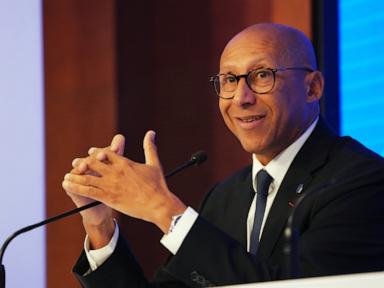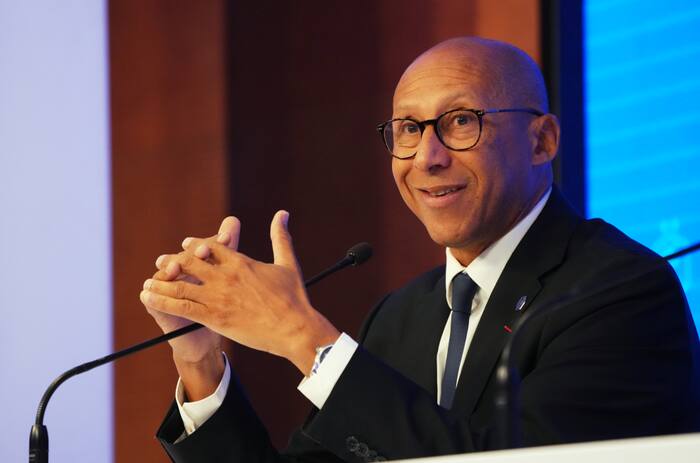
Challenging an incumbent FIFA president requires overcoming an institutionalized vote-gathering mechanism built on direct financial redistribution rather than ideological alignment. When Philippe Diallo, president of the French Football Federation (FFF), confirms a bid to unseat Gianni Infantino, the campaign is not a traditional political contest decided by public sentiment or media scrutiny. It is an institutional takeover attempt within a closed, one-member-one-vote cartel comprising 211 national member associations. To understand whether Diallo’s candidacy represents a viable structural threat or a symbolic European protest, one must analyze the mechanics of FIFA’s electoral college, the capital allocation strategies that insulate the incumbent, and the geopolitical fault lines dividing global football governance.
The Structural Asymmetry of the FIFA Congress
Most sports journalism frames a FIFA presidential race through the lens of Western European media narratives—focusing on governance scandals, tournament expansion controversies, or personal leadership styles. This analytical framework fails because Western European federations account for a small fraction of the electorate.
Under the FIFA Statutes, the presidency is decided by the FIFA Congress, where each of the 211 member associations holds exactly one vote. The structural reality of this system creates a profound asymmetry between economic contribution and political power:
- UEFA (Europe): 55 votes (26.1% of the electorate)
- CAF (Africa): 54 votes (25.6%)
- AFC (Asia): 47 votes (22.3%)
- CONCACAF (North, Central America, and the Caribbean): 35 votes (16.6%)
- OFC (Oceania): 11 votes (5.2%)
- CONMEBOL (South America): 10 votes (4.7%)
This distribution establishes the foundational law of FIFA politics: the nations that generate the vast majority of global football’s commercial revenue—primarily the top-tier European leagues and South American powerhouses—do not possess the voting bloc necessary to dictate executive leadership. A candidate can win the overwhelming support of the world’s premier footballing nations and still lose the election by a landslide.
To secure a first-round victory, a candidate requires a two-thirds majority (141 votes). If no candidate reaches that threshold, subsequent rounds require a simple majority (106 votes). Because UEFA and CONMEBOL combined represent only 65 votes, any viable challenger must construct a cross-confederation coalition capable of peeling at least 41 votes away from the incumbent across Africa, Asia, North America, and Oceania.
The Incumbency Moat and Financial Redistribution
Gianni Infantino’s durability since taking office in 2016 is rooted in a systematic restructuring of how FIFA distributes capital to its member associations. Prior to 2016, FIFA’s financial assistance programs were relatively modest and unevenly monitored. Infantino institutionalized a massive expansion of direct transfer payments through the FIFA Forward development program.
This mechanism functions as an economic moat around the presidency. By increasing direct funding cycles to hundreds of millions of dollars per four-year term—allocated equally to member associations regardless of their population, GDP, or footballing infrastructure—FIFA altered the incentive structure for smaller federations.
- Operational Dependency: For roughly 150 of the 211 member associations, national broadcast deals and domestic commercial sponsorships are negligible. FIFA Forward grants do not merely supplement their budgets; they constitute the primary source of operational liquidity, funding everything from administrative salaries to youth academies and stadium turf.
- Risk Aversion to Regime Change: When an incumbent reliably delivers predictable, multi-million-dollar capital injections to associations that would otherwise face insolvency, voting for a challenger introduces existential financial risk. A challenger must promise either greater financial distributions—which requires expanding commercial inventory—or superior governance, which carries zero immediate balance-sheet value for a cash-strapped federation in Oceania or the Caribbean.
- Tournament Expansion as Patronage: Expanding the Men’s World Cup from 32 to 48 teams, alongside the creation of an expanded 32-team FIFA Club World Cup, serves a dual purpose. Commercially, it unlocks new broadcast and sponsorship tiers. Politically, it increases the probability that mid-tier and developing football nations qualify for global finals, unlocking millions of dollars in participation prize money for their respective federations.
Any challenger entering this environment faces an immediate deficit. Diallo cannot out-promise Infantino on direct payouts without proposing an even more aggressive commercialization of the international match calendar—a move that would directly alienate the very European clubs and leagues that form his domestic power base in France.
Deconstructing the Challenger Profile
Philippe Diallo’s entry into the race must be evaluated through his institutional background. Unlike previous challengers who emerged from outside the established administrative apparatus or represented isolated protest movements, Diallo is a career sports administrator with deep roots in European football’s labor and governance structures.
Having led the Union des Clubs Professionnels de Football (UCPF) before ascending to the presidency of the FFF in 2023 following the departure of Noël Le Graët, Diallo possesses specific operational competencies:
- Institutional Legitimacy: The FFF is one of the most influential national federations globally, backed by two Men’s World Cup titles, a massive domestic talent pipeline, and significant commercial weight within UEFA. A candidacy originating from Paris carries automatic diplomatic standing that candidates from smaller associations lack.
- Labor and Calendar Literacy: Diallo’s background in representing professional clubs gives him granular expertise in the primary friction point of modern global football: the collision between domestic league schedules and FIFA’s expanding international window.
- Administrative Stability: During his tenure stabilizing the FFF after a period of acute internal governance crises, Diallo demonstrated an ability to manage institutional transitions without alienating commercial sponsors or government stakeholders.
However, these strengths are localized to the European ecosystem. They solve problems for French clubs, the Premier League, and UEFA, but they do not address the structural priorities of federations in CAF or the AFC. In fact, Diallo’s alignment with the interests of major European leagues acts as a liability in regions that view European club football as an extractive force that drains local talent while hoarding global broadcast revenues.
The Geopolitical Fault Lines of the Electorate
To map Diallo’s path to 106 votes, one must examine the internal dynamics of the six confederations and identify where fissures exist in Infantino’s coalition.
The European Bloc (UEFA)
UEFA is the natural base for a French challenger, yet it is far from monolithic. While Western and Northern European federations—including England, Germany, the Nordic nations, and France—have frequently clashed with FIFA over governance transparency, human rights due diligence for tournament hosts, and match congestion, Eastern and Southern European associations often maintain closer bilateral ties with Infantino’s administration. Infantino, a former UEFA General Secretary, understands the internal divisions of European football intimately. Securing all 55 UEFA votes is not automatic for Diallo; he would have to actively campaign merely to consolidate his own home confederation.
The African Pivot (CAF)
CAF, with 54 votes, is the ultimate kingmaker in every FIFA election. Historically, African football leadership voted as a unified bloc under long-serving confederation presidents. Under Patrice Motsepe, CAF has maintained a closely aligned, cooperative relationship with FIFA, heavily supported by joint infrastructure initiatives and the creation of the African Football League. For Diallo to fracture the CAF bloc, he cannot rely on historical Francophone ties alone. While France shares deep linguistic and footballing links with numerous West and North African nations—many of whose national team players are developed within the French academy system—geopolitical alignment in sports governance rarely follows colonial-era linguistic lines anymore. African federations vote based on tangible investment commitments and representation within FIFA’s executive committees.
The Asian and North American Alignments (AFC and CONCACAF)
The AFC (47 votes) has become the center of gravity for global sports capital, driven by sovereign wealth investments in football infrastructure, club acquisitions, and tournament hosting rights across the Gulf states. The decision to award the 2034 Men’s World Cup to Saudi Arabia solidified an institutional alignment between FIFA’s executive leadership and the most powerful financial actors within the AFC. Penetrating this bloc is extraordinarily difficult for a European candidate whose platform is implicitly built on curbing the geopolitical expansion of global football tournaments.
Similarly, CONCACAF (35 votes) is deeply invested in the operational success of the 2026 Men’s World Cup hosted across the United States, Canada, and Mexico, as well as the expanded Club World Cup hosted in the United States. Victor Montagliani, president of CONCACAF and a FIFA Vice President, has consistently operated within Infantino’s core strategic circle.
The Three Pillars of a Viable Insurgency
If Diallo’s campaign is to move beyond a symbolic protest vote, it must execute a disciplined strategic framework built on three specific operational pillars. Without these, the campaign will stall at roughly 40 to 60 votes.
1. The Calendar Protection Coalition
The most acute economic threat to established football ecosystems is player burnout and asset devaluation caused by an overloaded match schedule. Domestic leagues and player unions (such as FIFPRO) are locked in legal and regulatory battles with FIFA over the unilateral imposition of new tournaments. Diallo can position his candidacy as the institutional defender of the domestic game. By uniting national associations whose domestic leagues are losing commercial value to FIFA’s global properties, he can build a coalition around a clear economic thesis: preserving the scarcity and value of elite football requires capping international tournament expansion. This appeals directly to UEFA, CONMEBOL, and major leagues within CONCACAF and the AFC.
2. Decentralized Revenue Sharing
To neutralize the FIFA Forward moat, a challenger cannot simply attack the program; they must propose a superior capital allocation model. Diallo’s team would need to construct a transparent, rules-based revenue-sharing formula that guarantees developing nations their current baseline funding while removing executive discretion from how supplementary development grants are awarded. By framing FIFA’s current financial distribution as overly centralized and politically discretionary, a challenger can argue that codifying grants into permanent statutory percentages protects smaller federations from arbitrary cuts—offering them greater long-term financial security than the incumbent’s patronage model.
3. Governance De-risking for Commercial Partners
Corporate sponsors and major broadcasters face mounting reputational risk when associating with opaque governance structures and controversial host selection processes. A challenger from a major G7 economy can pitch a return to strict, verifiable compliance standards, independent ethics oversight, and transparent bidding protocols. While governance reform alone does not win votes in the FIFA Congress, it becomes a potent weapon if the challenger can demonstrate that commercial growth is plateauing in Western markets due to institutional distrust, thereby threatening the long-term size of the revenue pie available for redistribution.
Limitations and Structural Constraints
Any objective assessment of this race must account for the severe structural barriers facing an opposition candidate.
First, the timeline advantage belongs entirely to the incumbent. An incumbent FIFA president campaigns continuously for four years using FIFA’s own institutional budget, traveling globally to inaugurate stadiums, sign memorandums of understanding, and attend confederation congresses. A challenger must self-fund their campaign infrastructure while simultaneously fulfilling their duties as a national federation president, operating under strict FIFA electoral ethics rules regarding gift-giving and travel.
Second, the nomination threshold creates early friction. Under FIFA electoral regulations, a candidate must secure formal written nominations from at least five member associations within a strict deadline prior to the Congress. While Diallo can easily clear this hurdle through European allies, public declarations of support force federations to reveal their hand early, exposing them to diplomatic pressure or the loss of discretionary committee appointments if the incumbent wins re-election.
Third, term-limit mechanics complicate the strategic horizon. Under FIFA’s own statutes regarding presidential term limits—and the specific legal interpretations surrounding when Infantino’s first partial term began in 2016—the electoral runway is tightly defined. Challenging an entrenched incumbent during a cycle where major commercial contracts for the 2026 and 2030 World Cups are already locked in means the challenger is asking the electorate to change leadership after the primary financial windfalls of the cycle have already been secured, rather than during a moment of acute financial crisis.
The Strategic Play for the Opposition
Philippe Diallo’s confirmation of a presidential bid immediately alters the political calculus inside Zurich, even if the mathematical path to 106 votes remains steep. Uncontested elections allow an incumbent to govern without formal scrutiny, turning the FIFA Congress into a purely ceremonial ratification body. By forcing a contested election, Diallo compels Infantino to expend political capital, lock in commitments, and defend his record on calendar expansion and governance transparency on a public stage.
For Diallo’s campaign to maximize its leverage, the strategic objective must be bifurcated:
- Immediate Phase (Consolidation): Lock down a unified block of at least 45 to 50 votes across UEFA and select allies in CONMEBOL and CONCACAF before engaging in broader diplomatic outreach. Entering negotiations with African and Asian blocs without a solid European foundation signals weakness and invites defections.
- Endgame Phase (Institutional Extraction): If internal polling indicates that the 106-vote threshold remains out of reach six weeks prior to the Congress, Diallo must avoid a humiliating, low-vote defeat that diminishes the FFF’s standing. Instead, he should use his unified European voting bloc as a bargaining chip to extract concrete statutory concessions from the incumbent—specifically, binding caps on future tournament expansions, guaranteed seats for domestic league representatives on key FIFA decision-making committees, and formalized protection of the domestic match calendar—in exchange for broader institutional alignment.
In FIFA politics, a well-organized challenger who commands a disciplined minority bloc holds enough leverage to rewrite the operational rules of the game, even without capturing the presidency.