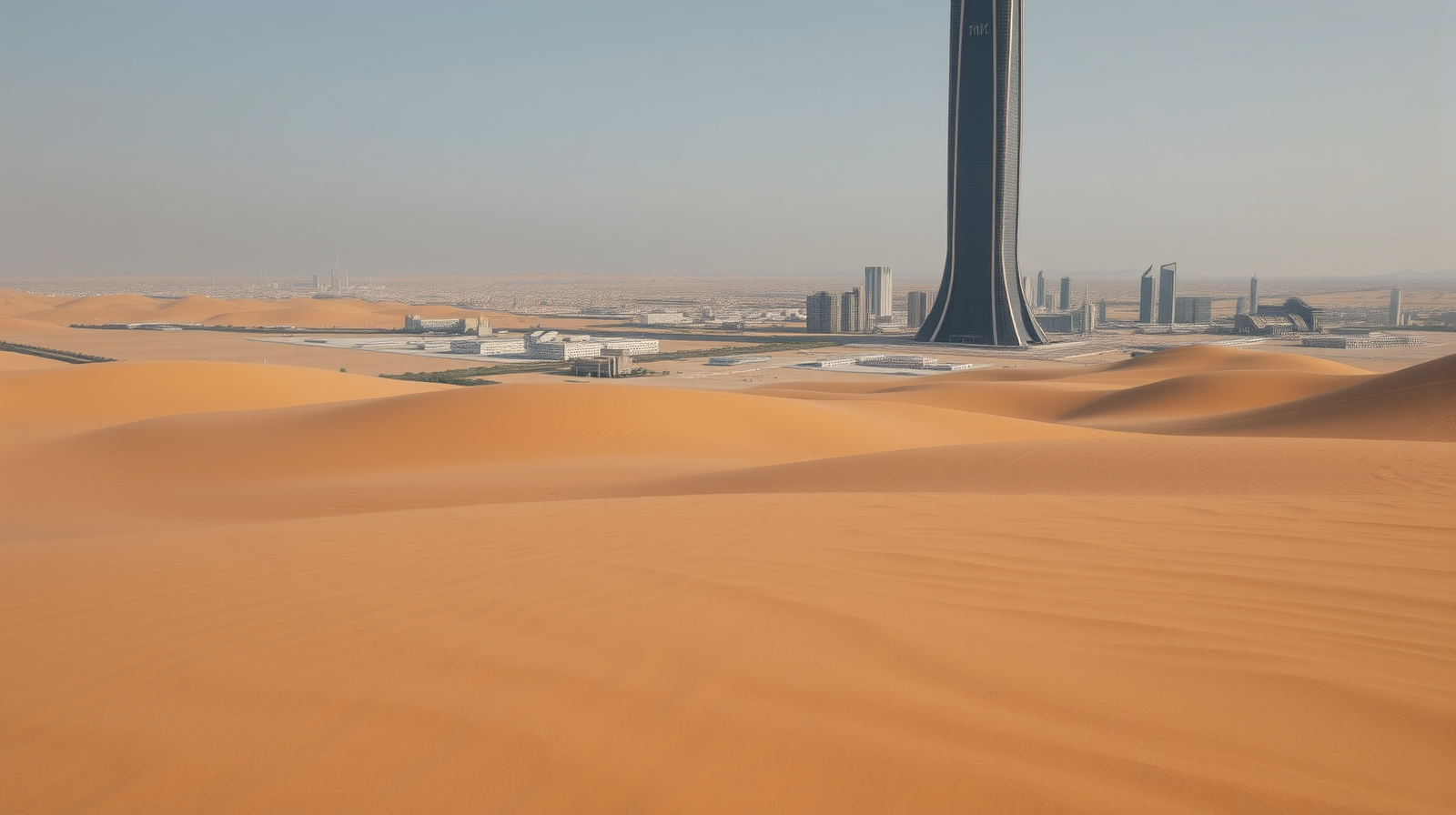
Egypt is doing something wild. The country is building an entire metropolis from scratch in the middle of a barren desert. Located about 45 kilometers east of Cairo, this massive project is officially known as The New Capital. It isn't just a collection of government buildings and residential blocks. It is an urban experiment on a scale the world rarely sees.
At the absolute center of this grand plan stands the Iconic Tower. It rises 1,293 feet above the sand. That makes it the tallest building in Africa. To put that in perspective, it beats out every skyscraper in London, Paris, and Johannesburg. It is designed to look like a pharaonic obelisk, with a glass exterior meant to mimic an ancient crown.
But why build a new city from nothing when Cairo already exists?
The truth is that Cairo is choking. The historic capital holds over 20 million people. It's crowded, noisy, and struggling under the weight of its own population. The Egyptian government designed this new city to take the pressure off. It is meant to house up to seven million residents when fully completed. This isn't a distant dream either. President Abdel Fattah al-Sisi already took his constitutional oath here, and the government has started moving thousands of employees into their new offices.
Moving the Power Base Out of Cairo
You can't understand this project without looking at how the state is reshaping its entire power structure. The city isn't just for show. It is the new, functioning seat of the Egyptian government.
In mid-2026, the government reached a massive milestone by officially inaugurating the "Octagon." This is a sprawling military headquarters complex that spans 34 square miles. It is an integrated center for crisis management and smart command, designed to replace the old defense ministries in downtown Cairo.
Here is what makes up the core of this desert metropolis:
- The Government District: Home to dozens of ministries and the new parliament building.
- The Central Business District: A cluster of 20 high-rises surrounding the Iconic Tower.
- The Green River Park: A massive strip of green space and artificial lakes designed to mimic the path of the Nile.
- The Sports City: Featuring a 93,000-seater national stadium with a roof shaped like Queen Nefertiti’s headdress.
People often wonder if normal citizens can actually live here. Right now, it's a mixed bag. The residential districts are open, and the first waves of residents are moving in. But it's expensive. While the government promises affordable housing blocks, the glittering towers and luxury compounds mean this city caters heavily to the wealthy and corporate elite.
The High Cost of Dreaming Big
Building a smart city in the desert isn't cheap. The estimated cost for the first phases alone sits around $58 billion. This massive spending has triggered intense debate inside and outside of Egypt.
Critics argue that the country is taking on too much debt for a luxury project. Egypt's foreign debt has climbed significantly over the last decade. The country has relied on billions of dollars from global financial institutions to keep things stable. Many everyday citizens wonder why billions are going into desert skyscrapers when older neighborhoods in Cairo need better schools, roads, and hospitals.
There's also the water problem. Egypt gets almost all its fresh water from the Nile. Pumping water out to a desert city with artificial lakes and green parks takes a massive amount of engineering. Planners are using recycled agricultural wastewater and constructing massive treatment plants to keep the city running without draining the Nile completely.
If you want to see how this massive urban transformation looks on the ground, check out this detailed breakdown of the New Administrative Capital Megaproject, which explores the scale and risks of the city.
To get a true sense of the scale, you have to look at the numbers. The city covers 700 square kilometers. That is roughly the size of Singapore. It features a theme park planned to be four times the size of Disneyland. Siemens is currently helping build a high-speed rail line to connect the capital to both the Mediterranean and the Red Sea coasts. It's a staggering logistical puzzle. The project is a high-stakes gamble. If it works, it completely redefines Egypt's economy. If it fails, the financial burden will last for generations.