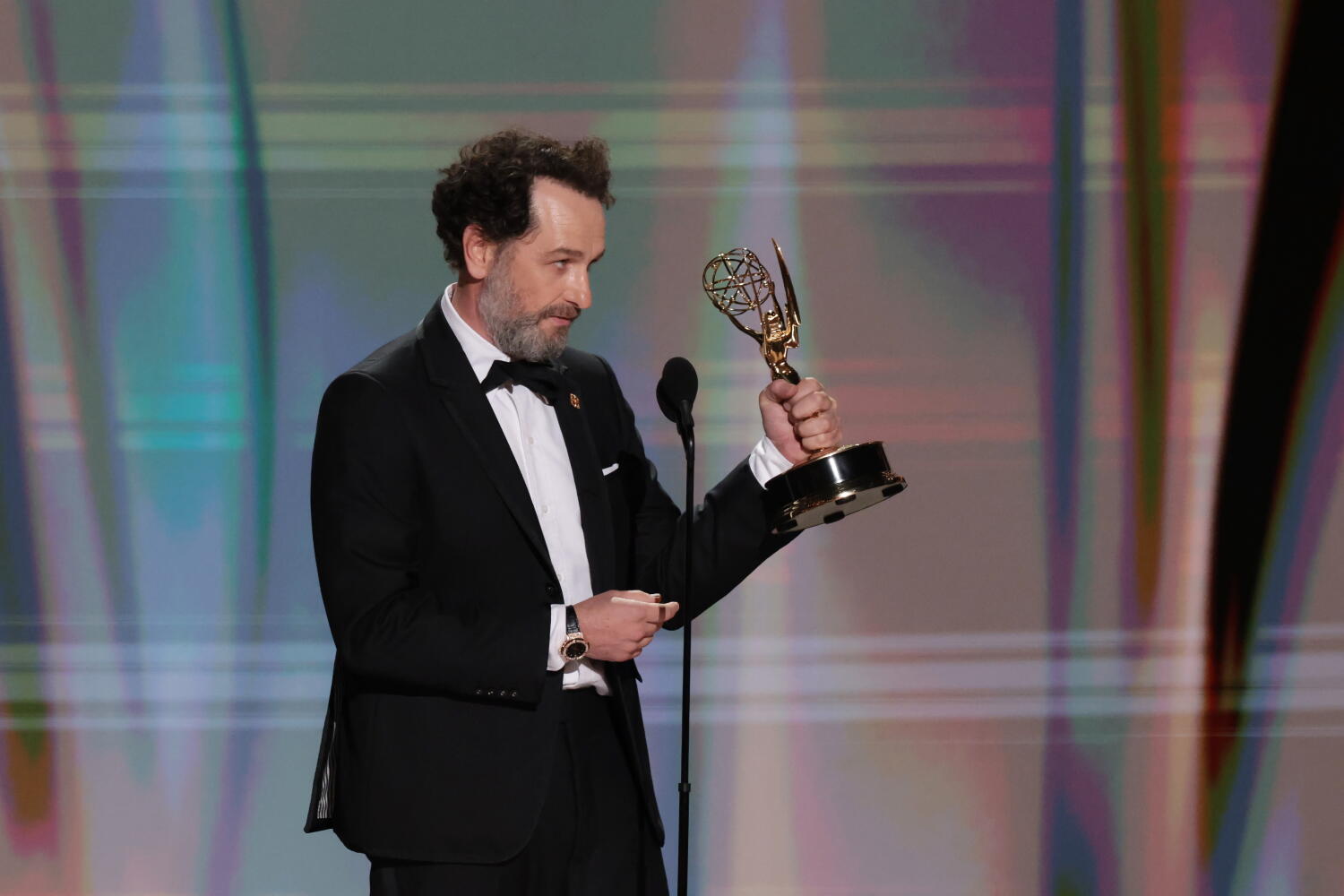
Critical recognition within the contemporary television ecosystem operates as a high-stakes capital allocation mechanism rather than a purely aesthetic exercise. When an industry veteran secures a primary performance accolade after decades of cumulative output, the event triggers measurable shifts across studio greenlight formulas, talent agency packaging economics, and residual valuation models. Industry observers frequently attribute such milestones to emotional narratives of perseverance or overdue artistic validation. That framing obscures the underlying structural mechanics. Recognition serves as a quantifiable de-risking instrument for risk-averse financiers operating in a compressed content market. Deconstructing the mechanics behind award acquisition reveals how prestige metrics translate directly into leverage, platform valuation stability, and intellectual property positioning.
The television landscape underwent a structural bifurcation over the past decade. The proliferation of subscription video-on-demand platforms initially expanded volume, creating an oversupply of narrative product that fractured audience attention spans and complicated traditional measurement systems. Within an over-saturated market, discoverability costs escalate exponentially. Content creators and platform executives face an acute optimization problem: how to pierce consumer indifference without incurring unsustainable marketing expenditures.
Prestigious industry accolades function as an efficient signaling mechanism to solve this coordination failure. When voting bodies representing thousands of industry peers single out a performance, they reduce consumer search friction. More importantly, they provide institutional validation to corporate boards and institutional investors who evaluate content portfolios on risk-adjusted returns rather than purely creative merit. The accumulation of major awards shifts an actor from a variable cost component in production budgets to an appreciating brand asset capable of commanding equity participation or first-look production deals.
The traditional trajectory of a character actor differs fundamentally from that of a traditional marquee movie star. Character actors build equity through long-tail consistency, inhabiting secondary or supporting roles that anchor complex narrative arcs across multiple seasons. In the case of Rhea Seehorn's career progression across critical prestige vehicles, the valuation curve followed a non-linear trajectory. For years, industry insiders recognized the technical precision of her work, yet mass market visibility and executive compensation lagged behind actual output quality.
This creates a structural inefficiency in talent markets. Studios extract maximum dramatic utility from versatile performers while pricing them below their replacement cost. The eventual acquisition of a primary lead actress Emmy alters this pricing equilibrium instantly. The award acts as an external shock that recalculates the market-clearing rate for future attachments.
To understand why this inflection point matters for industry economics, one must examine the three primary pillars governing talent valuation in prestige drama:
The first pillar is fractional audience retention. Unlike broad comedies or reality formats designed for broad acquisition, prestige dramas rely on passionate, highly engaged cohorts who monitor critical consensus. An acclaimed lead performance acts as an anchor that stabilizes subscription renewal rates during inter-season hiatuses. Platform churn models account for critical acclaim as a primary dampening factor against subscriber cancellation.
The second pillar is international format licensing and syndication defensibility. International buyers evaluate foreign acquisitions through the lens of critical credentials. A recognized lead performance mitigates cultural translation risks, signaling to overseas distributors that the underlying intellectual property possesses universal dramatic integrity. This directly impacts upfront licensing fees and secondary market syndication pricing.
The third pillar is internal studio signaling. Within corporate hierarchies, content executives must justify substantial budget allocations to risk-averse finance committees. Securing top-tier accolades provides executives with political cover and empirical justification for continuing expensive, prestige-oriented narrative projects that might otherwise fail standard quantitative viewership thresholds.
The mechanics of academy voting behavior themselves deserve rigorous economic scrutiny. Voting members of major television academies are practitioners—actors, writers, directors, and producers—who evaluate work through a lens of technical execution. Over multi-season runs, voting inertia often creates a ceiling for performers working within established ensembles, where split focus among multiple nominated cast members dilutes voting concentration.
When a narrative shifts to center a single protagonist or when a performer's arc achieves sufficient narrative autonomy, voting consolidation becomes mathematically feasible. The breakthrough moment relies on a convergence of three distinct variables: narrative prominence, timing within the broader competitive slate, and the conscious deployment of targeted campaign capital by distributing studios.
Studio campaign expenditures represent a significant capital outlay. Prestige television campaigns involve sophisticated trade advertising, targeted screenings, panel appearances, and strategic public relations deployment. Industry analysts often mischaracterize these campaigns as superficial lobbying efforts. In practice, they function as informational campaigns designed to remind voting blocks of specific technical achievements executed months prior.
The return on investment for a major Emmy campaign is substantial. A winning campaign immediately increases the backend valuation of the series library, enhances the global profile of the streaming service or network hosting the asset, and elevates the commercial value of the talent for future packaging negotiations. Consequently, studio expenditure on awards campaigns operates as a high-yield capital investment rather than a discretionary marketing expense.
The downstream market implications of a major win extend far beyond an individual trophy or a temporary spike in media coverage. When an actor who has spent decades building a reputation for meticulous character work secures a lead actress Emmy, it recalibrates industry casting algorithms. Casting directors and showrunners utilize historical award data as a heuristic to minimize financial risk when greenlighting new properties. A validated lead actor commands immediate project momentum, transforming unfinanced scripts into prioritized development packages.
Furthermore, this dynamic influences the bargaining power of talent representation agencies. Agencies leverage critical accolades during contract renegotiations for ongoing series or when structuring overarching talent deals with major studios. The presence of a recognized, award-winning lead transforms a project's financial risk profile, allowing creators to demand higher ownership stakes, executive producer credits, and more favorable backend profit participation structures.
The ongoing evolution of distribution models—transitioning from traditional cable windows to global streaming algorithms—places an even higher premium on prestige signals. As algorithmic recommendations become increasingly homogenized, human-curated markers of excellence such as peer-voted awards serve as vital differentiators. They cut through the noise of automated content delivery systems, offering audiences a trusted proxy for quality and depth.
The strategic trajectory moving forward requires examining how talent and production entities capitalize on this institutional validation. The primary operational objective for a performer following a major award milestone is immediate portfolio diversification coupled with strategic brand positioning. Rather than accepting high-volume, low-margin commercial work that might dilute the newly established prestige equity, sophisticated talent management teams pivot toward executive producer roles and proprietary intellectual property development.
By securing creative control and ownership stakes in upcoming projects, the newly validated talent captures a larger share of the economic value they generate. Studios and platforms, eager to secure output from freshly minted award-winning creators, are increasingly willing to concede equity and backend participation. This shift alters the traditional power dynamic between labor and capital in television production.
The quantitative realities of modern media economics dictate that prestige is no longer a luxury good for networks seeking cultural prestige; it is a vital economic stabilizer in a volatile market. As production budgets face tightening scrutiny from corporate boards prioritizing profitability over subscriber growth at all costs, the value of proven, critically validated talent increases.
The acquisition of a lead acting Emmy by a foundational practitioner of dramatic craft is not merely an artistic milestone. It is a market correction that re-prices talent, validates strategic studio capital allocation, and establishes a new benchmark for how long-tail industry persistence converts into enduring commercial and creative leverage. The mechanism is deliberate, measurable, and fundamentally economic.