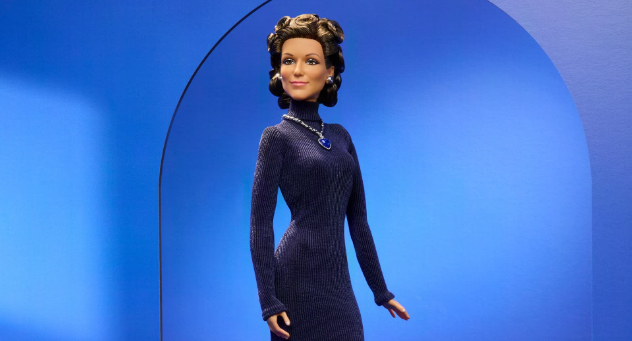
Celebrity licensing deals anchored to a single archival outfit rarely succeed by accident; they operate as engineered nostalgia engines designed to convert decades-old cultural memory into high-margin collectible demand. In the case of a Céline Dion doll modeled after her 1998 Academy Awards appearance, the commercial logic rests on pairing an unmistakable pop-culture touchstone with a tightly bounded collector audience. Standard entertainment coverage treats a release like this as a celebratory milestone or a routine fashion tribute. A rigorous strategy audit shows something far more mechanical: the doll functions as a physical artifact of retro-equity, where an all-white suit-and-sunglasses silhouette acts as a visual shortcut to late-1990s peak visibility, institutional prestige, and personal resilience.
To evaluate why single-look celebrity dolls command attention long after the original event, we have to separate verified licensing mechanics from educated hypotheses. It is a known structural fact in consumer licensing that intellectual property owners and toy manufacturers rely on iconic wardrobe moments to give a static plastic figure immediate narrative identity. Without a distinct costume, a likeness doll risks looking generic or overly tied to a fleeting news cycle. What remains an educated hypothesis—absent public sell-through figures or wholesale contract terms—is the exact share of demand driven by lifelong music fans versus adult doll collectors versus casual gift buyers. Even without proprietary sales numbers, the underlying value chain can be mapped with precision through the drivers of archival memory, the cost structure of likeness production, and the feedback loops between live performance and merchandise velocity.
The Three Pillars of Archival Wardrobe Equity
A single red-carpet outfit carries commercial weight only when it satisfies three conditions simultaneously: visual distinctiveness, cultural durability, and emotional transferability. When a celebrity wears an outfit that breaks from standard eveningwear norms, the garment becomes a compressed symbol of a specific era. The 1998 Oscars look works as a licensing anchor because its silhouette is immediately legible at scale—tailored white menswear-inspired lines paired with dark eyewear—allowing a mass-produced doll to read as the subject even in miniature form.
The first pillar is visual compression. Miniature sculptures lose fine facial detail quickly at standard retail price points, especially when produced at scale rather than as bespoke art pieces. Strong wardrobe choices compensate for scale compression by relying on high-contrast color blocks, sharp lapels, or signature accessories that hold their shape in molded plastic and stitched fabric. When an outfit relies on subtle textile draping or micro-embroidery, downscaling flattens the design. High-contrast tailoring preserves recognition across packaging windows, social feeds, and shelf displays.
The second pillar is temporal anchoring. A look tied to a major cultural broadcast—such as the Academy Awards during a global blockbuster soundtrack era—sits inside a shared collective timeline. Rather than asking buyers to recall a random street style moment, the product taps into an era when mass television audiences watched the same broadcast simultaneously. That shared memory lowers cognitive friction at checkout because the buyer already holds the mental reference image.
The third pillar is narrative transfer. Over nearly three decades, public perception of an artist evolves through career peaks, touring cycles, health disclosures, and public comebacks. A doll rooted in a past triumph allows audiences to project current admiration backward onto an earlier moment of poise and command. That mechanism explains why legacy pop figures and awards-show moments retain strong affinity across age cohorts: the object carries both historical memory and present-day goodwill.
How Licensing Economics Shape Collectible Design
Behind every celebrity doll sits a strict unit-economics equation that governs sculpting fidelity, packaging complexity, run size, and retail pricing. Licensing is not free publicity; it is a structured risk-sharing arrangement where upfront guarantees, royalty rates, approval cycles, and minimum order quantities shape the final physical product.
The Cost Function of Likeness and Tooling
Developing a celebrity doll introduces fixed costs that do not exist for generic fashion dolls. Sculpting a recognizable head mold requires iterative approval rounds between the manufacturer's design team and the talent's representatives or likeness rights holders. Each revision adds tooling time, prototype expense, and schedule risk.
- Sculpting and likeness approval: Multi-stage head and expression sign-offs create bottlenecks if schedules slip across management, legal, and brand teams.
- Custom costume patterning: Tailoring miniature jackets, trousers, or accessories requires specialized sewing operations that cost more per unit than simple molded bodices.
- Packaging engineering: Collector-oriented boxes with display windows, graphic storytelling, and protective inserts raise per-unit material and freight costs compared to basic blister packs.
- Minimum order quantities: Factory production lines require volume thresholds to amortize steel mold creation, forcing brands to balance inventory risk against sell-out scarcity.
One operational bottleneck appears frequently in licensed collectibles: approval latency versus trend windows. When a product takes twelve to eighteen months from concept to shelf, an impulse driven by a viral clip can cool before inventory arrives. Anchoring a release to a perennial archival icon reduces that timing hazard because the reference point does not expire next quarter.
Segmenting the Buyer Pool
A celebrity collectible rarely appeals to a single monolithic shopper. Instead, demand clusters into distinct buyer cohorts with different price sensitivities and holding behaviors.
- Core artist superfans: Buyers motivated by biographical affinity and career milestones, often purchasing to display alongside vinyl records, concert posters, or tour books.
- Adult doll and fashion collectors: Buyers focused on articulation, tailoring accuracy, face paint precision, and edition pedigree rather than the celebrity's music catalog alone.
- Nostalgia and gift shoppers: Occasional buyers drawn in by recognizable pop-culture branding around holidays, birthdays, or milestone anniversaries.
A second structural constraint emerges right here: competing expectations between casual fans and hardcore collectors. A casual buyer wants an accessible price point and instant recognition, while dedicated collectors scrutinize proportions, fabric weight, hair rooting, and accessory detail. Trying to satisfy every tier on a single SKU can leave hardcore collectors unimpressed while pushing retail price past casual impulse thresholds.
Cause-and-Effect Loops in Pop-Culture Merchandising
Entertainment coverage often treats a celebrity doll announcement as a standalone event. In practice, merchandise launches interact with streaming behavior, catalog discovery, social media virality, and live cultural moments through reinforcing cause-and-effect loops.
When a recognizable celebrity item surfaces online, visual shareability drives organic reach among users who never search for toy releases. High-contrast imagery performs especially well in algorithmic feeds because viewers grasp the reference in under two seconds. That attention can ripple outward: a post about a 1998 Oscars outfit prompts viewers to revisit red-carpet clips, rewatch classic performances, or queue catalog tracks from that era.
At the same time, visibility without conversion discipline leaks value. If a launch generates spikes in search and social mentions without clear purchase pathways, stock availability, or clear differentiation between collector tiers, attention dissipates quickly. Secondary-market resellers also alter the dynamic: rapid sell-outs can validate scarcity and boost prestige, yet steep markups can alienate everyday fans who never had a realistic shot at retail pricing.
What Everyday Questions Reveal About Demand
Search behavior around celebrity collectibles usually centers on practical buyer questions: how the doll looks compared to the original outfit, whether it is aimed at collectors or children, when and where it can be bought, and whether it will hold value. Structurally, those questions map onto three commercial tests:
- Fidelity test: Does the physical execution capture the defining silhouette and attitude of the original appearance without looking like a generic costume swap?
- Positioning test: Are messaging, packaging, and pricing aligned around display-grade fandom or play-grade accessibility?
- Distribution test: Does the release strategy match real demand depth—wide enough for genuine fans to participate, yet disciplined enough to avoid dead stock?
Operational Risks and Strategic Limits of Nostalgia Releases
Even well-crafted nostalgia licensing carries real limits. Relying heavily on past glory can create a backward-looking brand posture if not paired with active cultural relevance. If an artist or property has no current touchpoint in public conversation, a retro product can feel purely backward-facing rather than part of an ongoing story.
Licensing deals also carry reputational coupling. Because the product bears a real person's likeness and signature moment, shifts in public sentiment around the artist directly affect how the merchandise is received. Conversely, quality flaws on the physical doll—such as an off-mark facial sculpt or cheap-feeling fabric—can reflect poorly on both the manufacturer and the talent brand. No merchandise launch is a silver bullet for long-term brand building; it can amplify existing equity, but it cannot manufacture affection where none exists.
Strategic Play for Licensing and Brand Teams
For brand managers, licensors, and consumer product teams evaluating archival celebrity releases, the highest-leverage move is to treat the wardrobe moment as a narrative system rather than a single SKU. Plan the release around three coordinated elements: pair the hero figure with tightly scoped companion touchpoints (such as curated archival visuals, editorial storytelling around the era's styling, and clear tiering between collector and mainstream editions), lock down likeness and costume approvals early enough to protect launch momentum, and measure success beyond opening-week sell-through by tracking catalog engagement, repeat collector participation, and brand sentiment over the full campaign window.


