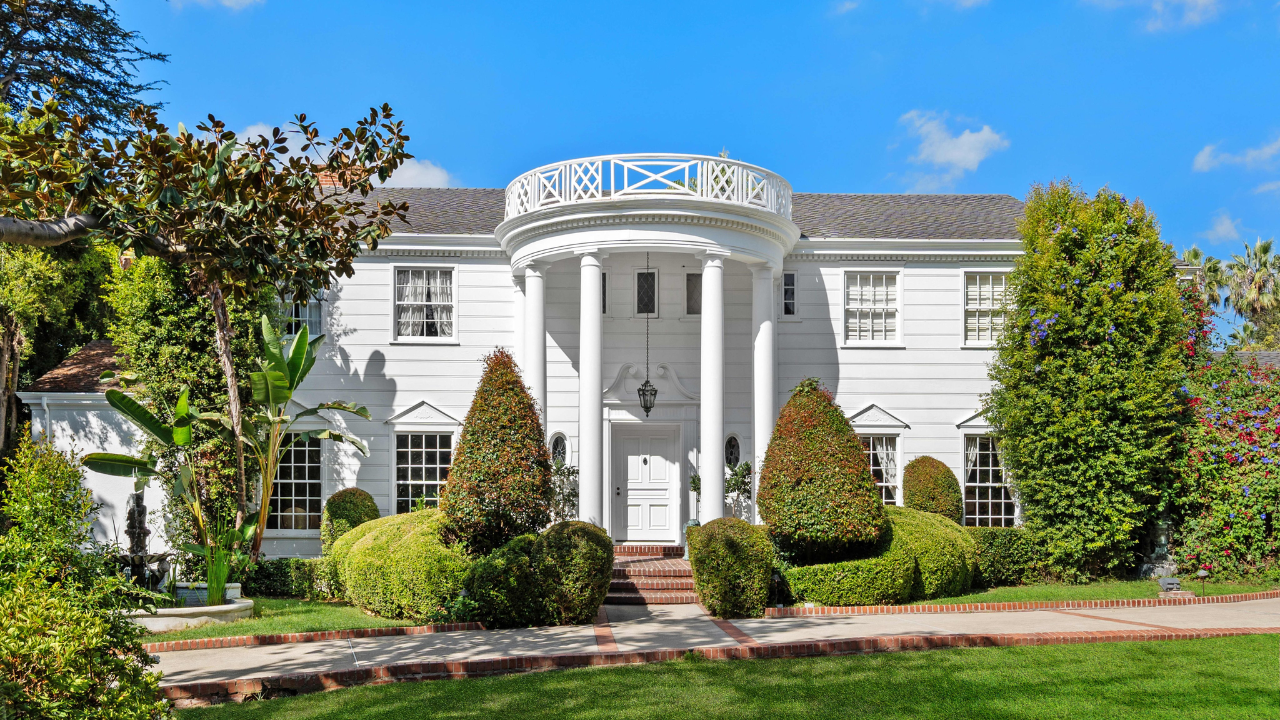
High-end residential real estate valuation operates under a distinct set of economic rules that diverge sharply from standard commercial or multi-family asset pricing. When a marquee property—such as the Los Angeles estate associated with Will Smith’s The Fresh Prince of Bel-Air—undergoes a severe price reduction from $30.4 million down to $22.95 million alongside the looming threat of demolition, it exposes the vulnerabilities of single-asset luxury holdings. This situation is not merely a localized curiosity of the Brentwood or Bel-Air submarkets; it serves as a case study in asset liquidity traps, land-to-improvement value ratios, and the mispricing of cultural capital in physical structures.
The Cost Function of Luxury Age and obsolescence
Standard real estate depreciation accounts for wear and tear, structural aging, and shifting neighborhood demographics. In the ultra-prime tier, however, depreciation follows an accelerated, non-linear trajectory driven by functional and architectural obsolescence.
A custom-built estate tailored to the hyper-specific tastes of a high-net-worth owner or designed around a specific architectural epoch faces a steep liquidity discount upon resale. The cost function of luxury real estate obsolescence is defined by two primary variables:
- Customization Penalty: The capital expenditure required to strip away bespoke finishes, hyper-personalized layouts, and dated luxury markers exceeds normal renovation costs. Buyers in the $20M+ bracket demand turnkey perfection aligned with contemporary architectural minimalism, not historical preservation of a celebrity's former television backdrop.
- Carrying Cost Friction: Property taxes, security, insurance, and maintenance on a sprawling estate generate an aggressive negative cash flow drag. As these carrying costs accumulate against a stagnant listing, the opportunity cost of tied-up capital forces aggressive price corrections to trigger market liquidity.
When a property lingers on the market, it acquires market stigma. Prospective buyers begin to discount the asset not just for its physical attributes, but because a prolonged days-on-market metric signals a misaligned seller expectation. The recent 25 percent price cut on the Fresh Prince estate is a mathematical response to this friction, attempting to reset the pricing threshold to match actual buyer demand rather than historical prestige.
The Land versus Improvement Value Divergence
A critical dynamic in high-value real estate transactions is the shifting ratio between land value and improvement value. As properties age, the physical structure depreciates while prime land value typically appreciates, assuming micro-location stability. Eventually, a tipping point occurs where the improvement value approaches zero, or becomes negative when factoring in demolition costs.
The credible threat of demolition associated with this estate highlights an economic reality: the physical structure has ceased to be an appreciating asset and has transitioned into a liability.
- The Demolition Threshold: When the cost of modernizing a legacy layout to meet contemporary luxury standards exceeds the cost of tearing it down and building from scratch, the property's valuation must be calculated purely on raw land value plus permits and entitlements.
- Entitlement Premiums: In supply-constrained enclaves like Los Angeles, securing permits, navigating environmental reviews, and managing zoning restrictions represent immense capital and time investments. If the existing footprint permits a larger or better-positioned build than current zoning codes would allow, the structure retains salvage value as a grandfathered envelope. If zoning laws have tightened, demolition might destroy valuable square footage rights, trapping the owner between an unmarketable interior and a restrictive building code.
This tension explains why high-profile properties often face the wrecking ball. The utility of the land vastly outstrips the utility of the bricks, mortar, and celebrity provenance attached to them.
Cultural Capital Discounting
A common fallacy in luxury asset pricing is the belief that cultural provenance or media association adds permanent financial value to real estate. While pop-culture notoriety—such as serving as the exterior or setting for an iconic 1990s sitcom—generates initial marketing velocity and high visibility, it rarely translates into a structural valuation premium among ultra-high-net-worth buyers.
In fact, cultural capital often introduces negative externalities:
- Privacy Deficit: Properties with high public recognition attract constant tourist traffic, security risks, and paparazzi presence, which directly undermines the core utility sought by luxury buyers: absolute privacy and sanctuary.
- Demographic Shift in Buyer Intent: The cohort of buyers capable of purchasing a $23M+ estate consists largely of tech founders, private equity partners, and international industrialists. For these buyers, the cultural relevance of a television show from decades past holds zero economic weight. They evaluate square footage per dollar, ceiling heights, seismic retrofitting, smart-home integration, and view corridors.
When a listing relies heavily on its pop-culture pedigree to sustain an inflated price, it signals a weak fundamental value proposition. Once the novelty-driven buyer pool is exhausted, the asset must be repriced to compete purely on underlying square footage and location metrics.
Strategic Capital Allocation and Exit Velocity
Analyzing the trajectory of distressed ultra-prime assets reveals the mechanics of capital preservation in real estate portfolios. Sellers who delay price adjustments fail to account for the time value of money locked inside an illiquid asset. By dropping the price by over 25 percent, the ownership syndicate or seller is recognizing that capital redeployed into yielding assets or alternative investments generates a higher internal rate of return than holding out for a legacy price point that the current macroeconomic environment will not support.
The ultimate valuation floor for such properties is dictated by replacement cost minus demolition friction, adjusted for local market absorption rates. As inventory matches demand at lower price points, the property transitions from a speculative trophy asset to a raw development opportunity.
To optimize liquidity in this tier, the strategic play requires stripping emotional valuation metrics, decoupling historical fame from baseline market appraisal, and pricing ahead of the downward curve rather than chasing it through incremental, reactive reductions.