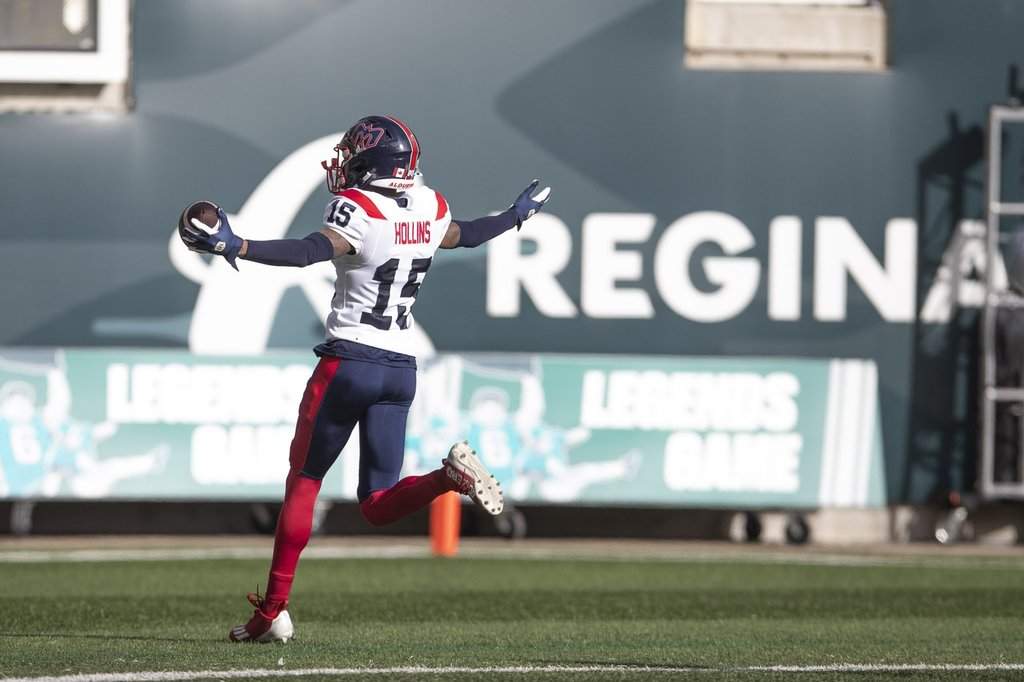
The retirement of a veteran wide receiver in the Canadian Football League (CFL) rarely stems from a single isolated decision. Instead, it represents the mathematical intersection of physical depreciation, salary cap compression, and the structural realities of the three-down game. When a pass-catcher—such as a veteran receiver like Hollins—exits the league, standard sports reporting treats the event as a simple transaction: a player steps away, and a roster spot opens. This surface-level framing misses the underlying operational mechanics driving front-office roster construction and player longevity in Canadian football. Understanding why receivers retire when they do requires analyzing the CFL’s unique labor economics, the physical toll of the wider field, and the replacement-level calculus used by general managers.
The Three Pillars of CFL Receiver Attrition
To evaluate a receiver's exit from the league, analysts must separate emotional narratives from structural pressures. Three primary variables dictate the lifespan of an import or national wide receiver in the CFL: salary cap architecture, spatial wear-and-tear, and the developmental pipeline of replacement talent.
1. Salary Cap Architecture and the Veteran Tax
The CFL operates under a strict, hard salary cap that forces general managers to optimize every dollar allocated to non-quarterback positions. Unlike leagues with massive broadcast revenues that absorb veteran contract escalations, the CFL penalizes longevity unless a player produces at an elite, irreplaceable tier.
- Guaranteed Money Scarcity: Most CFL contracts feature minimal long-term guarantees, effectively functioning as one-year options tied to training camp health and mid-season performance.
- The Veteran Minimum Trap: Once a receiver accrues enough service time to command a higher base salary, their cap hit rises faster than their marginal on-field value. Front offices routinely release or decline to re-sign productive veterans simply to reallocate that cap space toward a starting quarterback or pass rusher.
- Incentive-Heavy Structures: Veteran contracts increasingly rely on playing-time and statistical incentives. If a receiver suffers a minor injury early in the season, they lose the ability to hit those thresholds, reducing their effective compensation to a level where the physical risk outweighs the financial return.
2. Spatial Mechanics and Cumulative Trauma
The physical demands placed on a CFL wide receiver differ fundamentally from those in four-down American football. The Canadian field—110 yards long by 65 yards wide, with 20-yard end zones—creates vastly different biomechanical stresses.
The primary mechanism of attrition is the waggle—the pre-snap unlimited motion allowed for offensive backs and receivers. While the waggle gives receivers a massive spatial advantage against defensive backs, it also means receivers hit the line of scrimmage at full sprinting speed on nearly every play. Over an 18-game regular season plus playoffs, the cumulative mileage logged in pre-snap motion and vertical route stems accelerates soft-tissue degradation. High-speed collisions in open space, combined with the harder turf surfaces prevalent across Canadian stadiums, compress the prime athletic window of a boundary or slot receiver into a narrow three-to-five-year band.
3. The Replacement-Level Talent Pipeline
CFL scouting departments maintain vast negotiation lists filled with NCAA Division I and II graduates who possess comparable top-end speed and agility at a fraction of a veteran's cost. Because the league enforces strict ratio rules—requiring a specific number of Canadian (National) players on the field—teams must be hyper-selective with their American (Import) roster spots.
An American receiver is never evaluated in a vacuum; they are evaluated against the hundreds of unsigned receivers available on the open market who will play for the league minimum. When a veteran receiver's separation metrics decline by even a fraction of a step, the front office's replacement calculus shifts immediately. Retaining the veteran ceases to be a football decision and becomes an inefficient allocation of cap resources.
Cause and Effect in Roster Deconstruction
Standard transaction wire reports note that a player has retired, implying unilateral agency on the part of the athlete. In operational reality, retirement in the CFL is frequently the final step in a sequence initiated by market realities.
[Declining Separation Metrics / Minor Injury]
       │
       ▼
[Front Office Demands Pay Cut or Incentive-Only Deal]
       │
       ▼
[Player Evaluates Opportunity Cost vs. Physical Risk]
       │
       ▼
[Formal Retirement Filing]
First, an aging receiver experiences a slight dip in targets or yards per route run, often triggered by a scheme change or a new offensive coordinator prioritizing younger targets. Second, during the off-season or prior to training camp, the team approaches the player with a restructured contract offer that eliminates guaranteed money and lowers the base salary. Third, the player calculates the opportunity cost of playing another season. If the net financial payout after taxes, housing adjustments, and off-season training expenses falls below what the individual can earn in a post-football career, retirement becomes the rational economic choice.
Operational Limitations of Veteran Retention
For coaching staffs and general managers, keeping a veteran receiver in the locker room offers clear intangible benefits, primarily leadership and playbook mastery. However, over-indexing on veteran presence introduces severe operational risks to a roster.
- Developmental Bottlenecks: Every snap given to a 30-year-old receiver is a snap denied to a second-year prospect on a rookie contract. If a team delays integrating younger talent, it risks a sudden cliff in offensive production when the veteran inevitably retires or suffers a season-ending injury.
- Special Teams Inflexibility: Younger receivers on the active roster are expected to contribute on kickoff and punt coverage units. Established veterans rarely play special teams, forcing the coaching staff to carry extra defensive backs or linebackers on the 45-man game-day roster to cover those roles. This compresses depth at other critical positions, such as the offensive line.
- Scheme Stagnation: Offensive coordinators often tailor passing concepts to fit the specific strengths of established veterans—such as relying heavily on back-shoulder fades or possession routes—rather than evolving the offense toward faster, space-exploiting concepts suited to younger athletes.
The Front-Office Blueprint for Post-Retirement Transition
When a veteran wide receiver retires, a disciplined front office does not simply sign the highest-profile free agent available. Executing an efficient roster transition requires a strict, four-step operational sequence:
- Audit the Ratio Impact: Determine immediately whether the retiring player held National or American status. Losing a starting National receiver creates an acute supply-chain problem, as domestic talent with proven CFL production cannot be easily replaced via the American free-agent wire. Teams must either adjust their ratio elsewhere—such as starting an extra Canadian on the offensive line or at safety—or execute a trade for domestic depth.
- Reallocate Cap Space to High-Leverage Positions: Resist the urge to spend the freed cap dollars directly on another veteran wideout. Instead, channel those savings into protecting the quarterback or reinforcing the defensive front. In the CFL, passing efficiency correlates far more strongly with pass protection and quarterback time-to-throw than with the individual pedigree of the wide receivers.
- Promote from the Practice Roster: Elevate a first- or second-year receiver who has already spent at least one full season learning the nuances of the Canadian game—specifically the waggle timing, the 12th defender (the SAM linebacker), and the wider sideline boundaries. Practice-roster promotions eliminate the steep learning curve that causes rookie imports to struggle during the first half of the season.
- Restructure the Target Tree: Have the offensive coordinator redistribute the departing receiver's target share across existing personnel rather than forcing a single replacement into the exact same role. Moving a boundary receiver into the slot or increasing targets to the running back out of the backfield creates defensive mismatches without requiring an immediate, high-cost external acquisition.
Strategic Forecast for Roster Construction
Front offices across the CFL must treat wide receiver depth as a continuously depreciating asset rather than a fixed cornerstone of team building. As salary cap growth remains measured against inflation and operating costs, the middle class of veteran CFL receivers will continue to shrink. Teams that achieve sustained offensive efficiency will be those that refuse to pay for past production, aggressively cycle through cost-controlled prospects every three years, and concentrate their guaranteed cap allocations on quarterbacks and offensive linemen who dictate the tempo of the three-down game.