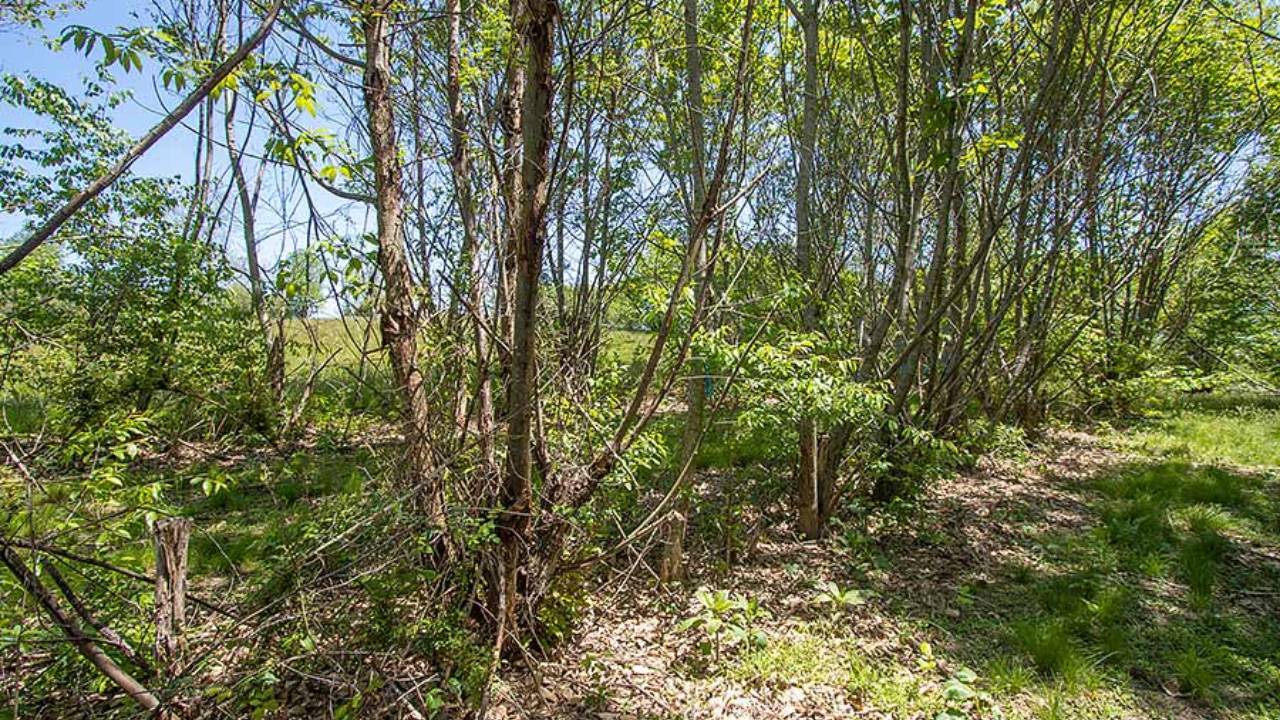
The reintroduction of twenty-five American chestnut saplings to the Bronx Zoo after an absence of one hundred and twenty years represents a localized ecological milestone, yet it serves primarily as a tactical testing ground for systemic forest restoration. To understand the operational significance of this deployment, one must deconstruct the biological bottleneck that eliminated Castanea dentata from the North American deciduous biome, evaluate the mechanisms of blight resistance currently under development, and analyze the deployment constraints governing urban and regional remediation projects.
The Pathology of Functional Extinction
The collapse of the American chestnut population in the early twentieth century stands as one of the most destructive ecological failures in recorded history. The agent of destruction, Cryphonectria parasitica—a pathogenic fungus introduced via imported Asian nursery stock—exploited a structural vulnerability in the host species.
Unlike native pathogens that establish a stable equilibrium with their hosts over evolutionary time, Cryphonectria parasitica operated as an unconstrained parasite. The fungus enters the tree through bark fissures or wounds, colonizing the cambium and vascular tissues. As the mycelium proliferates, it forms a sunken canker that eventually girdles the stem, cutting off the transport of water and nutrients between the root system and the canopy.
Crucially, this pathology did not destroy the root systems of the trees. The underground root collar, protected by soil, retained its viability, giving rise to persistent root sprouts that repeatedly cycle through a growth-and-dieback loop. This dynamic reduced the American chestnut from a dominant canopy-forming hardwood comprising up to twenty-five percent of eastern North American forests to an understory shrub incapable of reaching reproductive maturity.
Mechanics of Resistance Engineering
Restoring Castanea dentata requires overcoming this pathogenic bottleneck. Current mitigation strategies rely on two distinct operational vectors: breeding programs and genetic modification.
The traditional breeding approach, spearheaded by organizations such as the American Chestnut Foundation, utilizes backcross breeding. Researchers cross-pollinate surviving American chestnuts with blight-resistant Chinese chestnut (Castanea crenata) species. The resulting hybrid progeny are repeatedly backcrossed with American chestnuts over multiple generations to dilute the Chinese genetic traits while retaining the specific loci conferring fungal resistance. While this method preserves native phenotypic characteristics, the polygenic nature of resistance makes stable trait inheritance difficult to guarantee across large populations.
The alternative vector involves genetic engineering, specifically the introduction of the oxalate oxidase (OxO) gene derived from wheat (Triticum aestivum) or other plant species. The fungus damages host tissue primarily by secreting oxalic acid, which lowers the pH of the infected tissue and degrades cell walls. The OxO enzyme degrades oxalic acid into harmless byproducts (carbon dioxide and hydrogen peroxide), effectively neutralizing the pathogen's primary weapon.
Trees engineered with the OxO gene do not necessarily kill the fungus, but they arrest its spread, allowing the host to compartmentalize the infection and maintain structural integrity. This transgenic approach maintains over ninety-nine percent of the original American chestnut genome, avoiding the genetic dilution inherent in multi-generation backcrossing.
Deployment Constraints in Urban Ecosystems
The introduction of twenty-five saplings to the controlled environment of the Bronx Zoo highlights the operational challenges of urban afforestation. Urban and semi-controlled park environments present distinct ecological variables that differ significantly from native contiguous forest landscapes.
Soil composition, subterranean infrastructure constraints, microclimates, and restricted genetic diversity create high-stress operating conditions for young saplings. Urban soils frequently lack the necessary mycorrhizal networks—specifically symbiotic fungi that facilitate nutrient and water uptake—which can severely depress early-stage root development. Furthermore, spatial isolation limits natural gene flow, turning urban reintroductions into isolated genetic islands rather than self-sustaining metapopulations.
Consequently, urban plantings function less as primary timber restoration sites and more as biological monitoring nodes. They allow researchers to evaluate phenotypic expression, track resilience against local stressors such as insect pests and urban heat island effects, and engage public stakeholders in conservation telemetry.
Scaling from Urban Enclosures to Regional Forests
Transitioning from localized plantings of dozens of saplings to regional landscape-scale restoration involves resolving complex logistical and regulatory variables.
The primary constraint is seed and sapling stock availability. Propagating thousands of blight-tolerant trees requires extensive nursery infrastructure capable of maintaining genetic diversity while scaling production. Planting out must account for successional dynamics, canopy competition, and herbivory pressure from white-tailed deer, which preferentially browse young hardwood shoots.
Regulatory frameworks governing genetically engineered organisms further complicate regional deployment. Environmental release permits require rigorous multi-year ecological impact assessments to ensure that modified trees do not express unintended traits or disrupt existing forest ecosystems.
Future restoration success hinges on establishing regional seed orchards, streamlining regulatory approval pathways for OxO-expressing
Ecological Restoration Metrics Why Reintroducing the American Chestnut Requires Structural Systems Thinking
news, science
category: news
The reintroduction of twenty-five blight-resistant American chestnut saplings to the grounds of the Bronx Zoo marks a shift from passive conservation management to active ecological intervention in urban microclimates. While media coverage frames this event as a symbolic homecoming of a lost forest monarch, a rigorous operational analysis reveals a complex multi-variable biological experiment. Restoring Castanea dentata to a highly altered anthropogenic landscape is not merely a botanical exercise; it is an exercise in stress testing disease resistance, mycorrhizal compatibility, and long-term canopy competition within a fragmented ecosystem.
To evaluate the viability of this restoration vector, we must deconstruct the biological and environmental variables governing survival. The American chestnut once dominated the Eastern North American forest canopy, accounting for up to twenty-five percent of hardwood volume before the Cryphonectria parasitica fungal pathogen decimated the population in the early twentieth century. Re-establishing this species requires analyzing the primary vectors of failure: pathogen persistence, genetic diversity bottlenecks, and microclimatic stress in urban environments.
The Tripartite Failure Points of Historical Restoration
Prior attempts at chestnut restoration largely failed due to a fundamental misunderstanding of systemic vulnerability. Conservation efforts often focused entirely on single-trait breeding without accounting for environmental feedback loops. Three distinct failure points define the historical record: fungal persistence, insufficient genetic breadth, and habitat mismatch.
The Cryphonectria parasitica fungus remains active in soil and bark matrices throughout the historical range. Saplings introduced to unsterilized or high-spore environments face immediate necrotic pressure long before they reach reproductive maturity. Introducing blight-resistant strains, such as those incorporating transgenic enhancement or backcross breeding programs, addresses the resistance trait, but it does not automatically guarantee field-level resilience against secondary stressors like Phytophthora root rot or browsing herbivores.
Genetic stagnation represents the second structural vulnerability. Planting a small cohort of twenty-five saplings in an isolated urban park creates a genetic bottleneck. Inbreeding depression reduces the adaptive capacity of the population over successive generations, limiting its ability to mutate alongside shifting environmental pressures such as rising ambient temperatures and altered precipitation regimes.
The third failure point involves urban edaphic conditions. The Bronx Zoo environment deviates significantly from the deep, well-drained, acidic soils of the historical Appalachian range. Urban soils are typically compacted, nutrient-imbalanced, and subject to altered hydrological cycles and high pollutant loads. Without targeted soil microbiome inoculation, young chestnut roots struggle to establish the essential ectomycorrhizal associations required for nutrient acquisition.
The Mechanics of Resistance and Breeding Strategies
Modern restoration methodology relies on two primary mechanisms for conferring resistance: multi-generational backcrossing with the Chinese chestnut, Castanea mollissima, and targeted genetic modification through the insertion of an oxalate oxidase gene derived from wheat.
The backcross breeding method attempts to recover the phenotype and growth habit of the American chestnut while introgressing the blight-resistance genes of its Asian relative. This process requires a strict mathematical progression over multiple generations to recover upwards of ninety-four percent American chestnut genetic makeup while retaining durable disease resistance. However, quantitative trait locus analysis shows that blight resistance is governed by multiple minor genes rather than a single dominant allele. This polygenic inheritance complicates selection, as progeny often retain undesirable Chinese chestnut physical traits or lose resistance fidelity in field conditions.
Conversely, transgenic approaches bypass the slow multi-generational dilution of undesirable traits by directly inserting a single gene that neutralizes oxalic acid, the primary toxin secreted by the blight fungus. This biochemical mechanism prevents the fungus from creating lethal Cankers on the cambium layer. From a systems perspective, the transgenic pathway offers a more predictable quantitative outcome for disease mitigation, though it introduces regulatory friction and public acceptance variables.
Urban Microclimates as Stress Laboratories
Utilizing urban environments like the Bronx Zoo as initial planting sites introduces unique ecological parameters. Urban heat island effects, elevated carbon dioxide concentrations, and restricted root zones transform these plots into high-stress testing grounds.
While these conditions initially appear disadvantageous, they serve as a rigorous stress filter. Saplings that survive the high-stress urban matrix possess phenotypic plasticity that may prove valuable as climate change alters rural forest conditions. Furthermore, urban planting sites allow for intensive monitoring regimens that are logistically impossible in remote wilderness tracts. Researchers can track soil moisture depletion rates, foliar nutrient content, and annual ring increment growth with high-frequency telemetry.
The operational success of this deployment depends on continuous intervention protocols. Mulching regimens, localized irrigation during drought windows, and protective physical barriers against white-tailed deer browsing are mandatory inputs during the establishment phase. Without these capital-intensive maintenance inputs, mortality rates in urban forest restoration projects routinely exceed seventy percent within the first thirty-six months.
Strategic Scaling and Population Viability
Moving from a localized planting of twenty-five saplings to a self-sustaining metapopulation requires a structured scaling model. A viable forest canopy species cannot rely on isolated, fragmented demographic pockets. The minimum dynamic population size required to prevent genetic drift and maintain evolutionary potential runs into the thousands of mature, interbreeding individuals.
Future deployment phases must transition from isolated urban arboriculture to coordinated regional corridors. Conservation strategists must map pollen dispersal vectors and seed-dispersal mechanisms—primarily facilitated by small mammals and gravity—to identify contiguous tracts of public and private land capable of supporting future generations.
The economic and ecological capital expended on urban reintroductions must be justified by data collection rather than immediate aesthetic canopy recovery. Every sapling serves as a biological data node, yielding empirical metrics on blight tolerance thresholds and soil adaptation rates.
Establish regional seed orchards utilizing molecular screening to maximize allelic diversity before subsequent outplanting waves. Prioritize infrastructural investment in mycorrhizal soil priming over sheer numerical volume in future urban deployments to ensure root system establishment before canopy competition begins.