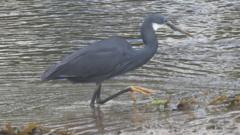
A rare African bird clips the edge of a weather system, ends up in a rain-slicked ditch in Oxfordshire, and three hundred people immediately abandon their jobs, sprint to their diesel hatchbacks, and idle in a muddy country lane for six hours just to tick a box in a notebook.
The media loves this story. It is framed as a heartwarming tale of human connection with the natural world, a celebration of biodiversity, and a quirky British pastime.
It is actually an eco-diagnostic disaster masquerading as conservation.
The standard narrative surrounding rare bird sightings—vulgarly known as "twitching"—is built on a foundation of unexamined virtue signaling. We are told that these massive gatherings raise awareness for wildlife. We are told that the passion of these hobbyists translates into protection for threatened species.
It does not. Twitching is an extractive, consumerist pursuit that treats the natural world like a live-action game of Pokémon Go. The obsession with vagrant birds—individuals that are almost certainly doomed evolutionary dead-ends—distracts from the grim reality of systemic habitat collapse right in our own backyards.
The Myth of the Romantic Naturalist
Let us dismantle the primary delusion of the modern twitcher: the idea that chasing a displaced vagrant contributes to citizen science.
When a bird like an Egyptian Vulture or a Ruppell's Vulture appears thousands of miles outside its normal migratory corridor, it is not pioneering a new territory. It is lost. It is often starving, exhausted, and severely stressed by the sudden climate shift.
Enter the crowd.
Within minutes of a rare sighting being logged on specialized apps, a localized migration of humans begins. I have watched quiet, fragile micro-habitats—the exact places these disoriented birds seek out for sanctuary—get systematically trampled by hundreds of boots. Nesting sites are disrupted. Local insect populations are crushed. The sheer volume of human presence creates a wall of stress around an animal that is already operating on its final reserves of metabolic energy.
This is not a connection with nature. It is the commodification of an anomaly.
The twitcher does not care about the local ecosystem. They care about the rarity scale. The moment that specific bird dies or flies away, the crowd vanishes, leaving behind compressed soil, exhaust fumes, and littered plastic wrappers. They do not stay to restore the hedgerow. They do not stick around to clean the stream. They burn fossil fuels to chase the next high, completely blind to the irony of their carbon footprint.
The Mathematical Absurdity of Vagrant Conservation
The broader conservation community is often too polite to say this, but chasing vagrants is a colossal waste of intellectual and financial capital.
Consider the energy expenditure of three hundred people driving an average of 100 miles round-trip to glimpse a single bird. That is 30,000 miles of vehicular emissions. If we look at the broader pattern of international twitching—where wealthy enthusiasts hop on commercial flights to see a single displaced species—the carbon math becomes indefensible.
[Vagrant Bird Appears] ➔ [Mass Mobilization via Apps] ➔ [Localized Habitat Trampling] ➔ [High Carbon Expenditure] ➔ [Zero Long-Term Ecological Return]
Every pound spent on fuel, high-end optics, and premium memberships to sighting alerts is a pound diverted from boring, unsexy, critical conservation work.
The British trust for Ornithology (BTO) and the Royal Society for the Protection of Birds (RSPB) do phenomenal work, but the public attention they receive is heavily skewed toward these flash-in-the-pan media events. A headline about a single exotic visitor gets millions of clicks. A report detailing the steady, quiet 60% decline of the common UK house sparrow since the 1970s is met with a collective yawn.
We are ignoring the burning house because we are fascinated by a colorful sparkler on the front lawn.
Why the "People Also Ask" Premise is Completely Backwards
If you look at public interest queries surrounding rare bird sightings, the questions are painfully revealing:
- Where can I see the rare bird in the UK right now?
- How rare is this specific species on British soil?
- What is the best camera lens for wildlife tracking?
Notice the underlying theme? Every single question is focused on acquisition, access, and documentation. None of them ask: What structural failure caused this bird to lose its course? or How much damage will my presence cause if I visit this site?
The premise that seeing a rare bird makes you an environmentalist is flawed. It makes you a spectator. If you truly want to protect avian populations, the single most radical thing you can do is stay at home and transform your immediate surroundings.
From Spectatorship to Radical Stewardship
The uncomfortable truth is that an obsession with the exotic is a symptom of a disconnected society. We require nature to be shocking, rare, and dramatic to merit our attention.
True ecological literacy is boring. It involves understanding the complex relationships between soil health, native flora, insect biomass, and apex predators. It means advocating for stricter pesticide regulations, fighting local housing developments on greenbelt land, and letting your garden grow wild and unkempt.
If you want to make a genuine impact, stop looking at alert apps. Shift your focus from the anomaly to the baseline.
1. Kill Your Lawns
The manicured green lawn is an ecological desert. It offers zero food, zero shelter, and requires toxic chemical inputs to maintain its artificial perfection. Replace it with native wildflowers, brambles, and rotting logs. Create a chaotic mess that breeds the insects that local birds actually need to survive.
2. Fund the Boring Work
Stop donating exclusively to high-profile animal rescues that focus on charismatic megafauna or rare individual cases. Direct your capital toward land acquisition trusts. The only way to save birds is to buy land, take it out of the hands of developers and industrial agriculture, and let it rewild over decades.
3. Boycott the Twitching Circuit
Refuse to participate in the mass mobilization loops. If a rare bird appears near you, leave it alone. The best gift you can give a disoriented, stressed animal is total human absence.
The High Cost of Independent Thinking
Adopting this stance will not make you popular in traditional wildlife circles. You will be accused of being a killjoy, a gatekeeper, or someone trying to drain the fun out of a harmless hobby.
But we no longer have the luxury of harmless hobbies that consume massive amounts of fossil fuels and treat wildlife as a checklist. Our ecosystems are fracturing under the weight of climate volatility. Migratory patterns are breaking down because global wind currents and temperatures are completely out of whack. The appearance of an African bird in a British field is not a joyful miracle; it is a flashing red warning light on the global dashboard.
Treating it like a circus attraction is a profound failure of imagination and responsibility.
Put down the binoculars. Sell the telephoto lens. Look down at the dirt beneath your feet, accept the reality that our local wildlife is quietly vanishing while we stare at the sky, and start doing the hard, invisible work of fixing the habitat right in front of you.
Stop chasing the exceptions and start defending the rule.


