The floor does not usually behave like the surface of a pond.
When a magnitude 7.1 earthquake tears through southwestern Japan, the fundamental contract we make with the ground beneath our feet is instantly broken. For generations, we build upward. We pour concrete, lace steel through foundations, string wires across horizons, and convince ourselves that permanence is a design choice. Then the earth shudders. In a matter of seconds, the illusion evaporates. In similar updates, read about: Why the Yarkand Massacre Anniversary Still Demands Answers Today.
I remember the first time the ground turned to liquid beneath me. It is a sensation that defies language. Your inner ear screams that gravity has failed, while your eyes desperately search for a straight line that no longer exists. Books tumble. Glass shatters. But worse than the noise is the silence that follows—that heavy, terrifying hush when you wait to see who is still standing.
In southwestern Japan, that silence has now been filled with the grim tally of a disaster that claimed eighteen lives. The Guardian has analyzed this important issue in extensive detail.
Numbers are comfortable. They are neat. Eighteen is a statistic that fits neatly into a morning news bulletin, easily digested between the weather report and the traffic update. Yet numbers are a sedative. They distance us from the reality of a life interrupted mid-sentence.
Consider what happens next in places like Miyazaki and Kochi prefectures, where the tremors hit with ferocious intensity. The ground heaves. Homes built with decades of memories slide down hillsides. Trains freeze on elevated tracks. Convenience stores, usually glowing beacons of 24-hour safety and warmth, go dark.
Behind the official death toll of eighteen lies a constellation of individual realities. There is the elderly shopkeeper who spent fifty years sweeping the same wooden porch, now buried under it. There is the young mother who managed to shield her toddler just as the ceiling caved in. There is the frantic rescue worker peering into a pocket of concrete with a flashlight, hoping against probability that the faint sound they heard a minute ago was not just settling dust.
We rely heavily on our infrastructure to protect us, yet nature operates on a scale that humbles our finest engineering. Japan is one of the most seismically active zones on the planet. Its building codes are among the strictest in existence. Skyscrapers flex like bamboo in a hurricane; bridges are mounted on shock absorbers. Every child in the country grows up practicing duck-and-cover drills with the mechanical precision of a military exercise.
Yet preparedness is not immunity. It is merely a buffer against total catastrophe.
When the 7.1 quake struck, it served as a brutal reminder of the Nankai Trough threat that geologists have whispered about for years. Scientists monitor the subduction zones off the coast with the diligence of watchmakers. They track tectonic creep, measure strain accumulation, and calculate probabilities with cold mathematical rigor. They issue advisories. They warn that a mega-earthquake could happen in our lifetimes.
We nod. We update our emergency kits with canned water and foil blankets. Then we go back to work, lulled by the quiet months and years between disasters. We mistake a lull for safety.
Earthquakes do not negotiate. They do not care about your schedule, your retirement plans, or the email you forgot to send. They arrive without warning, stripping away the trivialities of daily existence until only the essential truth remains: we are entirely at the mercy of forces older than time.
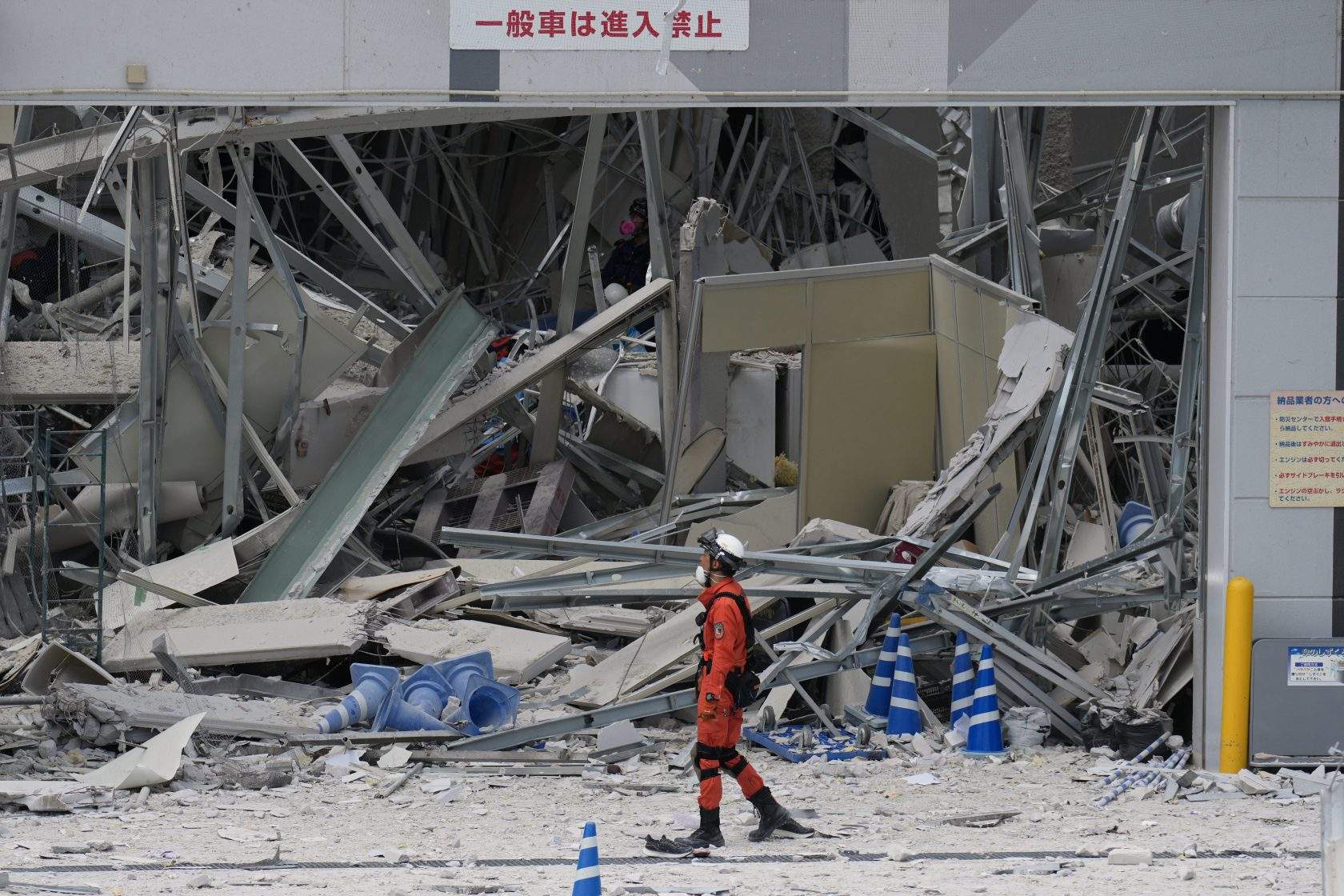
Rescue operations in the aftermath are a masterclass in human endurance. First responders do not move with the sleek efficiency seen in Hollywood action films. They move with heavy boots, blistered hands, and exhausted eyes. They crawl through jagged concrete tunnels where a single aftershock could bring the whole ruin down on top of them. They listen for breathing in the dark.
Every survivor has a story of a narrow escape. A kitchen cabinet that fell just so, creating a protective triangle over a kitchen table. A decision to leave the house five minutes earlier than usual. A stroke of inexplicable luck in a landscape of total devastation.
And then there are those who ran the wrong way.
We try to find meaning in the chaos. We ask why some homes collapsed while the house next door stood untouched. We look for patterns in the rubble. But tectonic plates do not distribute punishment or reward. They simply grind against each other, releasing pent-up energy that has been accumulating for centuries.
The human cost goes far beyond the initial eighteen lives lost. It lives in the psychological trauma of every person who felt the house lurch sideways. It echoes in the children who now flinch every time a heavy truck rumbles down the street, convinced the floor is about to open up again. It rests in the heavy hearts of business owners staring at shattered inventory, wondering if they have the strength to start over for a third or fourth time.
Disasters of this magnitude reveal the best and worst of our collective wiring. We see price gouging on bottled water in isolated instances, but we also see neighbors carrying elderly residents out of crumbling apartments on their backs. We see strangers sharing hot tea from cracked thermoses in makeshift evacuation centers hastily set up in school gymnasiums.
We are fragile creatures inhabiting a volatile rock. We spend our entire lives trying to build fortresses against the void, forgetting that the ground we stand on is constantly moving beneath us.
The dust will eventually settle in southwestern Japan. The broken asphalt will be patched. The collapsed roofs will be cleared away, and new timber will rise in their place. Life will return to a semblance of normal rhythm, because human beings possess an astonishing, almost defiant capacity to rebuild.
Yet the memory of those secondary tremors will linger in the bones of everyone who lived through them.
The sun sets over the Pacific, casting a long, golden light across a fractured landscape. In the quiet streets of the affected towns, a single rescue vehicle idles, its red lights spinning slowly against the gathering dark, casting rhythmic pulses of crimson across the quiet rubble of a changed world.


