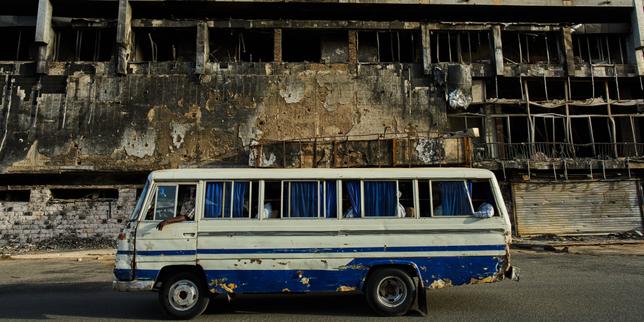
The tea in Khartoum used to taste of mint and jasmine. It was served in small glass cups on street corners where the shadows of the palms offered a temporary reprieve from the heat. Today, that tea tastes of iron and cordite. The palms are charred sticks, and the street corners have become the front lines of a war that the rest of the world has decided is too complicated to care about.
Sudan is not just breaking. It is being ground into a fine powder between two egos. On one side, General Abdel Fattah al-Burhan, head of the Sudanese Armed Forces (SAF). On the other, Mohamed Hamdan Dagalo, known universally as Hemedti, leader of the Rapid Support Forces (RSF). They were once partners in a coup. They are now architects of a graveyard.
This is the largest humanitarian crisis on the planet. Yet, it remains a whisper in the backrooms of global diplomacy.
The Anatomy of a Betrayal
Imagine a house where two brothers decide they both want to be the sole master. To prove their dominance, they don't just fight; they set the curtains on fire, smash the windows, and lock the children in the basement. This is the metaphor for Sudan's current state, but the reality is far more visceral.
The RSF, a paramilitary force born from the Janjaweed militias of the Darfur conflict, has turned urban neighborhoods into hunting grounds. The SAF, the official military, responds with indiscriminate aerial bombardments. The people caught in the middle are not "collateral damage." They are the targets of a systematic erasure.
Statistics often numb the mind, but these demand attention. Over 10 million people have been displaced. That is not a number; it is the entire population of London or New York City forced to pack their lives into a single plastic bag and walk into the desert. Since the fighting erupted in April 2023, the breadbasket of Africa has become a hollow shell.
The Silence of the Empty Plate
In the Zamzam camp in North Darfur, a child dies every two hours.
Malnutrition is a slow, cruel thief. It starts by taking the energy to play, then the energy to cry, and finally, the body begins to consume itself. Famine has been formally declared in parts of Sudan, but the word "famine" feels too clinical. It doesn't capture the sound of a mother trying to boil grass to trick her children’s stomachs into thinking they are full.
The logistics of this starvation are intentional. Both sides of the conflict use food as a weapon of war. The SAF restricts aid from entering RSF-controlled areas, claiming it will sustain the militia. The RSF loots warehouses and hijacks convoys, turning international charity into a black-market currency. It is a siege on the very concept of survival.
Farmers can no longer plant. Markets have been looted or burned. The price of basic sorghum has spiked by over 200%. When a bag of grain becomes more valuable than a human life, the moral fabric of a nation begins to fray at the seams.
The Invisible Stakes
Why should a reader thousands of miles away lose sleep over Sudan?
Beyond the obvious moral obligation to stop a genocide—a word that is once again being whispered in the context of Darfur—there is a geopolitical earthquake happening. Sudan sits on the Red Sea. It is the gateway to the Sahel. If Sudan collapses completely, it creates a vacuum that will be filled by human traffickers, extremist groups, and foreign powers looking to strip-mine the country’s gold and resources.
We are seeing the death of the "nation-state" in real-time. In its place is a fragmented map of warlord fiefdoms. When the state dies, the laws die with it. This is why the reports of sexual violence are so staggering. The RSF has used rape as a documented tool of war to break the spirit of communities, particularly in Khartoum and Darfur. It is a weapon that costs nothing and destroys everything.
The international community’s response has been a masterclass in apathy. While billions in aid and military hardware flow to other conflicts, Sudan’s humanitarian appeal remains chronically underfunded. It is as if the world has a limited capacity for empathy, and Sudan simply arrived too late to the table.
The Ghost of Darfur Returns
History is not repeating; it is screaming.
Twenty years ago, the world looked at Darfur and said "Never Again." Celebrities wore wristbands. Documentaries were filmed. Today, the survivors of that original genocide are being hunted again by the same men, under a different banner. The Masalit people and other non-Arab groups are being systematically targeted in El Geneina.
Survivors describe "killing fields" where men are executed based on their ethnicity and bodies are piled in the streets because it is too dangerous to bury them. This is not a messy civil war. It is an organized attempt to reorganize the demographics of a region through blood.
The Cost of Neutrality
There is a temptation to look at Sudan and see a "forever war" or an ancient tribal conflict. That is a lie. This conflict is modern, calculated, and fueled by external interests. Weapons flow into the country from regional neighbors. Gold flows out to stabilize foreign currencies.
The two generals are not fighting for a vision of Sudan. They are fighting for the keys to the vault. Burhan wants to maintain the military’s decades-long grip on the economy. Hemedti wants to turn his mercenary empire into a legitimate government. Neither of them considers the people of Sudan to be anything more than an obstacle.
The real tragedy is that Sudan was on the verge of something beautiful. In 2019, a grassroots revolution led by women and youth toppled a thirty-year dictatorship. They stood in the streets of Khartoum, singing for "Freedom, Peace, and Justice." They wanted a civilian-led democracy. They were the ones who truly owned the future of the country.
Now, those same doctors, teachers, and students are either dead, in exile, or hiding in basements while the men with guns decide who gets to eat.
The Finality of the Dust
The Nile still flows through Khartoum, indifferent to the bodies that occasionally drift past the capital’s bridges. It is a blue ribbon in a landscape of grey ash.
Every day that the world looks away, the chances of a unified Sudan diminish. We are witnessing the dismantling of a culture, the starving of a generation, and the absolute failure of the "rules-based international order" to protect those it promised to shield.
The displacement camps are growing. The mass graves are deepening. And in the silence of the international community, the only sound left is the wind blowing the dust of a dying nation over the ruins of what used to be home.
Sudan doesn't need another statement of "deep concern." It needs the world to recognize that when we allow a country to be devoured by two men, we are not just losing a nation; we are losing our own claim to humanity.
The tea in Khartoum is cold, and the cups are broken.