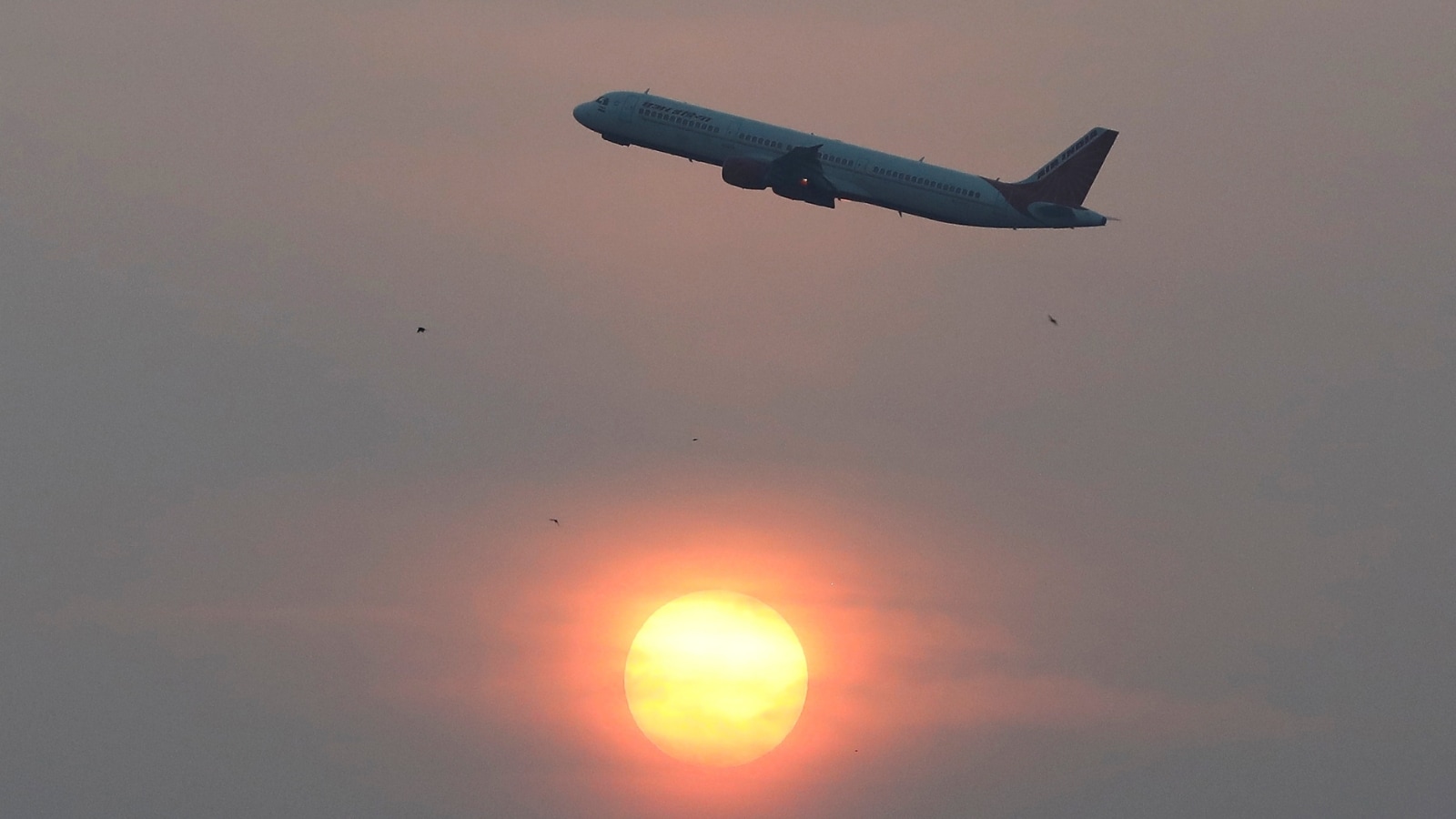
The headlines are screaming about "chaos" and "explosions" and "grounded fleets." They want you to believe the aviation industry is panicking because a few regional sparks flew. They are lying to you. What you are witnessing in Dubai isn't a crisis of logistics; it is a clinical, cold-blooded exercise in yield management and liability hedging.
Mainstream media loves a disaster narrative. It’s easy to film a crowded terminal at DXB, find a tourist who missed their connection to London, and call it a breakdown of global infrastructure. But if you look at the balance sheets of the major carriers currently pulling their planes out of the sky, you’ll see something entirely different. These airlines aren't scared of the sky. They are terrified of the insurance premiums and the long-term cost of operating in a low-yield, high-risk environment. Learn more on a similar subject: this related article.
The Myth of the Grounded Fleet
When a major airline "grounds all planes" following regional instability, they aren't doing it because the air is inherently too dangerous to fly. Modern avionics and satellite tracking mean we know exactly where every projectile is at any given second. We flew through worse during the Cold War.
They ground the planes because the War Risk Insurance surcharges just spiked by 400%. Further analysis by National Geographic Travel delves into similar views on the subject.
An airline like Emirates or Qatar Airways operates on margins that are thinner than the aluminum skin of a 777. The moment Lloyd’s of London or the big reinsurers decide a corridor is "controversial," the cost per seat-mile skyrockets. If they keep flying, they lose money on every ticket already sold. If they "ground the fleet due to safety," they invoke Force Majeure.
Force Majeure is the industry’s favorite get-out-of-jail-free card. It allows them to cancel your $2,000 flight, keep your cash in the form of a "travel voucher," and avoid paying the mandatory compensation fees that usually kick in for delays. By framing this as a heroic stance for passenger safety, they are actually protecting their quarterly earnings from a massive insurance-driven bleed.
Stop Asking if it is Safe and Start Asking Who Profits
The "People Also Ask" sections of search engines are currently flooded with variations of "Is it safe to fly to Dubai?"
That is the wrong question. The premise is flawed because it assumes the airline's primary metric for cancellation is your physical well-being. It isn't. The primary metric is the Hull Value of the aircraft.
An Airbus A380 costs roughly $450 million. If a piece of stray shrapnel so much as scratches the engine cowling of a parked jet in a "high-risk" zone, the maintenance downtime and insurance litigation cost more than the revenue from ten thousand passengers. Airlines aren't protecting you; they are protecting their hardware.
I’ve sat in the ops rooms where these calls are made. It’s not a room full of pilots looking at weather patterns. It’s a room full of actuaries and lawyers looking at "Hull All Risks" policies and "Third Party Liability" clauses. If the risk of a hardware write-off exceeds the projected revenue of the route by a fraction of a percent, the flight is scrubbed. They will let you rot in a terminal for 48 hours to save a $500,000 insurance deductible.
The Dubai Hub Strategy is Fundamentally Broken
For twenty years, the "Super-Connector" model has been the darling of the travel industry. Dubai, Doha, and Istanbul built empires by convincing the world that every flight should go through a single point in the Middle East.
This "chaos" proves that the model is a house of cards.
When you centralize 60% of East-West traffic through a single geographic bottleneck that happens to sit next to the world’s most volatile geopolitical fault lines, you aren't being efficient. You’re being reckless. The current "disruptions" aren't an anomaly; they are a feature of a centralized system.
We are seeing the death of the mega-hub in real-time. Smart travelers are already pivoting back to direct, long-range flights that bypass these chokepoints. The rise of the A350-1000 and the 787 Dreamliner was supposed to make the "stopover" obsolete. The only reason it hasn't is because the Gulf carriers subsidized their way into dominance. Now that the geopolitical bill is coming due, the "savings" you got on that cheap ticket to Bali via Dubai are being paid back in the form of three days spent sleeping on a linoleum floor.
Your Travel Insurance is a Participation Trophy
If you think your "premium" travel insurance is going to save you during a Dubai shutdown, you haven't read the fine print.
Most policies have explicit exclusions for "Acts of War," "Civil Unrest," or "Governmental Interference." I have seen travelers lose five figures in non-refundable bookings because they assumed "comprehensive" meant "everything." It doesn't.
- The Act of War Clause: If an airline cancels because of "explosions" or "conflict," your insurer will point to Section 4, Paragraph B and tell you to kick rocks.
- The Force Majeure Loophole: Since the airline isn't "at fault," they don't have to pay for your hotel. Since the event is "political," your insurance doesn't have to pay either.
You are the one subsidizing the airline's risk management strategy. They get to keep their planes safe; you get to keep your credit card debt.
The Counter-Intuitive Way to Fly Right Now
If you want to actually travel without being a pawn in an actuary's game, stop booking through the hubs.
- Pay the Direct Premium: A direct flight that costs 30% more is infinitely cheaper than a "deal" that leaves you stranded in a desert terminal during a regional flare-up.
- Fly Western-Registered Hulls on Riskier Routes: If you must fly through the region, use a carrier registered in a country with strict passenger rights (like EU261 protections). Even if they fly the same route, the legal requirements for how they treat you during a "grounding" are vastly different.
- Ignore the "Breaking News": Most of the flight groundings are temporary posturing. Carriers often resume flights within 12 hours once the insurance markets stabilize. The "chaos" is 90% panic-buying and 10% actual logistics.
The industry wants you to feel like a victim of "unforeseen global events." You aren't. You are a data point in a risk-reward calculation that was solved before you even checked in. The explosions are the excuse; the profit margin is the reason.
Don't wait for the airline to tell you it's safe to fly. They'll tell you it's safe the moment their insurance broker stops sweating. Until then, stop being the person who pays for their peace of mind with your time.
Book direct or don't book at all.