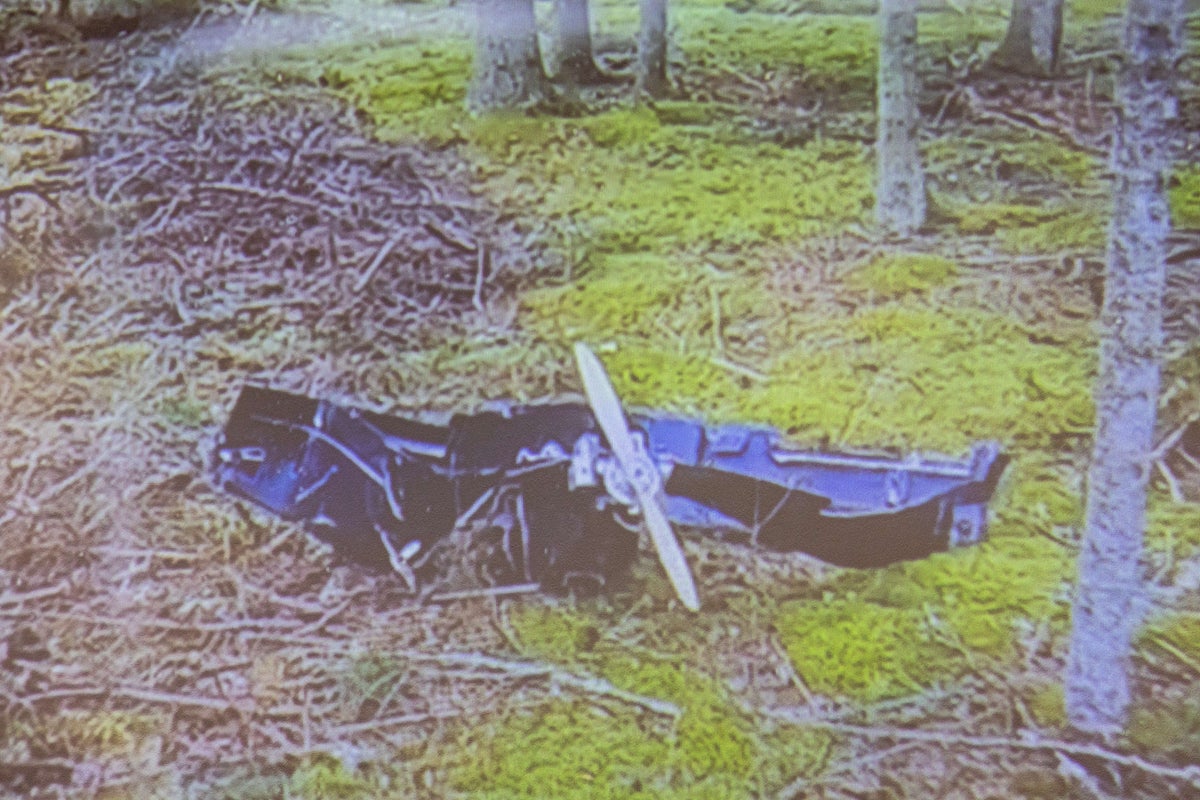
A Ukrainian drone fell in Finland. It had a warhead. The headlines are screaming about "stray" technology and "accidental" incursions. They are wrong.
The mainstream media is treating this like a GPS glitch or a gust of wind that blew a hobbyist's toy off course. That is the lazy consensus. It ignores the brutal physics of electronic warfare and the shifting geography of modern conflict. When a long-range suicide drone ends up in a NATO country, it isn't an "accident." It is a data point.
The Myth of the Stray Drone
Modern loitering munitions, like those being produced by Ukrainian startups and state enterprises, do not just "wander" hundreds of kilometers into a neighboring country because of a software bug. These systems operate on pre-programmed flight paths, inertial navigation systems, and, increasingly, AI-driven visual odometry to counter GPS jamming.
If a drone reaches Finland from a conflict zone in Eastern Europe, it didn't get lost. It successfully navigated some of the most contested airspace on the planet.
I have spent years looking at the telemetry of systems that fail. In the world of aerospace, a "crash" in a specific location is often the result of a deliberate failure or a calculated risk. To call this a "stray" drone is to insult the engineers who built it. They are building machines meant to bypass the Russian S-400 tiers. If it can do that, it doesn't just accidentally trip over a Finnish border.
The Warhead is the Message
The presence of a live warhead is what has the pundits clutching their pearls. They ask: "Why would they fly a live weapon over a friendly nation?"
They are asking the wrong question. The real question is: "Why are we surprised that the shield of neutrality has finally shattered?"
For decades, the Nordic region operated under the illusion that geography was a defense. The crash in Finland proves that in the age of autonomous attrition, geography is irrelevant. A warhead landing in a forest outside of Helsinki is a physical manifestation of a new reality. The conflict is no longer contained. It is atmospheric. It is borderless.
By focusing on the "danger" of the unexploded ordnance, the press misses the strategic shift. This drone is a stress test for Finnish radar integration and NATO’s northern flank response times. Every minute it took for the Finnish authorities to locate and secure that crash site was a lesson for every intelligence agency in the world.
Electronic Warfare is the Real Pilot
The competitor articles love to blame "malfunctions." They rarely mention the invisible war happening in the radio frequency spectrum.
We are currently seeing the largest-scale deployment of electronic warfare (EW) in human history. GPS spoofing is now so prevalent in the Baltic region that commercial pilots are regularly losing signals.
Imagine a scenario where a drone's primary and secondary navigation systems are being hit by high-power noise from a Russian "Krasukha-4" system. The drone doesn't just stop. It reverts to "dead reckoning." If the wind data is slightly off, or if the initial coordinates were offset to avoid a known SAM battery, the drift isn't an error. It's a survival mechanism.
The drone didn't "stray" into Finland. It was likely pushed there by a wall of Russian electromagnetic interference. Calling it a Ukrainian mistake is victim-blaming the hardware. It is a tactical byproduct of the most sophisticated electronic barrier ever constructed.
Stop Asking if Finland is Safe
People are asking: "Is Finland now a target?" or "Should we be worried about more crashes?"
These are the wrong questions. You should be worried that your defensive architecture is built for a 20th-century war.
If a single drone with a warhead can transit into your sovereign territory undetected until it hits the ground, your "cutting-edge" (excuse me, your "advanced") radar systems have a blind spot the size of a freight train. The issue isn't the drone. The issue is the hole in the net.
I've seen defense contractors pitch "impenetrable" air defense bubbles for years. They are selling smoke. Attrition warfare relies on the "leaking" effect. You send 100 drones. 90 are shot down. 9 hit the target. 1 "strays" into Finland. That 1% is the cost of doing business in 2026.
The Logistics of the "Accident"
Let's talk about the math that the mainstream avoids.
- Range: These drones are being pushed to their absolute limits. If you have a fuel tank designed for 1,000 km and you try to fly 995 km, any headwind makes you a glider.
- Payload: A warhead changes the center of gravity. As fuel burns off, the flight characteristics change.
- Flight Path: To avoid detection, these drones fly low—sometimes less than 50 meters above the treetops.
When you fly a machine at its limit, at low altitude, in a high-EW environment, "accidents" are statistically certain. The fact that it took this long for a kinetic event to happen in a Nordic country is the real surprise.
The Nordic Security Illusion
Finland and Sweden joining NATO changed the map, but it didn't change the physics of the sky. The competitor piece frames this as a diplomatic headache. It isn't. It is a procurement wake-up call.
The Finnish military is one of the most capable in Europe. But they are geared for a land invasion—tanks crossing the border, artillery duels. They are not geared for a swarm of 500-dollar carbon-fiber wings carrying 5 kilograms of plastic explosive.
The "stray" drone is a prototype of the future nuisance. It represents a threat that is too small to be worth a million-dollar interceptor missile, but too dangerous to ignore.
Why the "Stray" Narrative Persists
The reason governments and media outlets use the word "stray" is because the alternative is too uncomfortable. If it isn't a "stray," then it is an "incursion." If it is an incursion, Article 5 enters the conversation.
By calling it a mistake, everyone gets to keep their jobs. Ukraine apologizes. Finland expresses concern. The status quo remains.
But the status quo is a lie. The drone in the Finnish woods is a harbinger. It is the first of many. As the production of autonomous weapons scales to the millions, the "borders" we draw on maps will become suggestions.
The "lazy consensus" wants you to think this was a one-off. It wasn't. It was the first loud knock on a door that everyone thought was locked.
The Actionable Truth
If you are a policymaker or a citizen looking at this, stop looking for "better GPS." Start looking for better kinetic interception that doesn't cost more than the threat it's stopping.
We are entering an era where the sky is permanently weaponized. Today it is a "stray" drone in Finland. Tomorrow it is a "navigation error" over a power plant in Poland or a "technical glitch" in a harbor in Norway.
The era of the "contained" war is over. The warhead in the Finnish dirt proved it.
The drones aren't getting lost. The world is just getting smaller, and there is nowhere left to hide from the fallout of a high-tech attrition war. If you think your borders are a barrier to a machine that doesn't need a pilot, you aren't paying attention.
The drone didn't fail its mission. It completed a different one: it proved that nobody is out of range, and nobody is truly neutral anymore.
Stop waiting for an apology and start building a better net.