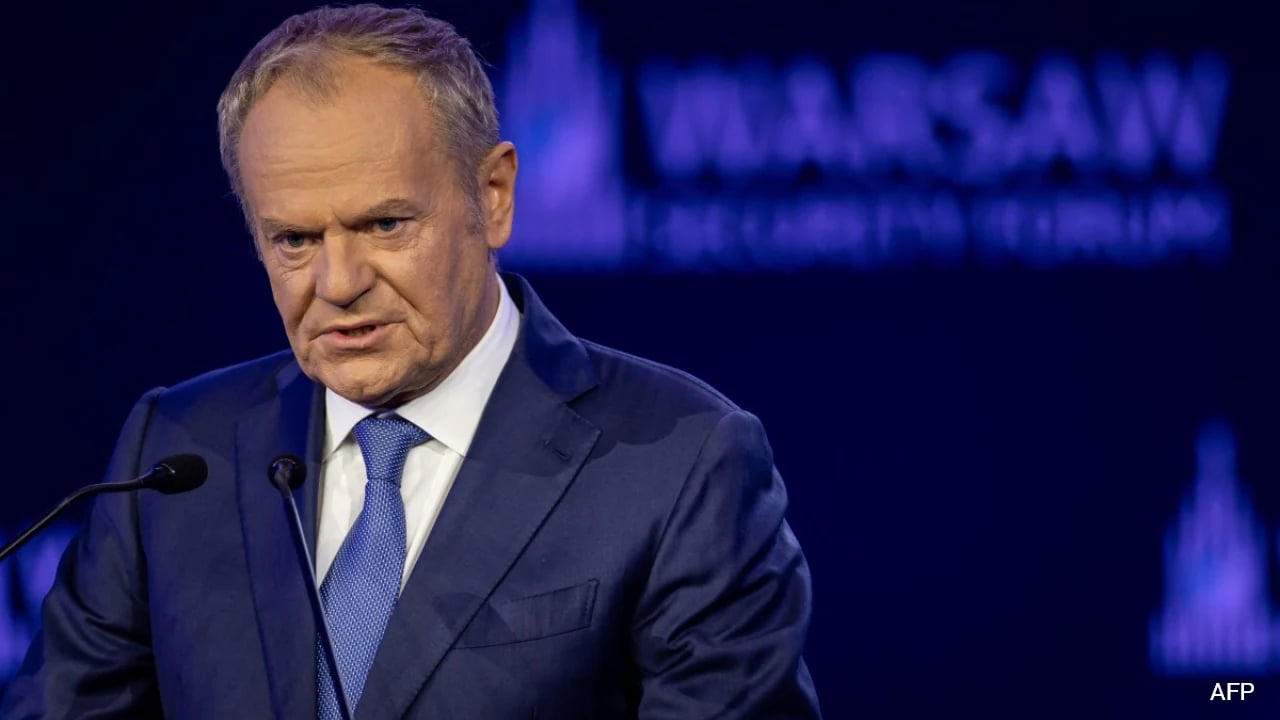
The Stage-Managed Illusion at New Delhi
The mainstream press loves a clean, inspirational narrative. When Polish Prime Minister Donald Tusk landed in New Delhi for bilateral engagements and the NDTV World Summit, the media playbook was rolled out instantly. We saw warm handshakes with Narendra Modi, glowing headlines about a strategic bilateral upgrade, and breathless commentary on Poland serving as India's premier gateway to Central Europe.
It is standard summit theater. It is also fundamentally delusional.
Media outlets treated Tusk's appearance as a triumphant victory for Western-aligned diplomacy, framing Warsaw as a bridge between the Global South and NATO's eastern flank. They highlighted economic summits in Bengaluru, mutual praise between leaders, and vague promises of defense co-production.
Behind the soft-focus photo opportunities lies a deep structural mismatch in foreign policy. Poland and India do not share a unified geopolitical vision. They are operating on entirely different diplomatic wavelengths, and pretending otherwise ignores basic strategic arithmetic.
+-----------------------------------------------------------------------------------+
|                        THE DIPLOMATIC STRUCTURAL DIVIDE                           |
+-----------------------------------------------------------------------------------+
|  POLAND (WARSAW)                                 INDIA (NEW DELHI)                |
|  - NATO Frontline State                          - Strategic Autonomy             |
|  - Zero-Sum Anti-Russia Consensus                - Pragmatic Multi-Alignment      |
|  - European Integration Priority                 - Global South Leadership        |
|  - Transactional Defense Sourcing                - Indigenous Defense (Make in India)|
+-----------------------------------------------------------------------------------+
Why Warsaw Cannot Deliver What New Delhi Needs
The conventional wisdom dictates that Poland is India's ideal partner in East-Central Europe. Economically, Poland is the Sixth-largest economy in the European Union, boasting impressive post-communist growth rates and a booming technology sector in hubs like Wrocław and Bengaluru-partnered technology centers.
The friction emerges when diplomatic rhetoric meets structural reality:
- The Russian Paradox: Warsaw views world affairs through a single, non-negotiable lens: the existential threat of Russian revanchism. For Donald Tusk, every foreign policy decision must serve the containment of Moscow. India, conversely, maintains a legacy security relationship with Russia, buying discounted crude, sourcing defense hardware, and treating Moscow as a counterweight in a multipolar world.
- Defense Hardware Realities: Polishing press releases about military cooperation ignores hardware supply chains. Poland is currently bankrupting its treasury buying South Korean tanks (K2 Black Panthers), American jets (F-35s), and artillery. Warsaw does not have defense exports to spare for New Delhi, nor does India want legacy Eastern-bloc legacy refits.
- The European Union Bottleneck: Tusk cannot single-handedly deliver an India-EU Free Trade Agreement. Despite his elite pedigree as former President of the European Council, trade policy in Brussels remains bogged down by agricultural protectionism, carbon border adjustment taxes, and labor standard disputes.
"A summit headline creates the illusion of momentum. True alignment requires shared structural incentives, not just shared polite applause on a summit stage."
The Strategic Autonomy Disconnect
The mainstream media misinterprets Donald Tusk's political persona. Commentators present him as the ultimate European statesman—the seasoned centrist who saved Poland from populist isolation and restored Warsaw to the inner sanctum of European decision-making.
That narrative ignores how Tusk operates domestically. He leads a fragile coalition at home, constantly under pressure from conservative nationalists. His foreign policy flexibility is constrained. When Tusk speaks in New Delhi, he speaks as an actor bound by Brussels directives and NATO imperatives.
                 POLAND'S DIPLOMATIC CONSTRAINTS

                      [ EU Regulatory Framework ]
                                   │
                                   ▼
[ NATO Defense Priorities ] ──► DONALD TUSK ◄── [ Domestic Coalition Pressure ]
                                   ▲
                                   │
                    [ Anti-Russia Structural Imperative ]
India operates under a completely different paradigm: strategic autonomy. External Affairs Minister S. Jaishankar has made it explicit that India will not accept binary civilizational choices. India engages with the United States, Russia, East Asia, and the Middle East simultaneously based strictly on national interest.
When Western analysts expect Donald Tusk to pull India into a tighter Atlanticist orbit, they misunderstand New Delhi's foundational grand strategy. India does not swap strategic alignment for ceremonial visits.
The Hard Economic Truths Behind the Bilateral Trade
Stripping away the summit enthusiasm reveals modest economic metrics. Bilateral trade between India and Poland sits at a modest figure compared to India’s trade volumes with major economic hubs like Germany, the UAE, or China.
While Indian IT giants like TCS, Infosys, and HCL have established delivery centers in Polish cities, hardware trade, heavy manufacturing, and venture capital flows remain limited.
Where the Partnership Actually Works (And Where It Fails)
- Technology & IT Services: Real Growth. Polish software talent combined with Indian enterprise scale creates genuine commercial value.
- Agricultural Exports: Stalled. European sanitary standards and domestic farmer lobbies in Poland create high trade barriers.
- Defense Co-Development: Mostly Rhetoric. Both nations rely heavily on foreign technology transfers rather than exporting indigenous platforms to each other.
- Energy Transition: Divergent Paths. Poland is scrambling to decarbonize its coal-heavy grid while securing LNG imports. India is expanding solar infrastructure alongside legacy fossil fuels.
Imagine a scenario where an Indian manufacturer seeks to establish a European hub. Poland seems attractive due to skilled labor and strategic location. But the moment regulatory compliance, EU carbon border adjustments, and visa friction hit the operations team, the expansion slows to a crawl. The summit announcements do not eliminate the operational friction of European bureaucracy.
The Myth of the "Middle Power" Alliance
An increasingly popular diplomatic theory claims that "middle powers"—nations that are neither the US nor China—must unite to preserve the rules-based international order. Commentators frequently bucket Poland and India together under this umbrella.
This conceptual framework is fundamentally broken.
India is not a middle power; it is an emerging global pole with a population of 1.4 billion, a nuclear arsenal, and the world's fifth-largest economy. Poland is a middle-tier European state deeply integrated into a Western treaty system. Their structural incentives are completely mismatched.
+----------------------------------------------------------------------------------+
|                          MISALIGNED GLOBAL OBJECTIVES                            |
+----------------------------------------------------------------------------------+
| FEATURE             | POLAND                             | INDIA                 |
+---------------------+------------------------------------+-----------------------+
| Global Role         | NATO Frontline / EU Core           | Multipolar Sovereign  |
| Primary Threat      | Regional Military Invasion         | Border Conflict / Sea |
| Trade Strategy      | Single Market Integration          | Bilateral FTAs        |
| Foreign Policy Tool | Collective Defense Security        | Transactional Deals   |
+---------------------+------------------------------------+-----------------------+
When Tusk calls for global solidarity against revisions to international borders, New Delhi listens politely, signs joint statements emphasizing peaceful dispute resolution, and immediately returns to buying discounted energy and securing its own borders in the Indo-Pacific.
The Reality of Central European Diplomacy
Dismantling the summit hype does not mean bilateral relations are worthless. It means business leaders, investors, and analysts must stop treating diplomatic summits as operational reality.
If Poland and India want a functional relationship, they must strip away the high-minded rhetoric about democratic values and focus on ruthless pragmatism:
- Targeted Tech Corridors: Stop talking about generic bilateral trade and focus specifically on tech talent mobility and cybersecurity infrastructure.
- Component Manufacturing: Leverage Poland's position inside the EU single market for assembling Indian components meant for European distribution.
- Direct Logistics Links: Establish robust, direct air and maritime logistics routes instead of relying on third-party Western European hubs.
The media coverage surrounding Donald Tusk’s visit to New Delhi was an exercise in performative diplomacy. Leaders meet, speeches are drafted, and press releases declare historic milestones.
Diplomacy is driven by structural incentives, energy security, and hard defense capabilities. Until the fundamental divergence between Warsaw's NATO-centric worldview and New Delhi's multipolar strategy is addressed, these summits will remain what they have always been: expensive political theater.