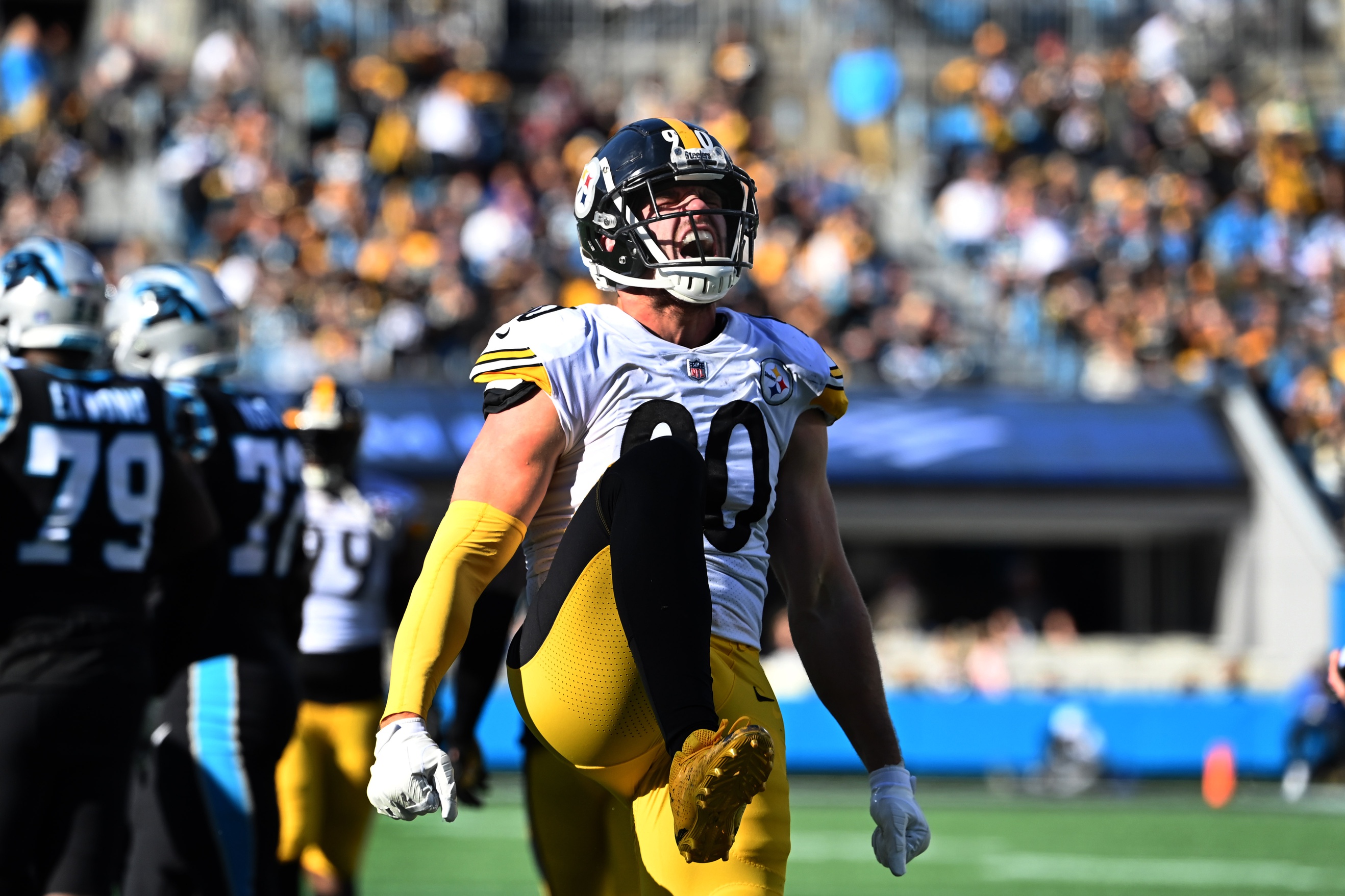
You're sitting on the couch, wings in hand, watching your favorite quarterback drop back. He scans the field, hitches once, then—boom. A defensive end coming off the edge blindsides him for a loss of seven yards. If you’re a stats nerd or a fantasy football manager, your first instinct is to check the box score. But here’s the kicker: the answer to "do sacks count against rushing yards" depends entirely on what level of football you’re watching. It’s one of those weird quirks that drives fans absolutely insane.
In the NFL, that seven-yard loss is a passing statistic. In the NCAA, it's a rushing statistic. Same play, same result, but two completely different ways of recording history.
It’s honestly kind of a mess. If you've ever wondered why college quarterbacks like Lamar Jackson or Jayden Daniels seem to have such volatile rushing totals compared to their pro careers, this is a huge piece of the puzzle. We’re talking about a fundamental disagreement in how the game of football is measured.
The NFL Logic: Sacks Are Passing Plays
The NFL views the game through the lens of intent. When a quarterback drops back to pass, the league considers every part of that sequence a "passing play." If the QB gets tackled behind the line of scrimmage, it’s recorded as a sack.
Crucially, the NFL does not subtract those lost yards from the quarterback's individual rushing total. Instead, those yards are deducted from the team's total passing yards. So, if Patrick Mahomes has 300 passing yards and 20 rushing yards, but gets sacked for a 10-yard loss, he still has 300 passing yards and 20 rushing yards in the individual box score. The Chiefs, however, would be credited with 290 net passing yards.
This makes sense if you think about it. If a guy is looking to throw, and he gets hit, why should his running stats suffer? He wasn't trying to run. He was trying to be an aerial threat. The NFL started tracking sacks as an official stat in 1982, and they've been pretty consistent about this separation ever since. It protects the integrity of a quarterback’s rushing average. You’ll see guys like Justin Fields or Jalen Hurts finish a game with a healthy 5.5 yards per carry because their sacks don't drag them down.
Why College Football (NCAA) Does It Differently
Now, let’s talk about the chaos of the Saturday game. The NCAA takes a much more literal approach. To them, if the ball is in the quarterback's hands and he is tackled behind the line of scrimmage, it's a negative run. Period.
This is why you’ll see a college quarterback have a "bad" day on the ground even if he looked fast. Imagine a mobile QB who breaks off a 40-yard scramble but then gets sacked five times for a total loss of 45 yards. In the college box score, he will finish the day with -5 rushing yards. It looks like he’s a statue, but in reality, he was actually quite productive on the one "real" run he had.
This discrepancy matters for historical context. When you look at the career rushing leaders in college football, quarterbacks are often buried because their sack yardage is constantly eating away at their totals. It’s also why Heisman Trophy debates get so heated. People argue over the "true" rushing ability of a dual-threat QB because the NCAA stats are essentially "diluted" by the offensive line's failure to protect him.
The Fantasy Football Impact
If you’re a fantasy manager, you’ve probably noticed that your platform (ESPN, Yahoo, Sleeper) follows the NFL’s lead. Sacks don't hurt your QB's rushing floor. This is a blessing. If sacks counted against rushing yards in fantasy, the "dual-threat" QB meta would be way riskier.
Imagine losing a playoff matchup because your quarterback took a meaningless sack on a Hail Mary attempt at the end of the half, docking you 0.8 points. People would riot. By keeping sacks separate, fantasy football rewards the quarterback for what he tries to do with his legs, rather than punishing him for what the defense does to him in the pocket.
Comparing the "True" Stats
If we look at someone like Caleb Williams or Anthony Richardson transitioning from college to the pros, their "rushing yards per game" often sees a weird jump. It’s not always that they became better runners overnight. It’s just that the 200+ yards they lose to sacks over a season are suddenly "hidden" in the passing stats rather than being a lead weight on their rushing average.
- NFL Rule: Sacks = Negative Team Passing Yards.
- NCAA Rule: Sacks = Negative Individual Rushing Yards.
- High School: Most state associations follow the NCAA rulebook, though some have their own tweaks.
The "Intent" Problem: Scramble vs. Sack
There is a gray area, though. What happens if a quarterback starts to run, realizes he can't make it, and gets tackled?
Basically, it comes down to the official scorer’s judgment. If the QB tucks the ball and becomes a runner, and he's tackled behind the line, that is a negative rush in the NFL. But if he still has his eyes downfield and is in a "passing posture," it’s a sack. You’ll often see coaches screaming at the sidelines because they want a play ruled as a sack rather than a tackle for loss (TFL) to protect their player's stats, or vice versa.
It's a split-second decision made by a person in a press box. Sometimes they get it wrong. You'll occasionally see stat corrections issued on Tuesday or Wednesday after the league reviews the "all-22" film. They look at whether the QB had abandoned the pass or if he was still hunting for a receiver.
Why the Discrepancy Exists
You might ask: Why can't everyone just use the same rule?
The NCAA has stuck to its guns mostly because of tradition. They view the game as a series of downs where the ball moves forward or backward. If the QB has the ball, he's the runner. It’s a simpler, if harsher, way of looking at the sport. The NFL, being a multi-billion dollar entertainment product, prefers stats that reflect specific skill sets. They want passing stats to reflect passing and rushing stats to reflect rushing.
This also affects "Net Yards per Attempt" (NY/A). This is a stat many analysts use to see how efficient a passing offense really is. It takes (Passing Yards - Sack Yards) / (Pass Attempts + Sacks). Even though the NFL doesn't take the yards away from the QB's personal total, they acknowledge those yards were lost on a pass play when calculating efficiency.
Real World Example: The 2023 Season
Look at a guy like Sam Howell, who was sacked a staggering 65 times in 2023. Under NCAA rules, assuming an average of 6 yards lost per sack, he would have had nearly 400 rushing yards wiped off his record. In the NFL, he finished with 263 rushing yards. If he were in college, he might have finished with a "negative" rushing total for the year despite being a relatively mobile guy.
What This Means for Your Betting and Scouting
If you're betting on player props, specifically "Quarterback Rushing Yards," you need to be hyper-aware of this. For NFL games, you don't have to worry about a sack-heavy game ruining your "Over." Your QB can get sacked 10 times, and as long as he has a couple of 10-yard scrambles, he’ll hit his mark.
But in the college game? A "rushing yards" prop is a gamble on the offensive line as much as the quarterback. If that line can't block, your QB's rushing total will bleed out throughout the game.
Actionable Takeaways for Fans
Knowing how these stats are logged makes you a smarter viewer. Next time you're arguing with a friend about who the better "athlete" is, remember these points:
- Check the "Sacked" Column: When evaluating a college QB's rushing stats, always look at how many times he was sacked. To find his "true" rushing ability, you often have to manually add those sack yards back into his total.
- Watch the Tucks: In the NFL, if a QB tucks the ball to run and gets hit for a 1-yard loss, that does count against his rushing yards. It’s only a "sack" if he’s still looking to pass.
- Contextualize Records: When comparing NFL legends to college legends, remember that the college guys are playing with a massive statistical handicap.
Understanding that sacks count against rushing yards in college but not in the pros is the "level 2" of football fandom. It changes how you see the box score and, more importantly, how you value the players on the field. Keep an eye on the official scorer next time a QB hesitates behind the line; that one decision could be the difference between a rushing title and a mediocre stat line.