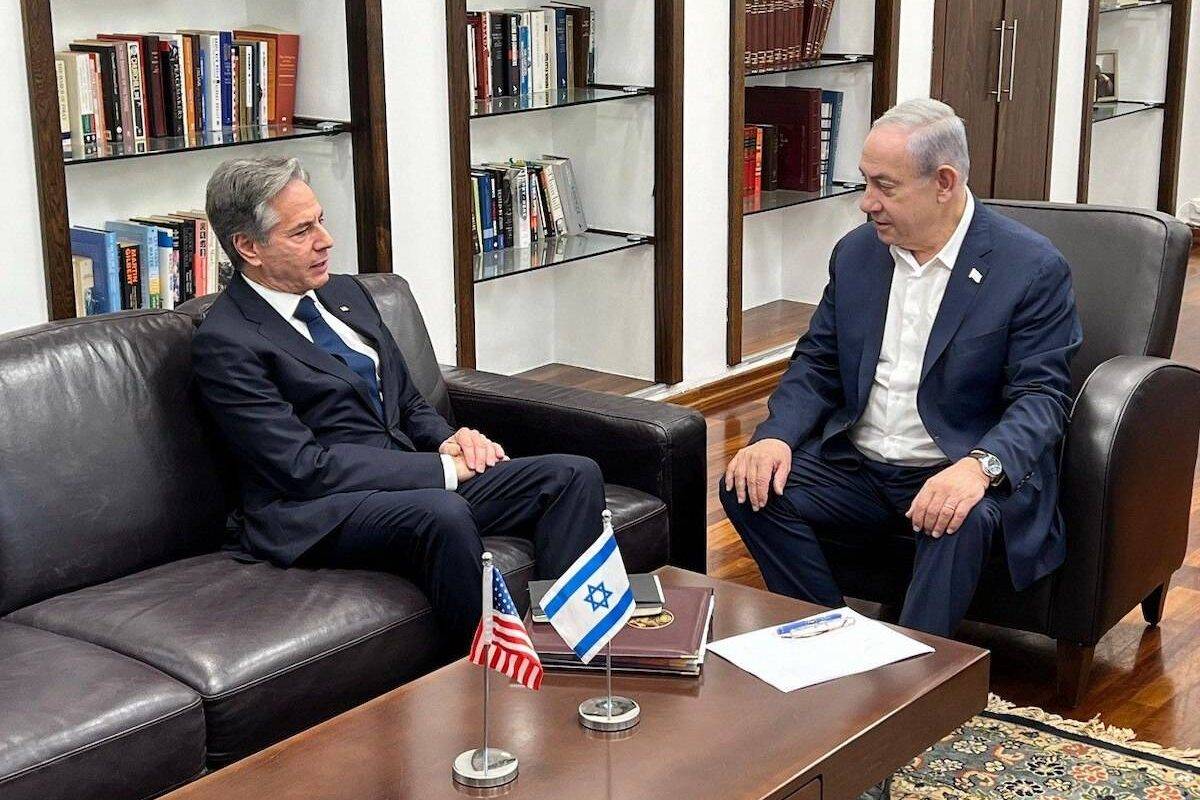
The international press is currently obsessed with a series of high-profile meetings between U.S. and Iranian envoys and the Pakistani leadership. They paint a picture of frantic, noble diplomacy aimed at "averting a regional catastrophe." They want you to believe that a few handshakes in Islamabad and some carefully worded joint statements are the thin line between peace and a scorched-earth Israel-Iran war.
It is a lie. This isn't diplomacy; it's a choreographed holding pattern designed to maintain a status quo that has already failed.
The media loves the narrative of the "Third-Party Mediator." Pakistan, with its unique position as a nuclear-armed neighbor to Iran and a long-standing partner of the West, is the perfect stage for this performance. But if you think these negotiations are about resolving the fundamental, existential friction between the Israeli state and the Iranian regime, you are falling for the oldest trick in the geopolitical book.
The Islamabad Distraction
The "lazy consensus" suggests that involving Pakistan creates a bridge. In reality, it creates a buffer that allows both Washington and Tehran to avoid making the hard choices necessary for actual resolution. By laundering their grievances through a third party, both sides can claim they are "exploring all avenues" while doing absolutely nothing to change their military posture.
I have spent years watching these cycles of "imminent conflict" followed by "breakthrough talks." The pattern is always the same:
- Tensions spike due to a direct strike or a proxy escalation.
- The U.S. deployment of carrier groups is framed as "deterrence."
- A neutral or semi-aligned capital (Muscat, Doha, or now Islamabad) hosts "urgent envoys."
- A vague statement about "regional stability" is issued.
- The underlying causes of the conflict remain completely untouched.
The Hindu and other outlets are reporting on the mechanics of the meeting. They tell you who sat where and what the itinerary looks like. They ignore the fact that the Pakistani government, currently grappling with its own internal economic collapse and domestic political instability, has zero actual leverage over either the Ayatollah or the Knesset. Pakistan is a venue, not a power broker.
The Myth of De-escalation Through Negotiation
The premise of these talks is that Iran and Israel are stumbling into a war they don't want, and simply need a "cool-down" period. This ignores the cold reality: both regimes find the current state of perpetual, low-level war incredibly useful for domestic survival.
For the Iranian leadership, the "Zionist threat" is the glue holding together a fractured domestic base. For the Israeli government, the "Iranian octopus" justifies every security measure and budget expansion. When envoys meet to "negotiate," they aren't trying to end the war. They are trying to calibrate it. They want to ensure the fire stays at a controlled simmer rather than a boil, not because they care about human life, but because a full-scale conflagration is expensive and unpredictable.
Stop asking if these talks will "succeed." They have already succeeded the moment the cameras clicked. They provided the illusion of movement.
The Nuclear Elephant in the Room
Notice what isn't the primary focus of these "urgent" Pakistan-hosted chats: the actual technical timeline of Iran's breakout capability. While envoys discuss "maritime security" and "regional proxies" with Pakistani officials, the centrifuges keep spinning.
The U.S. strategy, which I’ve seen play out across three different administrations, is to use these diplomatic side-shows to buy time. But time is only an asset if you are using it to build a better position. Right now, the U.S. is using time to hope the problem goes away. Iran is using time to ensure the problem becomes permanent.
If you want to understand the reality of the situation, stop looking at the press releases from Islamabad. Look at the shipping insurance rates in the Persian Gulf and the domestic fuel subsidies in Tehran. Those are the only metrics that matter.
Why Pakistan Can't Fix This
People also ask: "Can Pakistan bridge the gap between Sunni and Shia interests to stabilize the region?"
This question is fundamentally flawed. This conflict has almost nothing to do with sectarian theology and everything to do with 21st-century power projection. Pakistan itself is a victim of this rivalry, often serving as a playground for proxy influence. Expecting a country that is currently seeking an IMF bailout to dictate terms to a regional hegemon like Iran or a military powerhouse like Israel is a fantasy.
Pakistan’s involvement is a signal to the domestic audiences in the West: "Look, we are engaging with the Islamic world to find a solution." It is optics, nothing more.
The Cost of False Hope
The danger of this diplomatic theatre is that it breeds complacency. When the public sees headlines about "negotiations under way," they assume the adults are in the room and a plan is in place.
There is no plan.
The U.S. is reacting to events, not shaping them. Iran is playing a long game of "strategic patience" that involves slowly hollowing out its neighbors. Israel is operating on a doctrine of "mowing the grass"—periodically striking back to keep the threat at bay without ever solving the source.
Imagine a scenario where these talks actually "worked." What does that look like? A return to the status quo of 2023? That status quo led directly to the current crisis. Why are we so eager to return to a failed state?
The Only Real Way Out
If the U.S. actually wanted to end the threat of an Israel-Iran war, it wouldn't be sending envoys to Pakistan. It would be making a definitive choice: either provide the military hardware necessary for a decisive Israeli strike on nuclear infrastructure or enter into a grand bargain that recognizes Iranian regional influence in exchange for total, verifiable disarmament.
Neither side has the political stomach for either option. So, they go to Islamabad. They drink tea. They talk about "shared interests." They wait for the next explosion.
The next time you see a "LIVE update" about diplomatic missions in the Middle East, recognize it for what it is: a sedative for the masses. The war isn't being stopped in Pakistani boardrooms. It is being fueled by the very indecision these meetings are designed to mask.
Get used to the smoke. The people in charge have no intention of putting out the fire. They just want to make sure it doesn't singe their own eyebrows.