Geopolitics is not an Instagram feed.
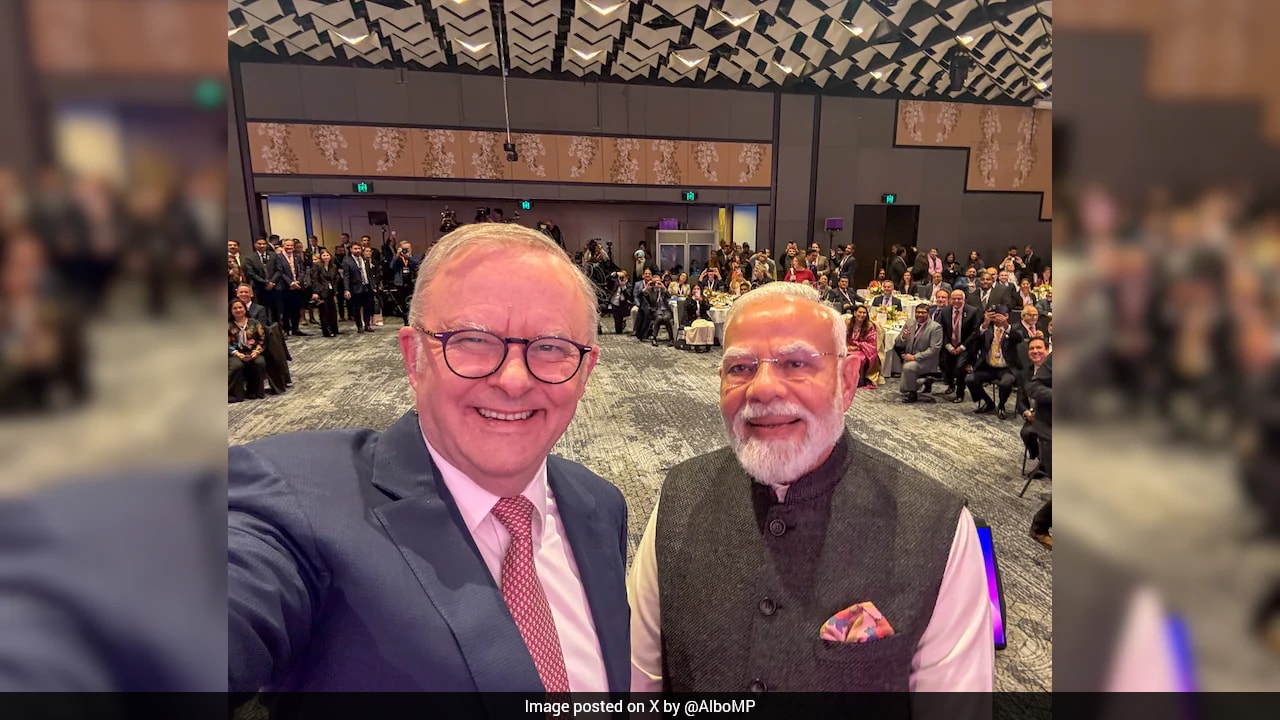
Yet, looking at the mainstream media coverage of Indian Prime Minister Narendra Modi and Australian Prime Minister Anthony Albanese, you would think global statecraft is won or lost on social media engagement. The press swooned over a "historic selfie" taken by the two leaders during a bilateral summit. They called it a defining moment for the Indo-Pacific. They hailed it as a masterclass in modern diplomacy.
They are dead wrong.
This hyper-focus on optics mask a sobering reality. While editors chase clicks on viral photos, the structural economic and strategic friction points between New Delhi and Canberra are quietly being swept under the rug. Optics-first diplomacy creates a dangerous illusion of alignment. It trades long-term institutional depth for short-term political theater.
The Soft Focus of Optics-Driven Diplomacy
I have spent years analyzing trade flows and bilateral defense treaties across the Indo-Pacific. I can tell you exactly what happens when governments rely on photo-ops to drive foreign policy: bureaucrats stop doing the heavy lifting. Why grind through grueling, 14-hour negotiations over agricultural tariffs or intellectual property rights when a single, smiling snapshot can dominate the next morning's news cycle?
The "lazy consensus" surrounding the India-Australia relationship asserts that because both nations share a mutual anxiety about regional maritime security, their interests are perfectly aligned. They are not.
To understand why, we need to dismantle the premise of the most common question asked by casual observers: How does a stronger personal bond between leaders accelerate trade agreements?
The brutal, honest answer is that it doesn’t.
The Fiction of the Personal Breakthrough
The idea that two leaders sharing a laugh can magically dissolve decades of protectionist economic policies is a fairy tale. Let’s look at the actual mechanics of the Australia-India Economic Cooperation and Trade Agreement (AI-ECTA) and its proposed upgrade, the Comprehensive Economic Cooperation Agreement (CECA).
Australia wants deep access to India’s massive consumer market for its agricultural exports—specifically dairy, beef, and grain.
India, conversely, has a deeply entrenched, politically sensitive farming lobby. Millions of smallholder Indian farmers wield immense voting power. No amount of personal camaraderie between Modi and Albanese will convince New Delhi to sacrifice its domestic agricultural sector to satisfy Australian cattle ranchers.
When we look past the flashbulbs, we see a relationship built on cautious hedging, not seamless integration.
The Strategic Disconnect Behind the Smiles
The media loves to bundle India and Australia into the same geopolitical bucket because of the Quad (the Quadrilateral Security Dialogue, alongside the US and Japan). But the strategic priorities of New Delhi and Canberra are fundamentally distinct, and ignoring this divergence is a recipe for diplomatic failure.
+------------------------+---------------------------------------+---------------------------------------+
| Strategic Metric       | Australia's Position                  | India's Position                      |
+------------------------+---------------------------------------+---------------------------------------+
| Alliance Architecture  | Formal treaty ally of the US (ANZUS).  | Strategic autonomy; rejects formal     |
|                        | Integrated into Western commands.     | military alliances.                   |
+------------------------+---------------------------------------+---------------------------------------+
| Principal Threat Focus | Maritime dominance in the South       | Continental borders (Line of Actual   |
|                        | China Sea and Pacific.                | Control) and Northern Indian Ocean.   |
+------------------------+---------------------------------------+---------------------------------------+
| Economic Dependence    | High reliance on China for resource   | Active decoupling; restricting Chinese|
|                        | exports (iron ore, coal).             | apps, investments, and supply chains. |
+------------------------+---------------------------------------+---------------------------------------+
Australia is an island nation structurally locked into the Western security apparatus via ANZUS and AUKUS. Its defense strategy relies on projecting maritime power alongside the United States.
India is a continental giant with a nuclear-armed neighbor on its northern border. Its defense policy is historically anchored in strategic autonomy. New Delhi does not take orders from Washington, nor does it view the world through a binary, Cold War-style lens.
When a crisis hits, these differences matter. Consider the conflict in Ukraine. Australia lined up squarely behind Western sanctions against Moscow. India, meanwhile, ramped up its imports of discounted Russian crude oil, ignoring Western disapproval to protect its domestic energy security.
A viral selfie cannot bridge a chasm that wide. It merely papers over it.
Stop Celebrating Content, Start Measuring Capital
If we want a resilient partnership in the Indo-Pacific, we must stop judging diplomatic success by the metrics of a marketing agency. We need to look at hard, unglamorous data points.
1. Supply Chain Diversification
Australia possesses vast reserves of critical minerals—lithium, cobalt, and rare earth elements—essential for the global energy transition. India desperately needs these materials to power its manufacturing ambitions. Yet, the supply chains connecting West Australian mines to Indian processing plants remain painfully underdeveloped. Until we see billions of dollars in actualized corporate investment rather than government press releases, the economic relationship remains superficial.
2. Educational and Migration Friction
The influx of Indian students into Australian universities is often cited as a triumph of soft power. However, rapid policy shifts in Canberra regarding student visas and immigration caps have caused widespread frustration in New Delhi. Treating human capital as a macroeconomic valve to be turned on and off to fix domestic Australian inflation numbers damages long-term trust.
3. Joint Naval Integration
While joint exercises like Malabar look impressive in promotional videos, true interoperability is lacking. Australia operates Western hardware; India utilizes a complex mix of legacy Russian, indigenous, and Western platforms. The logistical and communications barriers to genuine, real-time naval integration are massive and require sustained, technical bureaucratic work—not high-level political theater.
The Downside of the Contrarian Reality
Admitting that the India-Australia relationship is transactional rather than "historic" isn't cynical; it’s practical. The risk of this sober approach is that it lacks emotional appeal. It doesn’t inspire voters, and it doesn’t make for good television. It requires accepting that progress will be slow, frustrating, and measured in incremental regulatory adjustments rather than grand declarations.
But the alternative is worse. By pretending the relationship is more mature than it actually is, both nations risk being caught off guard when their core national interests inevitably clash.
Stop looking at the photo. Look at the balance sheet.