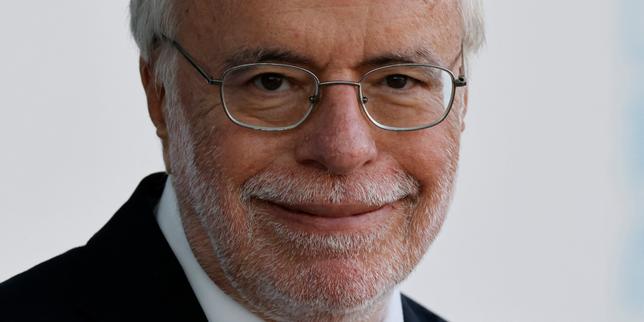
The air in the Élysée Palace is heavy with the scent of old floor wax and the weight of decisions that outlive the men who make them. Emmanuel Macron is a man who obsesses over the geometry of power. He views history not as a static timeline, but as a source of energy to be tapped, a battery for the present. When he sits across from Andrea Riccardi—the silver-haired, soft-spoken founder of the Sant’Egidio community—the conversation isn’t about simple policy. It is about a haunting.
Specifically, the ghost of Pope Leo XIII.
To understand why a modern, secular French president is mesmerized by a Pope who died in 1903, you have to look past the political theater. You have to look at the cracks in the world. Riccardi knows those cracks better than anyone. His community, often called the "UN of Trastevere," has spent decades brokering peace in the shadows of civil wars and feeding the forgotten in the streets of Rome. He sees the fragility of the social contract. Macron sees it too, and he is terrified of it breaking.
The Architect of a Social Bridge
Leo XIII was the man who looked at the Industrial Revolution—the smoke, the grinding poverty, the simmering rage of the working class—and realized that the old world was dead. In 1891, he released Rerum Novarum. It was a thunderclap. He didn't just talk about God; he talked about wages. He talked about the right to form unions. He argued that if the state and the church didn't address the misery of the masses, the masses would burn the house down.
Macron is currently standing in a similar gale. He faces a France, and a Europe, that feels increasingly unmoored. There is a sense that the gears of the global economy are chewing people up rather than lifting them. When Macron looks at Leo XIII, he sees an "authority figure" who managed to be both deeply traditional and radically modern. He sees a template for how to speak to a divided society without surrendering to the extremes.
Riccardi observes this fascination with a scholar’s detachment and a mediator’s intuition. He notes that for Macron, the appeal of the 19th-century pontiff lies in the "Ralliement"—the moment Leo XIII encouraged French Catholics to stop fighting the Republic and start working within it. It was an attempt to heal a broken national identity.
A Dialogue of Desperation
Imagine two men in a room, surrounded by the gilded opulence of the French state. One is a product of elite meritocracy, a master of the "at the same time" philosophy. The other is a man who has spent his life in the company of the poor and the war-torn.
The conversation isn’t about theology. It’s about the "social question."
The real stakes are the invisible ones. They are the feelings of the worker in a small town who feels the pulse of globalization leaving him behind. They are the fears of the immigrant who finds the doors of the Republic locked. They are the anxieties of a middle class that feels its status slipping like sand through its fingers.
Macron is looking for a way to provide moral gravity in a world that feels weightless. He is a secular leader searching for a sacred architecture to hold his country together. Riccardi, through Sant’Egidio, offers a living example of that architecture. The community doesn't just provide charity; it provides belonging. It treats the "discarded" people of society as the center of the world.
This is the "authority" Macron craves. Not the authority of a whip or a decree, but the authority of a shared moral purpose. He is trying to bridge the gap between the cold efficiency of the state and the warm, messy reality of human life.
The Ghost in the Machine
Critics call Macron’s interest in the papacy and historical religious figures a breach of laïcité—France’s fierce brand of secularism. But that misses the point entirely. He isn't trying to bring back the church as a political power. He is trying to figure out how to stop the fragmentation of the human soul.
The modern world is a lonely place. Digital connections have replaced physical neighborhoods. The "intermediary bodies"—the clubs, the unions, the parishes—that once gave people a sense of place have withered. Leo XIII understood that people cannot live on bread alone, nor can they live on ideology alone. They need a sense of dignity that comes from being part of a social whole.
Riccardi speaks of a "diplomacy of the heart." He tells stories of rebels in Mozambique or the streets of Lebanon who laid down their arms not because of a treaty, but because they finally felt seen. This is the "human-centric" power that Macron is trying to synthesize.
It is a desperate gamble.
French society is currently a powder keg of competing identities. On one side, a rigid secularism that can feel cold and exclusionary. On the other, a rising tide of religious and ethnic tensions that threaten to tear the fabric of the Republic. By invoking the spirit of Leo XIII, Macron is signaling a desire for a "third way"—a social Catholicism adapted for a secular age, focusing on solidarity and the common good rather than dogma.
The Invisible Stakes
Why does this matter to someone who isn't French, or Catholic, or even particularly political?
Because the crisis Macron and Riccardi are discussing is universal. We are all living in the shadow of a new Industrial Revolution—the digital and AI age. The old certainties are dissolving. Work is changing. The way we communicate is changing. The very idea of what it means to be a citizen is under fire.
If we don't find a way to ground our technological progress in a deep, human-centric morality, we risk creating a society that is technically brilliant but spiritually vacant. We risk building a world where the "authority" is an algorithm rather than a shared set of values.
Riccardi's Sant’Egidio serves as a laboratory for this challenge. They take the "discarded" and make them protagonists. They take the "invisible" and make them seen. For a president like Macron, who is often accused of being the "president of the rich" and out of touch with the common man, this isn't just an intellectual interest. It is a lifeline. It is an attempt to learn how to speak a language that resonates with the heart of the people.
The Long Shadow of the Vatican
The connection between the Élysée and the Vatican is a dance of shadows. It is a recognition that the state, for all its power, cannot manufacture meaning. It can provide safety, it can provide infrastructure, but it cannot provide hope.
Leo XIII’s genius was recognizing that the church had to change to survive in a modern world. Macron’s challenge is to see if the modern state can do the same. Can a secular Republic embrace the "social soul" that Leo XIII championed without losing its own identity?
Riccardi doesn't provide easy answers. He provides examples. He shows that when you treat a refugee as a brother rather than a statistic, the world changes. When you sit down with an enemy and share a meal, the wall between you starts to crumble.
This is the "invisible diplomacy" that lies beneath the surface of the headlines. It is a realization that power is not just about who holds the pen or the sword, but who holds the narrative of what it means to be human.
The meetings between the President and the peace-maker are a testament to a quiet truth: even in our hyper-secular, hyper-fast world, we are still searching for the same things the workers of 1891 were searching for. We are searching for a place in the story. We are searching for an authority that recognizes our inherent worth.
As the sun sets over the Rue du Faubourg Saint-Honoré, the echoes of a 19th-century Pope continue to bounce off the walls of the Élysée. It is a reminder that history never really ends; it just waits for someone to pick up the threads. Macron is holding those threads now, trying to weave a new tapestry out of the old, hoping that this time, the center will hold.
There is a profound vulnerability in this. To admit that the mechanisms of the state are not enough is to admit a kind of failure. But in that admission, there is a seed of something better. There is the possibility of a politics that doesn't just manage people, but actually serves them.
The ghost of Leo XIII isn't here to bring back the past. He is here to remind us that the "social question" is never truly answered. It is a conversation that must be had anew in every generation, in the streets of Rome, the suburbs of Paris, and the quiet corners of our own lives.
The silence in the palace isn't the absence of sound. It is the sound of two men listening for the heartbeat of a world that is struggling to be born.