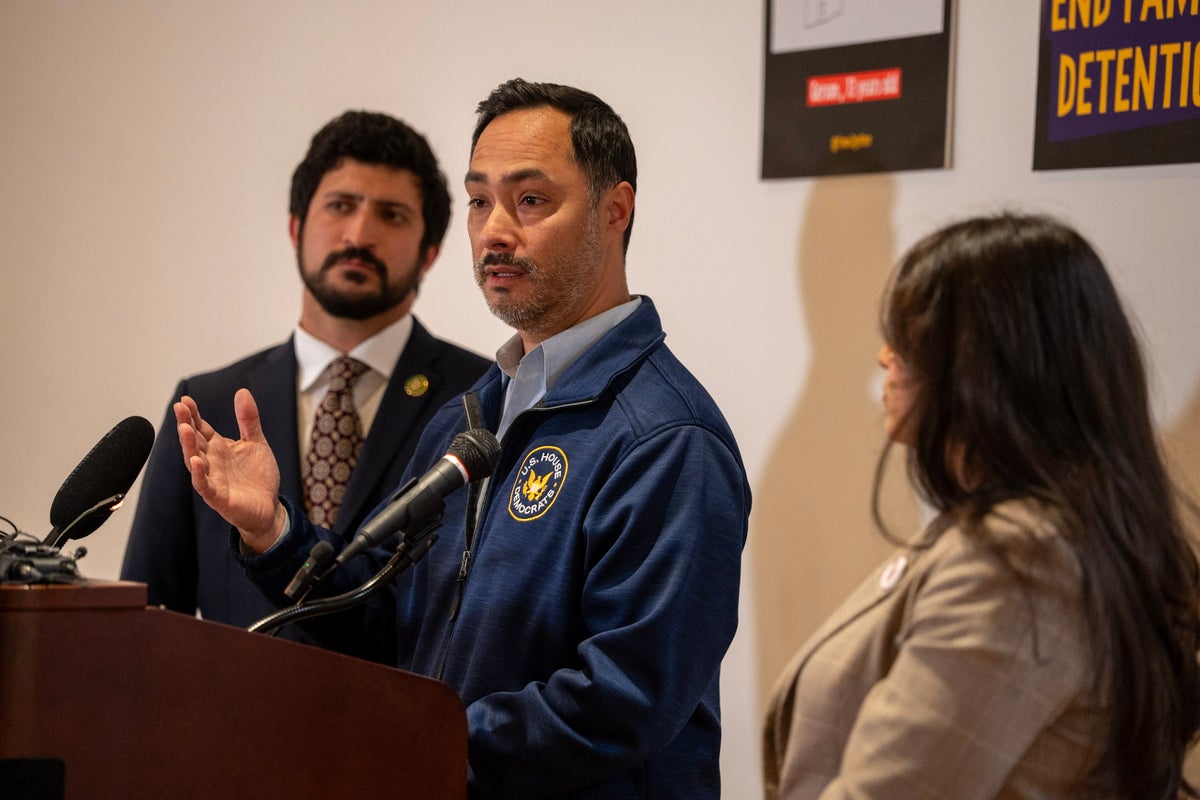
The South Texas Family Residential Center in Dilley has always been a controversial spot on the map, but lately, it’s turned into something much more ominous. For years, we’ve heard the horror stories of "trailer prisons" and kids in cages. Now, congressional Democrats are sounding the alarm that under the current Department of Homeland Security (DHS) leadership, the facility has entered a new era of secrecy that makes oversight almost impossible. If you think we know what's happening inside those gates, you're wrong.
Since the start of 2025, the detention system has shifted. We aren't just talking about a crowded facility anymore; we're talking about a systematic breakdown in transparency. Lawmakers like Elizabeth Warren and Joaquin Castro have described a "disappearance" of sorts on U.S. soil. People go in, and thanks to an increasingly broken Online Detainee Locator System (ODLS), their families and lawyers can't find them. It’s a ghost system, and Dilley is the epicenter. In other developments, read about: Why Cuba Still Wants to Talk and Why the US Probably Won't.
The wall of silence at the Dilley facility
The Dilley facility was originally built to house families, then it was closed, then it was retrofitted and reopened. This constant back-and-forth has created a chaotic environment where rules feel optional. Right now, more than 2,400 people can be held there at once, making it one of the largest cogs in the ICE machine. But bigger doesn't mean better. It just means more people are getting lost in the shuffle.
Congressional delegations recently returned from an inspection with a report that reads like a nightmare. Representative Madeleine Dean and Katherine Clark described a system in "despair." They found pregnant women and toddlers lacking basic medical attention. When they asked for data or access to specific areas, they were met with the kind of stonewalling you'd expect from a classified military site, not a civil detention center. Associated Press has also covered this important subject in great detail.
The DHS has been pushing back, claiming they provide "timely and appropriate" care, even calling reports of medical neglect "false." But the gap between the official press releases and what's actually happening on the ground is widening. When the government spends $102 million on a facility and then refuses to let independent observers see how that money is being used to treat human beings, the "secrecy" label isn't just political rhetoric. It's an accurate description.
Why the locator system failure is a feature not a bug
You’d think in 2026 we could track a person in federal custody with a simple database. Instead, the ODLS has become a "black hole." Democrats point to a terrifying trend: people are being shuffled between facilities or even deported before they ever show up in the system.
- Lagging Updates: It takes days or weeks for a name to appear.
- Holding Rooms: ICE is using non-traditional "holding facilities"—basically concrete boxes—that aren't subject to the same oversight as Dilley.
- Information Gaps: Lawyers arrive at Dilley only to be told their client isn't there, even when the system says they are.
This isn't just a technical glitch. It's a barrier to the constitutional right to legal counsel. If a lawyer can't find their client, they can't stop a wrongful deportation. It’s that simple. The current DHS chief has overseen a massive expansion of this "detention reengineering," which basically means spending $38 billion to turn warehouses into jails while cutting out the public’s right to know what's going on inside.
The high cost of no-bid contracts
One of the biggest issues nobody talks about is the money. ICE has used the current "border emergency" to skip the usual competitive bidding process. Instead, they’ve handed out massive, no-bid contracts to private prison giants like CoreCivic and GEO Group. Dilley is part of this "opaque contract scheme."
When you remove competition and transparency from the equation, you get two things: wasted taxpayer dollars and a total lack of accountability. These private companies are incentivized to cut costs on things like food and medicine to pad their bottom line. 2025 was already the deadliest year in two decades for people in ICE detention, and 2026 is on track to be even worse. With 13 deaths already reported since January, the "secrecy" isn't just about hiding paperwork; it's about hiding the human cost of a profit-driven system.
The reality is that Dilley has become a symbol of a government operating without a tether. Representative Joaquin Castro called it a "trailer prison," and honestly, he’s right. It’s a temporary solution that became permanent, managed by private interests, and shielded by a DHS leadership that treats oversight as an annoyance rather than a requirement.
If you want to stay informed or help, start by following the work of the National Immigrant Justice Center (NIJC) or the American Civil Liberties Union (ACLU). They’re the ones filing the lawsuits to force the DHS to release the data they’re currently hiding. You can also contact your local representatives to demand a return to competitive, transparent contracting for all DHS facilities. The "era of secrecy" only ends when we stop letting them hide in the dark.


