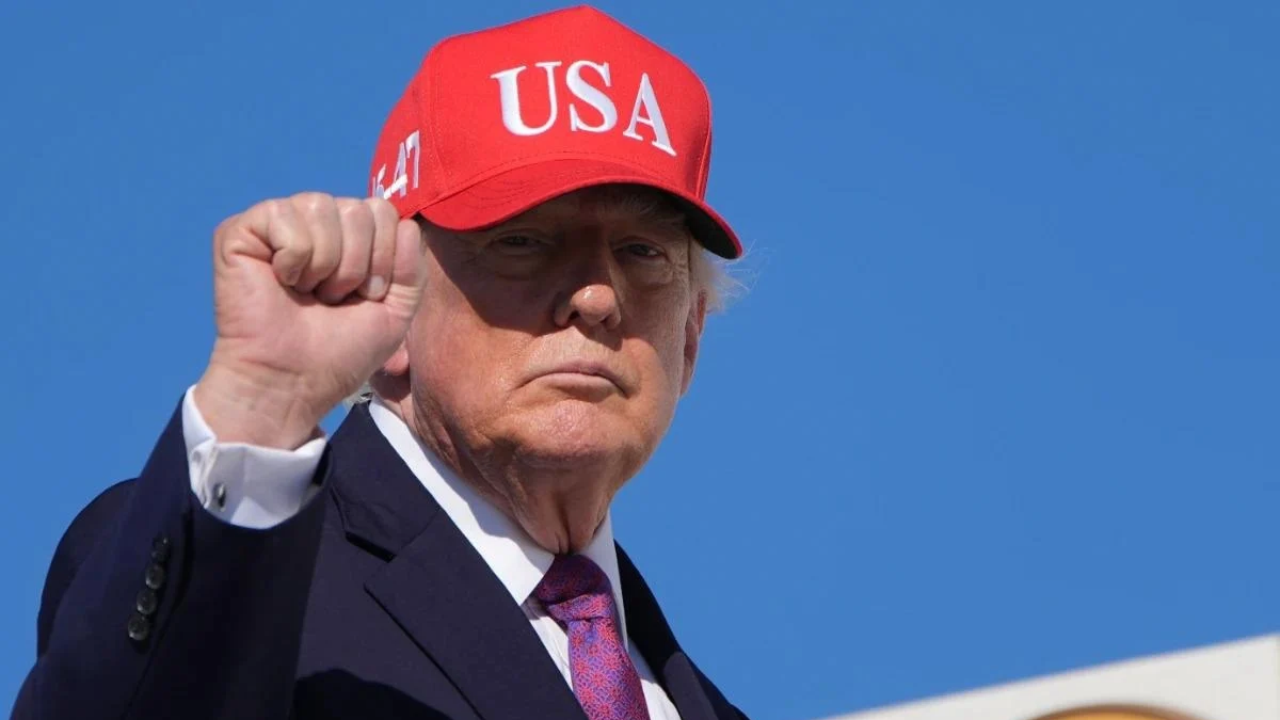
Dust. That is the first thing you taste in late-autumn Arizona when the Santa Ana and Sonoran air currents collide over a strip of asphalt south of Phoenix. It grits between your molars, settles onto the hood of a parked pickup truck, and coats the chain-link fence bordering a dry wash. You do not need a television set to feel the friction of an election cycle out here; you feel it in the dry rasp of wind through creosote bush and the tight, guarded silence at a diner counter when a news chyron flickers overhead.
Exhausted.
That is how so many voters walk into a midterm cycle—worn down by years of megaphone politics where every ballot box is framed as either a rescue raft or a cliff edge. When Donald Trump steps up to a podium and warns that Democrats will "destroy" America while throwing his weight behind Andy Biggs in the Arizona governor's race, he is speaking a dialect of urgency that has become the native tongue of modern campaigns. To a headline skimmer, that sentence looks like routine political theater: a fiery warning, a high-profile endorsement, a battleground state heating up.
Yet headlines flatten human lives into scoreboards. Behind the phrase "destroy America" sits a tangle of real anxieties—grocery receipts that sting a little harder than they did five years ago, border towns stretched thin between humanitarian strain and law-enforcement pressure, water allocations shrinking in a desert that never promised infinite growth, and a deep, simmering fear that the country one grew up recognizing is slipping out of reach.
To understand what actually moves people when those words echo across a rally ground, let us step into a hypothetical scenario. Picture Elena and Ray, a fictional couple living outside Mesa. Elena runs bookkeeping for a small HVAC contractor whose trucks burn diesel every morning before dawn; Ray works part-time maintenance at a municipal park and watches desert mesquite trees struggle through long stretches without rain. Neither Elena nor Ray matches a neat caricature. Elena worries about tax predictability, permitting delays, and whether her son can afford a starter home without moving two states away. Ray cares deeply about public lands, fair wages for working crews, and keeping neighborhood clinics open—even if he distrusts political promises from every quarter.
When Elena hears a warning that opponents will ruin the nation, she does not necessarily hear a literal prophecy of smoke and rubble. Often, she hears a shorthand for everything she is afraid of losing: purchasing power, order at the southern border, or a voice that respects small-business grit. When Ray hears the exact same rhetoric, he might recoil, feeling that calling fellow citizens "destructive" turns neighbors with different priorities into existential enemies.
Both reactions are real. Both are human. And both expose the central tension of midterm elections in a fiercely contested state like Arizona.
Why Midterms Hit Differently Than Presidential Years
Midterm elections often suffer from a strange optical illusion. Because there is no top-of-the-ticket presidential race, casual observers sometimes treat them as secondary—a mere temperature check or a mid-course correction. In reality, statehouses and congressional seats shape daily life with an intimacy a distant presidency rarely matches.
Consider what a governor actually touches. A state executive signs or vetoes budgets affecting public schools, state highway patrols, water management agencies, election administration rules, and economic development incentives. In a state like Arizona—where rapid suburban growth collides with finite Colorado River water and intense national debate over immigration and border enforcement—the governor's office sits right at the crossroads of local survival and national symbolism.
Backing a figure like Andy Biggs in a gubernatorial contest signals more than a personal preference. Biggs has long been one of the sharpest, most uncompromising conservative voices in Arizona politics, known for hardline positions on immigration enforcement, border security, spending restraint, and skepticism toward federal overreach. When a dominant political figure like Trump endorses such a candidate and frames the opposing party in apocalyptic terms, the message is unmistakable: compromise is cast as surrender, and the election is pitched as a decisive civilizational choice.
That framing works for a reason. Political psychology has long shown that threat motivates faster and more fiercely than incremental policy detail. Telling a tired voter, "Here is a 40-page white paper on municipal zoning," rarely stirs the blood. Telling them, "Everything you value is on the chopping block," grabs them by the collar.
Yet there is a steep cost to living at a permanent pitch of existential alarm.
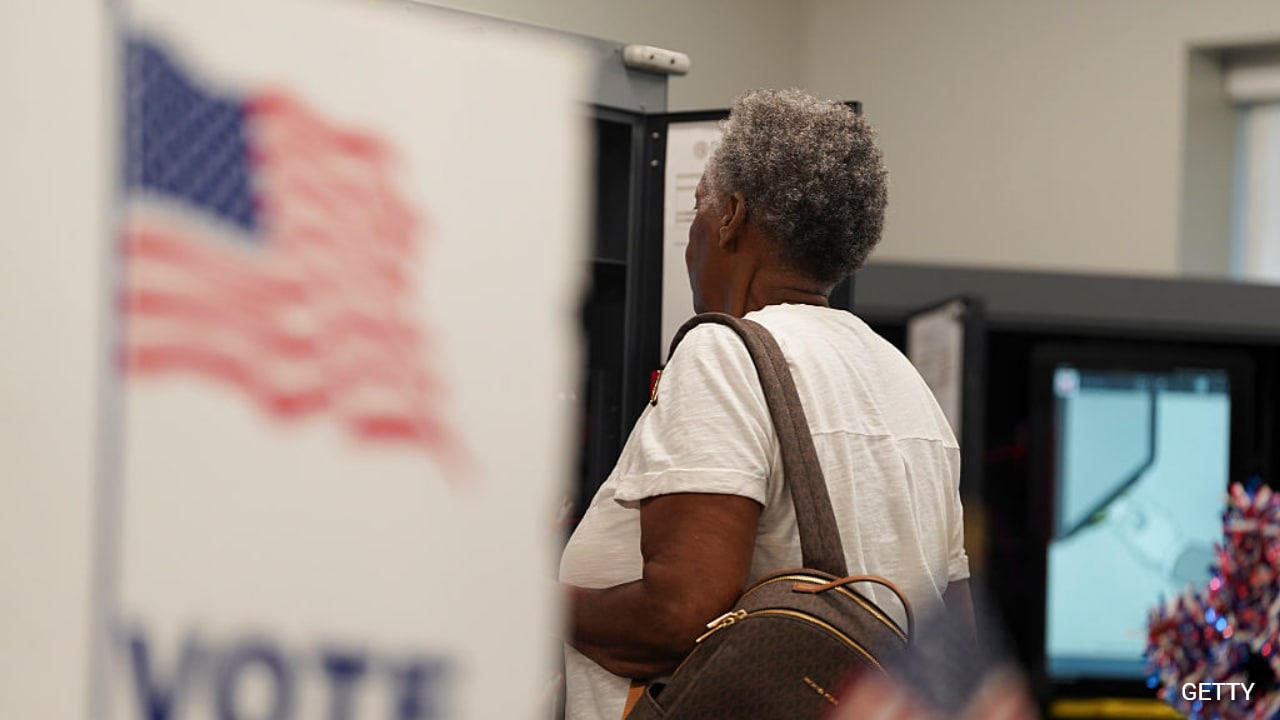
I have stood inside county election centers late on Tuesday nights when fluorescent lights hum over stacks of provisional ballots and volunteers with tired eyes check signature rosters for the twelfth hour. You watch ordinary people—poll workers who took the day off, observers from rival parties standing inches apart, local clerks trying to keep every rule straight—carry the weight of a nation that seems convinced the sky is falling. In those rooms, the gap between grand rhetoric and quiet civic labor feels vast. Most people working the count do not want to destroy anything. Most of them just want the rules followed, the lines kept moving, and their neighbors treated with basic decency.
The Endorsement Effect and the Battle for Arizona
Why does Arizona draw so much national oxygen during midterm cycles? Because it refuses to stay neatly painted one color. Over recent election cycles, Arizona has earned its reputation as a true purple battleground—a place where Maricopa County suburbs, fast-growing exurbs, tribal nations, college towns, and rural ranching counties pull in different directions.
In a contest shaped by sharp polarization, endorsements act like lightning rods. A Trump endorsement energizes a loyal base that views him as the primary champion of their movement, while giving candidates like Biggs high-wattage visibility and fundraising momentum. At the same time, high-decibel warnings about opponents "destroying" the country can rally die-hard supporters while alienating independent or persuadable voters who bristle at apocalyptic language.
That is the tightrope every campaign walks in a swing environment. Go too soft, and you risk depressing your own turnout; go too scorched-earth, and you may lose the middle slice of voters who decide close races by a few percentage points.
Think of it like tuning a guitar string in dry desert air. Heat and low humidity pull tension tight; pull a fraction too far and the string snaps, leaving silence where music was supposed to be. Politics in a divided electorate operates under a similar physics. Rhetoric that thrills one room can grate like chalk on a slate in the very next zip code.
Let us return for a moment to our hypothetical neighbors, Elena and Ray, sitting at their kitchen table after dinner. A campaign flyer sits beside a stack of utility bills. Elena points to a line warning of economic ruin if the wrong side wins; Ray shakes his head at the all-caps certainty on both sides of the mailbox pile. They are not political theorists. They are two working adults trying to make sense of rising costs, shifting cultural norms, and a media ecosystem that rewards outrage over nuance.
Confusing? Yes. Scary at times? Unquestionably. When every election is sold as doomsday, people start wondering what happens if their side loses—and whether the person across the street is a threat rather than a fellow citizen.
What Gets Lost When Politics Becomes Apocalypse
Here is the trap inside extreme warnings, regardless of which party uses them: when you describe your political rivals as destroyers of the country, you quietly shrink the space for governing.
Democracies are messy bargains among people who disagree. You do not need everyone to share the same worldview to share a town, a school district, a power grid, or a Constitution. You only need enough mutual restraint to accept outcomes, argue fiercely within the rules, and solve practical problems without treating every disagreement as treason.
When rhetoric escalates to existential ruin, ordinary disagreements—over tax rates, border enforcement priorities, regulatory pace, or social policy—get blown up into moral warfare. Suddenly, a dispute over how to fund rural roads or manage water rights feels like a fight over civilization itself.
That is exhausting for a republic. Worse, it can distract from the gritty, unglamorous work that actually improves lives. Fixing supply bottlenecks, protecting water supplies, keeping schools staffed, ensuring fair and transparent elections, and supporting families squeezed by housing and healthcare costs require steady execution, not just volume.
Of course, voters are right to demand clear stakes. Elections do matter. Who holds power in Arizona and in Washington shapes courts, budgets, enforcement priorities, and the direction of policy for years. Saying that opponents will "destroy" America is hyperbole—a blunt political weapon—but the underlying fears behind that weapon deserve serious attention rather than dismissal. If millions of people feel economically strained, culturally unheard, or anxious about border security and public safety, ignoring those feelings only feeds sharper anger.
Listening Beneath the Slogan
If you strip away the rally roar and the cable-news spin, a midterm election comes down to a quiet, personal reckoning inside millions of living rooms. Voters weigh memory against hope, frustration against trust, and pocketbook reality against promises.
An endorsement from Donald Trump for Andy Biggs in the Arizona governor's race puts a sharp ideological edge on that reckoning. It tells voters exactly what kind of fight is being waged and what kind of leadership is being offered. Whether that message persuades enough Arizonans—or pushes enough others the opposite way—depends on how people experience their daily lives when the cameras leave.
Out past the city limits, the desert wind keeps blowing across dry washes and open mesas. Tomorrow morning, trucks will roll out before sunrise, schools will open their doors, and neighbors who vote differently will pass each other on the same two-lane roads—still bound to the same ground, still sharing the same weather, still deciding what kind of common life they are willing to build together.