Modern autocrats rarely arrive in tanks. Instead, the legal path to autocracy relies on elected leaders using constitutional amendments, judicial appointments, and emergency decrees to dismantle democratic checks from within—all while keeping the ballot box intact. By following the letter of the law, aspiring strongmen neutralize courts, cripple independent media, and tilt election rules in their favor before the public realizes the game is rigged.
I have spent three decades covering constitutional crises, coup attempts, and quiet institutional collapses across four continents. Early in my career, you knew a democracy had fallen when a general read a proclamation over state radio and suspended the constitution. Today, the constitution stays on the shelf, freshly bound and frequently cited by the very men hollowing it out. Political scientists call this autocratic legalism, a strategy where the machinery of democracy is turned against itself.
The Architecture of Constitutional Capture
The process almost always begins at the ballot box. A charismatic leader wins a legitimate, often sweeping electoral mandate by promising to clear out a corrupt, gridlocked establishment. That initial victory provides the moral and legal fuel for everything that follows. Once in office, the new executive argues that the existing system of checks and balances is not a safeguard against tyranny, but an obstacle to the will of the people.
To clear those obstacles, the ruling party targets the judiciary first. They do not jail judges or padlock courthouses. They pass laws lowering the mandatory retirement age for supreme court justices, creating sudden vacancies that the ruling party immediately fills with loyalists. Or they expand the size of the constitutional court, diluting the influence of independent jurists without firing a single one.
In Hungary after 2010, Prime Minister Viktor Orbán's Fidesz party used its parliamentary supermajority to rewrite the constitution entirely, packing the Constitutional Court and stripping it of the power to review budget and tax laws. Every step was debated on the floor of parliament. Every bill received the required number of votes. By the time international observers raised alarms, the highest court in the land was effectively an arm of the executive branch.
Weaponizing the Bureaucracy and the Tax Code
Once the courts are neutralized, the legal path to autocracy moves into the mundane, unglamorous world of administrative law. Journalists and casual observers tend to miss this phase because tax audits and broadcast licensing renewals do not make for dramatic television. Yet this is where opposition movements are quietly starved to death.
An independent newspaper publishes an investigation into government procurement contracts. Weeks later, the state tax authority launches an exhaustive, multi-year audit of the paper's parent company, freezing its bank accounts as a "precautionary measure" while the investigation drags on. Simultaneously, state-owned enterprises and private corporations fearful of regulatory retaliation pull their advertising budgets. The paper folds—not because of a censor's stamp, but because it cannot pay its printers.
Consider a hypothetical scenario that plays out in various forms across struggling democracies. Imagine a mid-sized telecommunications firm owned by a businessman who funds an opposition party. Suddenly, the national communications regulator discovers a minor, previously ignored technical violation in the firm's spectrum license. Fines pile up. Appeals vanish into the newly compliant court system. Within eighteen months, the businessman sells the company at a steep discount to a holding company controlled by a close ally of the president. No laws were broken. Every form was stamped in triplicate.
The Illusion of the Level Playing Field
Elections remain central to this model. Modern strongmen need the legitimacy that only a vote can confer, both to placate domestic populations and to maintain access to international trade and lending markets. The trick is to keep elections competitive on paper while making an opposition victory mathematically nearly impossible.
This is achieved through electoral engineering. Ruling parties redraw district boundaries to fracture opposition strongholds, a practice familiar in many democracies but taken to extreme lengths under autocratic legalism. They pass strict, hyper-technical campaign finance rules that cut off private donations to opposition candidates while funneling state subsidies and public media airtime to the incumbent.
In Venezuela under Hugo Chávez and later Nicolás Maduro, the government gradually transformed the National Electoral Council into a partisan body. Opposition candidates were routinely disqualified on minor administrative pretexts—an incomplete asset disclosure here, an alleged misuse of municipal funds there. Voters still went to the polls, and international monitors could still observe ballots dropping into boxes. The outcome, however, was baked into the legal framework months before election day.
Why Traditional Safeguards Fail
Why do constitutions fail to stop leaders who use constitutional methods to destroy them? The answer lies in a fundamental design flaw of democratic governance. Constitutions are written on the assumption that political actors will exercise institutional forbearance—the willingness to refrain from using every legal power at their disposal just because they technically can.
A constitution might grant a president the power to declare a state of emergency during a crisis, or allow a parliament to alter judicial rules with a simple majority. The framers of these documents assumed that norms, public backlash, and mutual self-interest would prevent leaders from abusing those clauses. When a leader discards those norms while strictly obeying the text, the system has no immune response.
| Mechanism | Traditional Coup | Legal Path to Autocracy |
|---|---|---|
| Transfer of Power | Military force or sudden seizure | Legitimate democratic election |
| Constitution | Suspended or abolished immediately | Amended, rewritten, or selectively enforced |
| Judiciary | Shut down or replaced by military tribunals | Packed via retirement laws or court expansion |
| Independent Media | Censored by decree or stations seized | Starved via tax audits, libel suits, and license denials |
| Elections | Canceled indefinitely | Held regularly under skewed legal rules |
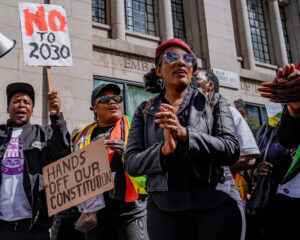
Opponents trying to fight this process face an agonizing trap. If they play strictly by the newly rigged rules, they validate a system designed to ensure their defeat. If they boycott elections or take to the streets to disrupt government operations, the regime paints them as anti-democratic extremists threatening law and order. The autocrat gets to play the defender of constitutional stability while the actual democrats look like insurgents.
The Gray Areas of Emergency Powers and National Security
To be clear, distinguishing between legitimate governance and creeping autocracy is rarely straightforward in real time. Democracies genuinely do face crises—pandemics, economic collapses, terrorist threats—that require swift executive action and temporary expansions of state power. A government that centralizes authority during an acute emergency is not automatically sliding toward dictatorship.
The warning signs appear when temporary measures become permanent fixtures of the legal code. Look closely at sunset clauses. In a healthy democracy, emergency powers expire automatically unless renewed by a broad legislative consensus. Along the legal path to autocracy, emergencies are extended indefinitely through routine parliamentary votes, or their provisions are quietly folded into ordinary criminal and administrative statutes.
Counter-terrorism and anti-money laundering laws are particularly susceptible to this kind of mission creep. Originally passed to satisfy international banking standards or combat genuine violent threats, these statutes give prosecutors sweeping powers to freeze assets, surveil communications, and detain suspects without immediate charge. Once those tools exist on the books, it requires only a shift in prosecutorial discretion to turn them against investigative reporters, labor organizers, and political rivals.
Follow the Paper Trail
If you want to track whether a democracy is eroding, stop watching the nightly news shouts and start reading the legislative register. The real story is rarely in the speeches; it is buried in the footnotes of omnibus budget bills and regulatory decrees.
Watch the civil service. When career bureaucrats in justice ministries, election commissions, and central banks are systematically replaced by political appointees—often through newly created "special advisor" classifications that bypass merit-based hiring laws—the institutional memory and independence of the state are being hollowed out.
Watch the rules governing non-governmental organizations. When a government passes a "foreign agent" registration law requiring any civic group receiving international grants to submit to intrusive audits and carry stigmatizing labels, civil society is being cornered.
The genius of the legal path to autocracy is its patience. No single decree triggers a general strike. No single judicial appointment justifies a mass uprising. Each step looks like a minor, defensible adjustment to existing law—until the day citizens look up and realize there is no longer a legal way to vote the government out.