The artificial intelligence boom is silently migrating to the ocean floor. Beneath thousands of meters of cold, black water, a high-stakes geopolitical war for fiber-optic dominance is reshaping the US-China relationship.
For decades, the physical internet felt like an abstract concept floating through the atmosphere or tethered to mundane utility poles. That illusion is shattered. The massive computational demands of training next-generation large language models require unprecedented data transfer speeds across continents. Transpacific fiber-optic cables are the literal veins of this infrastructure. Whoever controls these underwater lines controls the flow of global capital, intelligence, and technological supremacy.
Washington and Beijing are no longer just competing over silicon chips and software algorithms. They are locked in a subterranean gridlock over the very cables that carry them.
The Physical Constraints of Digital Ambition
Silicon Valley likes to talk about the cloud as if it exists in a weightless dimension. It does not. Every query fed into an artificial intelligence model, every synthetic image generated, and every parameter adjusted in a massive neural network relies on physical copper and glass resting on the abyssal plain.
Data center expansion is hitting a wall on land. Power grids are straining under the sheer electricity draw of server farms. Meanwhile, the transpacific cable network connecting North America to East Asia is operating near maximum capacity.
The traditional model of laying submarine cables relied on a cooperative global consortium. Private telecommunications companies, often backed by international alliances, shared the immense multi-million-dollar cost of routing cables across the Pacific Ocean. Those days are over.
National security agencies on both sides of the Pacific now view these private consortiums as potential vectors for espionage and sabotage. The Department of Justice and the Federal Communications Commission have quietly weaponized permitting processes to block direct cable landings between the United States and mainland China. Projects that once took months to greenlight now face indefinite delays, security reviews, and outright rejections under the banner of foreign intelligence protection.
Chokepoints on the Ocean Floor
Geographers talk about chokepoints like the Strait of Malacca or the Suez Canal with nervous respect. The new map of vulnerability lies much deeper.
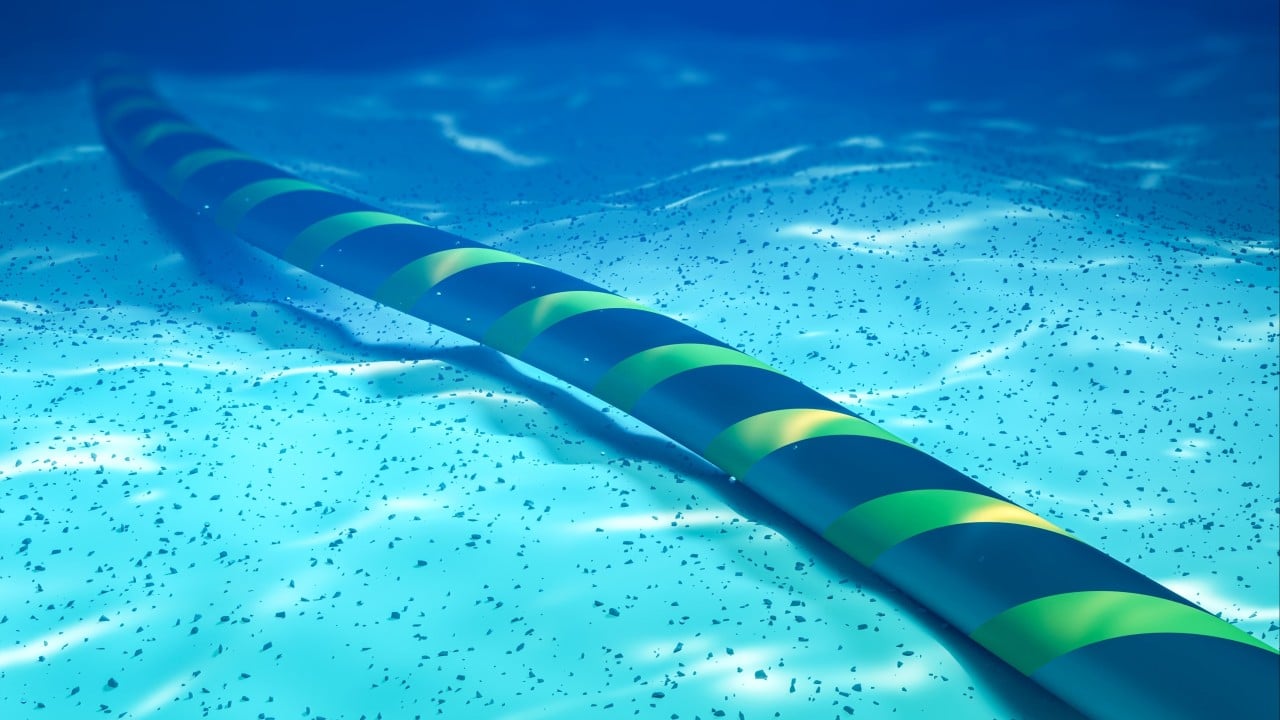
Submarine cables are shockingly fragile. Despite being armored with steel wire, polyethylene, and waterproof tubes, they are vulnerable to seismic activity, commercial fishing trawlers, and intentional disruption. When a cable breaks between Taiwan and the Philippines, the economic ripple effects are immediate and severe.
The US-China stand-off has turned these vulnerabilities into strategic weapons. Intelligence reports leaked over recent years highlight deep-seated fears in Washington that state-backed actors could tap cables at depth, splicing into fiber strands to harvest unencrypted data streams before they hit domestic shores. While the tech industry insists that modern end-to-end encryption renders raw wiretapping obsolete, security hawks counter that metadata collection alone provides a map of global intent.
China, for its part, views American control over international standardization bodies and cable repair consortia as an unfair blockade. Beijing has launched aggressive state-subsidized initiatives to build alternative routes. Projects like the PEACE cable, which connects Asia, Africa, and Europe, bypass traditional Western-dominated pathways entirely.
The Routing Wars
Look at a map of planned transpacific routes over the last five years. You will notice a deliberate detour.
Earlier routes frequently connected US shores directly to Hong Kong, a global financial hub with robust infrastructure. As Beijing tightened its legal grip on the territory through national security legislation, Washington panicked. The FCC began denying landing licenses for any cable terminating in Hong Kong, forcing tech giants to reroute multi-thousand-mile lines to Taiwan, Japan, Guam, and the Philippines instead.
This redirection comes with a massive financial and logistical penalty. Longer routes increase latency—the microscopic delay in data transmission. For artificial intelligence systems that rely on real-time distributed computing across global clusters, milliseconds matter. The political fracturing of the ocean floor is introducing physical friction into a digital economy designed for instantaneous speed.
Traditional Route: US West Coast -> Hong Kong (Direct, Low Latency)
Current Route:     US West Coast -> Guam -> Philippines -> Japan (Bypasses China/HK, Higher Latency)
The technology giants financing these cables are caught in the crossfire. Alphabet, Meta, Microsoft, and Amazon are no longer mere customers of telecommunications providers; they are primary stakeholders funding proprietary subsea infrastructure. They want the fastest, cheapest path for their artificial intelligence workloads. Geopolitics keeps handing them the longest, most expensive one.
The Subsea Surveillance Economy
The competition extends far beyond data transit. The ships that lay and repair these cables are themselves targets of suspicion.
Cable repair vessels are specialized, rare, and expensive. There are only a few dozen ships in the world capable of hauling up a severed cable from four thousand meters down and splicing hair-thin glass fibers in rolling seas. Both the US Navy and China's People's Liberation Army Navy monitor these civilian vessels with intense operational focus.
An intelligence analyst looking at tracking data of cable ships off the coast of East Asia sees a shadow war of positioning. Who is mapping the ocean floor? Which submarines are loitering near critical nodes? These are not hypothetical scenarios dreamed up by techno-thriller novelists. They are standard operational reports filed by defense contractors tracking maritime security in the South China Sea.
When a cable goes dark, the immediate assumption is no longer an accidental anchor drag. It is potential gray-zone warfare. The ambiguity benefits actors who want to disrupt communications without triggering a formal military response.
The Economic Realities of Cable Nationalism
Balkanization is expensive. By forcing the duplication of infrastructure, governments are driving up the baseline cost of global connectivity.
If American firms cannot land cables in Chinese territory, and Chinese firms are barred from Western projects, the world ends up with two parallel physical internets. This duplication requires astronomical capital expenditure. It diverts resources away from software innovation and renewable energy development toward defensive engineering and geopolitical hardening.
Furthermore, smaller nations in Southeast Asia and the Pacific Islands are caught in a patronage trap. Both Washington and Beijing are offering financing packages for regional landing stations, turning local infrastructure development into a proxy loyalty test. Accept Chinese state loans for your coastal landing site, and risk being locked out of Western cloud networks. Accept US security terms, and face regional diplomatic retaliation.
The artificial intelligence boom demands more bandwidth than the earth has ever seen. Meeting that demand requires laying thousands of kilometers of new cable every single year. Doing so in an atmosphere of mutual paranoia ensures that every meter of glass dropped into the sea carries the weight of a potential international incident.
The next frontier of great power competition will not be fought in orbit or across cyberspace alone. It rests silently on the dark, muddy floor of the Pacific Ocean, wrapped in steel, waiting for the next cut.