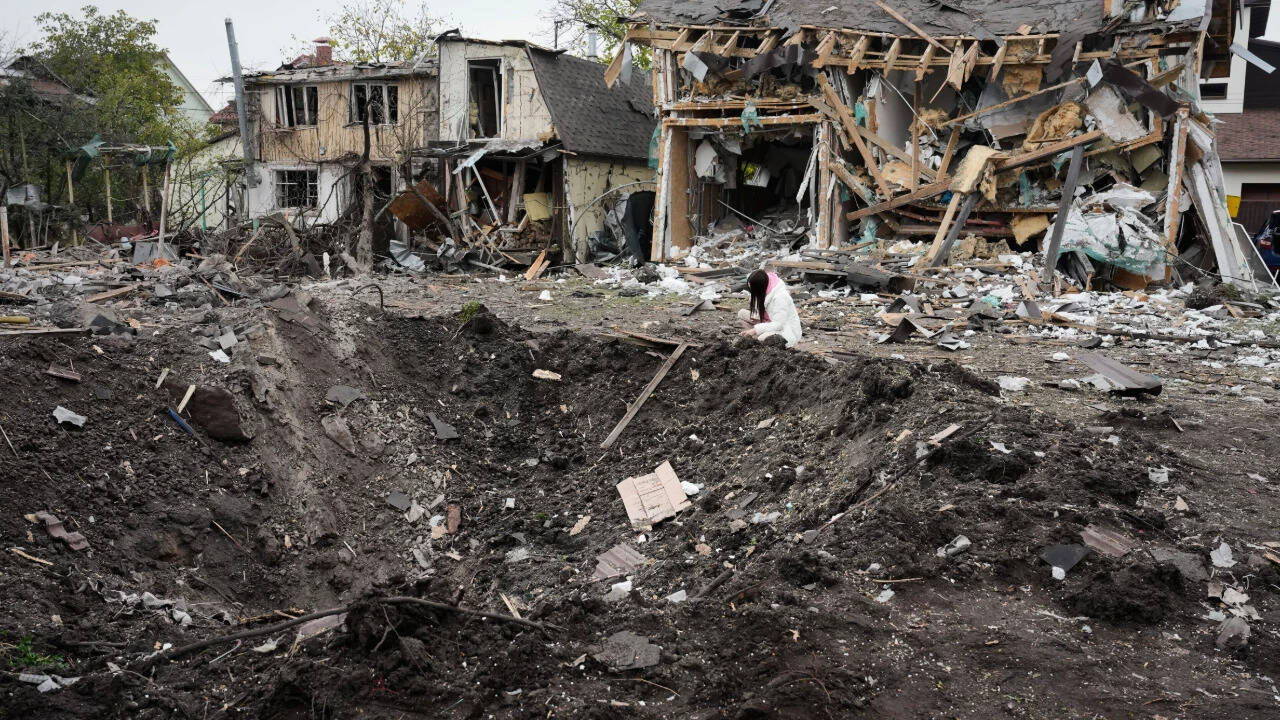
Ukrainian long-range strike drones struck critical municipal and industrial infrastructure in Russian-occupied Crimea and deep inside Russia's western border region, knocking out power and water supplies to tens of thousands of residents while torching a major petrochemical facility. The coordinated salvo hit electrical substations near Sevastopol and Feodosia alongside a major chemical processing plant in the Bryansk region. The attacks highlight a refined doctrine aimed at breaking the unified electrical and logistics networks that sustain Moscow's front-line military apparatus. Rather than chasing moving combat units, long-range targeting has shifted toward stationary, high-value industrial targets that cannot be easily replaced or defended.
The Engineering Behind the Grid Failures
Electricity and water systems in Crimea operate as an interdependent system. Disrupting one inevitably collapses the other.
When long-range explosive drones hit high-voltage transmission equipment, the impact extends far beyond immediate physical damage. Modern electrical networks rely on automated protection relays designed to trip circuit breakers when sudden voltage drops or frequency shifts occur. When a drone warhead detonate against a primary step-down transformer at a 330-kilovolt substation, the localized explosion destroys oil-filled cooling jackets and causes immediate thermal runaways.
The system reacts in seconds. To prevent cascading equipment destruction across the entire peninsula, regional safety systems automatically drop load. That immediate shutdown cuts electricity to water pumping stations, which rely on high-capacity electric motors to maintain pressure throughout urban distribution networks.
Pipes depressurize almost instantly. Without continuous electrical power to maintain hydraulic head, main pressure lines drain out, leaving domestic taps dry and forcing municipal workers to rely on diesel backup units that often lack the torque or continuous supply fuel lines required to run city-wide pumps for more than a few hours.
Technical Breakdown of Substation Interruption
| Substation Component | Primary Function | Primary Vulnerability to Drone Attack | Operational Consequence of Damage |
|---|---|---|---|
| Step-Down Transformers | Reduces voltage from transmission to distribution levels | Mineral oil cooling tanks are highly flammable | Complete localized blackout, long replacement timeline |
| High-Voltage Circuit Breakers | Isolates electrical faults to protect larger network | Precision ceramic insulators shatter under impact | Cascading trips across surrounding sub-stations |
| Control Room SCADA Nodes | Manages telemetry and automated distribution | Standard unreinforced roofing structures | Loss of remote operational control and manual overrides |
| Emergency Diesel Generators | Provides backup power for essential station operations | Exposed external fuel supply lines | Inability to cold-start critical equipment after trip |
Replacing industrial transformers is a major logistical challenge during wartime. High-voltage units are massive, weighing up to several hundred tons. They require specialized heavy transport railcars and take months to assemble, wire, and test. Russia's industrial manufacturing sector, constrained by Western sanctions on specialized electrical components and high-purity copper windings, faces severe bottlenecks in replacing these units at the rate they are being destroyed.
Petrochemical Vulnerabilities under Modern Air Defense Limits
Simultaneously, strike craft targeted a petrochemical facility hundreds of miles north. Petrochemical plants are among the most fragile industrial assets in modern warfare.
These facilities consist of miles of interconnected pipes, pressurized storage spheres, and distillation columns operating at high temperatures. Unlike military bunkers reinforced with meters of concrete, chemical processing infrastructure relies on thin-walled steel tanks to hold thousands of tons of volatile hydrocarbons. A light payload delivered directly to a cracking tower or a primary storage manifold creates immediate feed leaks that catch fire, triggering self-sustaining industrial infernos.
+-----------------------------------------------------------------------------------+
|                        TYPICAL REFINERY TARGET CHAIN                              |
+-----------------------------------------------------------------------------------+
|                                                                                   |
|  [ Approach Guidance ] ----> ( Unreinforced Distillation Column )                  |
|                                            |                                      |
|                                            v                                      |
|                                  { Thermal Ignition }                             |
|                                            |                                      |
|                                            v                                      |
|  [ Municipal Disruption ] <---- ( Pressurized Manifold Bleed ) ----> [ Fire Risk ] |
|                                                                                   |
+-----------------------------------------------------------------------------------+
Air defense systems like the S-400 or Pantsir-S1 were engineered primarily to track and intercept fast-moving, high-altitude targets like jet aircraft or ballistic missiles. A slow-flying composite drone with a low radar cross-section flying a few dozen meters above the terrain presents a fundamentally different challenge.
Radar systems struggle to distinguish low-altitude drones from ground clutter. When multiple low-cost drones approach an industrial target simultaneously from different headings, they quickly exhaust the ready-to-launch interceptor missiles of defending batteries. Expending a million-dollar surface-to-air missile to destroy a drone built for a fraction of that cost represents an unsustainable economic imbalance for the defender.
Economic and Military Consequences of Asymmetrical Strikecraft
The strategic calculation driving these long-range operations focuses on resource redistribution.
By forcing Russia to deploy air defense assets deep into its own territory to protect refineries, pumping stations, and regional power hubs, Ukrainian planners weaken air defenses along the immediate front line. Every mobile anti-aircraft system guarding a petrochemical plant in the interior is one fewer system protecting ammunition dumps or command posts near the trenches.
The cumulative damage on energy infrastructure creates severe secondary strains on regional economies:
- Industrial output drops: Manufacturing facilities and processing plants face involuntary power rationing, directly reducing economic output.
- Refining capacity degrades: Disrupted petrochemical and refining operations reduce the immediate domestic supply of refined fuels, driving up local prices and straining military supply chains.
- Logistical strain increases: Damaged electrical rail networks force transport routes to rely on diesel locomotives, consuming precious fuel supplies and slowing down the movement of military equipment.
- Repair resource fatigue: Technical response teams and specialized replacement parts are continually diverted to emergency repairs rather than planned maintenance.
Fixing these disruptions is never as simple as re-routing power through secondary circuits. High-voltage grids operate on precise phase matching and frequency stability. Attempting to balance a grid that has lost multiple major nodes often results in power surges, damaging secondary equipment and triggering widespread rolling blackouts.
      REGIONAL DISTRIBUTION NETWORK FLOW
      ===================================

      +------------------------+
      | Main Grid Transmission |
      +-----------+------------+
                  |
                  v
      +------------------------+
      |  Damaged Substation    | ===> [ PHYSICAL IMPASS ]
      +-----------+------------+
                  |
        +---------+---------+
        |                   |
        v                   v
  +-----------+       +-----------+
  | Domestic  |       | Municipal |
  | Blackouts |       | Pumping   |
  +-----------+       +-----+-----+
                            |
                            v
                      +-----------+
                      | Dry Tap   |
                      | System    |
                      +-----------+
As long-range strike technology continues to mature, the vulnerability of centralized electrical and chemical infrastructure will remain a major operational headache for military logisticians. The reliance on large, static industrial nodes creates an inherent imbalance: defending every critical point across millions of square kilometers is nearly impossible, while launching precise, low-cost strikes requires only time, intelligence, and relatively modest production capabilities.


