Reviving a modern musical property within a compressed institutional window requires balancing brand equity, production velocity, and audience sentiment. When New York City Center structured its extended run of Lin-Manuel Miranda and Quiara Alegría Hudes’s In the Heights, the operational math demanded a precise calibration of scarce assets. Analyzing this run reveals how short-term theatrical revivals function not merely as artistic retrospectives, but as strategic market tests for cultural staying power.
The structural mechanics of a limited engagement differ fundamentally from an open-ended commercial Broadway run. Fixed overhead must be absorbed across a tightly capped ceiling of performances. To mitigate the financial exposure inherent in shorter cycles, institutions rely on pre-existing intellectual property with built-in audience awareness, significantly lowering customer acquisition costs. For In the Heights, the asset had matured from its 2008 Broadway debut and 2021 feature film adaptation into a legacy property, shifting the economic proposition from discovery to validation.
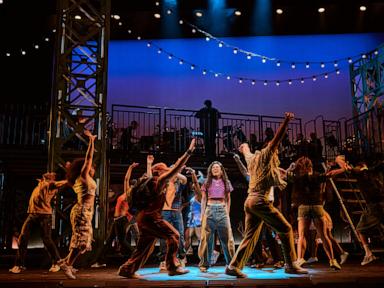
Directional execution under these constraints forces specific compromises. Director David Mendizábal inherited a production framework where rehearsal windows are minimized, requiring performers and creative teams to compress months of character development into weeks. This operational speed influences artistic output. Critical reception of the staging highlighted a tension between raw, high-energy ensemble numbers and technical synchronization. In high-velocity environments, choreographic precision often takes precedence over narrative breathing room, altering how thematic motifs are communicated to the audience.
Furthermore, the acoustics and spatial dynamics of mid-sized institutional venues introduce friction into sound design and spatial blocking. Unlike purpose-built commercial houses optimized for amplification and touring modularity, historic spaces present acoustic decay patterns that require aggressive electronic compensation. When audio engineering fails to balance orchestral density with rapid-fire rap-recitative delivery—such as the densely packed verses in numbers like "96,000"—intelligibility drops, creating a processing bottleneck for the audience.
The strategic value of such a revival lies in its secondary market signaling. By deploying tiered pricing models, including subsidized community access tickets alongside premium gala seats, the institution calibrates demand elasticity. This dual-track pricing strategy protects brand prestige while maintaining public relations goodwill. The operational takeaway for producers evaluating legacy revivals is clear: compressed windows maximize urgency and drive immediate ticket conversion, but they simultaneously compress the margin for technical error. Future iterations of short-form musical revivals must prioritize front-loaded technical integration to protect vocal clarity and spatial choreography from the pressures of accelerated timelines.