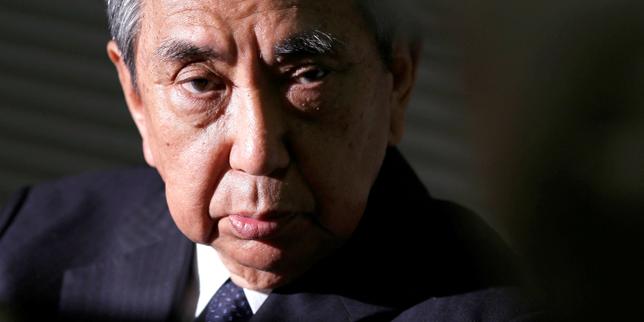
The passing of Yohei Kono at age 89 marks the definitive end of an era for Japanese diplomacy, leaving the country's ruling Liberal Democratic Party without its most prominent dove at a moment of accelerating military expansion.
Kono, who died in Tokyo following a battle with pancreatic cancer, leaves behind a legacy defined by his 1993 landmark apology for the wartime "comfort women" system. His death comes less than two weeks before he was scheduled to lead an economic delegation to China, a final attempt to mend a bilateral relationship fractured by Tokyo’s recent rightward shift. With his departure, the remaining institutional resistance against revising Japan's war-renouncing Constitution has effectively dissolved.
The 1993 Statement and the Right Wing Backlash
To understand the mechanics of Japan's current political fracture, one must trace it back to August 4, 1993. Serving as Chief Cabinet Secretary, Kono issued what became known globally as the Kono Statement. It formally acknowledged that the Imperial Japanese Army was directly or indirectly involved in the establishment and management of wartime brothels, coercing thousands of Asian women into sexual servitude.
This was not mere political theater. It was a calculated risk that altered Japan's foreign policy framework. By anchoring the state’s position to historical remorse, Kono sought to create a stable, peaceful neighborhood with South Korea and China.
The domestic political cost, however, was immediate and enduring. Right-wing factions within the Liberal Democratic Party viewed the statement as a profound betrayal, a historical concession that surrendered national pride. For the next three decades, Kono became a prime target for historical revisionists who claimed the state study lacked empirical proof of direct military abduction.
The backlash eventually transformed the LDP. The party shifted away from the pragmatic, consensus-driven factions of Kono's generation toward a hardline nationalist stance.
The Leader Who Never Became Prime Minister
Political power in Japan is traditionally secured by navigating factional alignments to capture the premiership. Kono achieved the rare distinction of serving as LDP President from 1993 to 1995 without ever becoming prime minister. He remains one of only two men in party history to bear this distinction.
When Kono took the reins, the party had just been ousted from power for the first time since 1955. He successfully steered the LDP back into a ruling coalition by engineering an alliance with the Social Democratic Party. To secure this partnership, he ceded the premiership to socialist leader Tomiichi Murayama.
This maneuver restored the LDP to governance but cost Kono his own shot at the top office. He prioritized party survival and institutional stability over personal ambition, a trait that modern political analysts view with nostalgic distance.
A Dynasty Divided by Realpolitik
The ideological vacuum left by Kono is made sharper by the political positioning of his own family. The Kono name represents a formidable dynasty. His father, Ichiro Kono, was a towering deputy prime minister who managed the 1964 Tokyo Olympics.
Today, his son, Taro Kono, stands as a prominent figure in the contemporary LDP. Yet the political contrast between father and son illustrates the broader trajectory of the Japanese state. While Yohei Kono spent his career defending Article 9 of the Constitution and advocating for diplomatic dialogue over military deterrence, Taro has served as defense minister and foreign minister within administrations that systematically dismantled postwar defense spending caps.
This generational shift reflects a broader reality in Tokyo. The modern LDP operates in an environment where regional security threats, particularly regarding Taiwan and North Korea, are utilized to justify rapid defense procurement. The old guard's warnings about the dangers of neo-militarism are increasingly dismissed as outdated idealism.
The Marginalization of Peace Diplomacy
During a visit to Beijing, Kono remarked that while the past cannot be changed, the future can be shaped through diplomatic effort. That perspective has found little traction in recent government policies.
In recent years, Tokyo has moved systematically to distance itself from the Kono legacy. The government has lobbied against the installation of memorial statues abroad and declared specific terms like "military comfort women" as inappropriate for official school textbooks. The political baseline has moved so far to the right that views once considered mainstream under Kono are now treated as fringe dissent.
The timing of Kono's death is particularly bitter for the remaining members of Japan's peace movement. It occurred just weeks after the passing of his long-time ally, Tomiichi Murayama. Together, the Kono and Murayama statements formed the bedrock of Japan’s postwar historical reconciliation. Both pillars have now lost their authors.
Japan is currently engaged in its largest military buildup since World War II, doubling its defense budget to align with NATO standards. The institutional guardrails that Kono spent his life defending have been bypassed. Power has consolidated around leaders who view historical apologies not as a tool for regional harmony, but as an unnecessary vulnerability. The passing of Yohei Kono does not simply mark the loss of a veteran statesman; it signals the final closing of the window for historical compromise in East Asia.