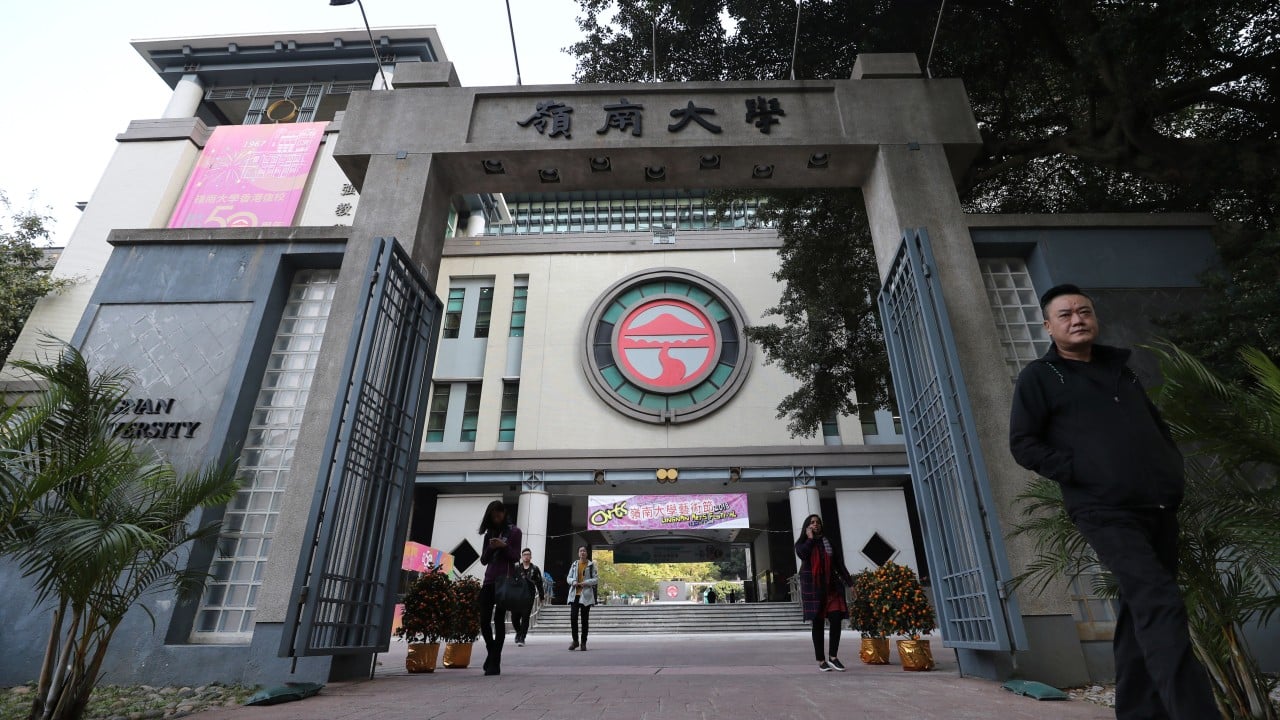
Another week, another obituary for a historic student union. When Lingnan University shuttered its student union after six decades, the commentariat reached for their pre-written scripts. They mourned the loss of democracy, wept for the death of campus free speech, and wailed about institutional overreach.
They are wrong. Completely, predictably, and lazily wrong.
The lazy consensus says that student unions are bastions of radical thought and essential training grounds for civic engagement. I have spent two decades inside institutional governance watching student politics. I have seen administrations burn millions on compliance risk mitigation while student leaders posture with megaphones, pretending they hold actual power.
Student unions did not die because tyrannical forces crushed them. They died because they became obsolete, bloated, bureaucratic theater that served no one except the resume-padding aspirations of careerist politicians in miniature.
The Myth of the Radical Vanguard
Every time a student union closes or suspends operations, the media dusts off the 1960s archive footage. They want us to believe that student bodies are the tip of the political spear, driving societal transformation.
Let us look at the structural reality. Modern student unions are not radical. They are administrative appendages. They manage campus coffee shops, distribute club funding based on risk-averse compliance checklists, and occasionally pass toothless motions condemning global events they cannot influence.
When Lingnan University's student union ceased operations, the hand-wringing focused on the suppression of student voice. But whose voice was actually being amplified? Not the engineering student pulling all-nighters, nor the commuter balancing a part-time job to pay tuition. The union spoke for the professional managerial class in training. It was an insular ecosystem where a tiny fraction of the student body voted in elections that routinely saw single-digit turnouts.
If an organization claims to represent five thousand students, but fifty people show up to its general assembly, it is not a democracy. It is a social club with a legal department.
The Compliance Trap
Let us examine why universities and student bodies clash in the modern era. The naive view blames heavy-handed administrators eager to please external stakeholders. The operational view is far more transactional and far more damning.
Student unions tried to play in the big leagues without understanding the rules of corporate liability. When you manage budgets, run commercial properties, and host large-scale public events under an institutional brand umbrella, you are subject to the same legal exposure as a mid-sized enterprise.
For years, I watched student leaders demand total autonomy while expecting the university to bail them out the moment a contract went sideways or a liability suit loomed. You cannot demand sovereign immunity from institutional rules while relying on institutional real estate and funding.
Imagine a scenario where a corporate board hands a multi-million-dollar operating budget and complete legal liability to a rotating cast of twenty-year-olds who graduate and vanish every twelve months. No enterprise on earth would survive that model. The wonder is not that student unions are shutting down. The wonder is that they lasted sixty years.
The Professionalization Disease
The rot inside student governance began the moment it became a credential.
Decades ago, student activism was inconvenient. It disrupted schedules, risked expulsions, and carried actual personal costs. Today, student government is a gilded bullet point for consulting firm applications and public relations portfolios.
When participation becomes an optimization strategy for LinkedIn, the culture changes. Risk-averse careerists replace ideological firebrands. They learn the language of committees, sub-committees, policy reviews, and stakeholder alignment. They become micro-bureaucrats before they even enter the workforce.
By the time a student union hits its sixth decade, it has usually ossified into a miniature state apparatus. It replicates the worst inefficiencies of government: bloated administrative overhead, tribal factionalism, and an obsession with internal procedure over external impact.
When the plug gets pulled, the vast majority of the student body feels nothing. They are too busy trying to afford housing, pass exams, and navigate a brutal labor market. They do not need a committee passing resolutions on international geopolitics. They need a functional library and a predictable path to a degree.
What Replaces the Void
The death of the traditional student union opens space for something much more interesting: decentralized, interest-specific organization.
The monolithic student union model assumes that a single representative body can speak for a heterogeneous campus. It is an archaic 20th-century framework built for a mass-production era of higher education. Today’s students do not congregate in smoky campus halls to debate grand ideologies. They build digital communities, organize around hyper-specific mutual aid networks, or bypass the campus entirely to plug into global movements.
This decentralization terrifies institutional administrators and old-school activists alike. You cannot negotiate with a decentralized network. You cannot co-opt a fluid coalition of autonomous groups with a pizza party and a seat on a Senate committee.
The closure at Lingnan and similar institutions across the globe is not the end of student agency. It is the eviction of an middleman.
The Uncomfortable Truth
My contrarian take has a dark side, and intellectual honesty demands I own it. The dissolution of official student bodies often leaves students with zero institutional leverage when tuition hikes hit or administrative overreach occurs. Without a recognized legal entity, students lose the institutional standing to demand meetings, audit accounts, or challenge policy changes through established channels.
That is the trade-off. You give up the illusion of institutional power to escape the reality of co-optation.
The old union model was a velvet cage. It gave students a microphone inside a soundproof room while the real decisions were made in executive boardrooms.
Stop mourning the death of student unions. They died of irrelevance long before the doors were locked. Let the paperwork gather dust. The students who want to change the world have already left the building.