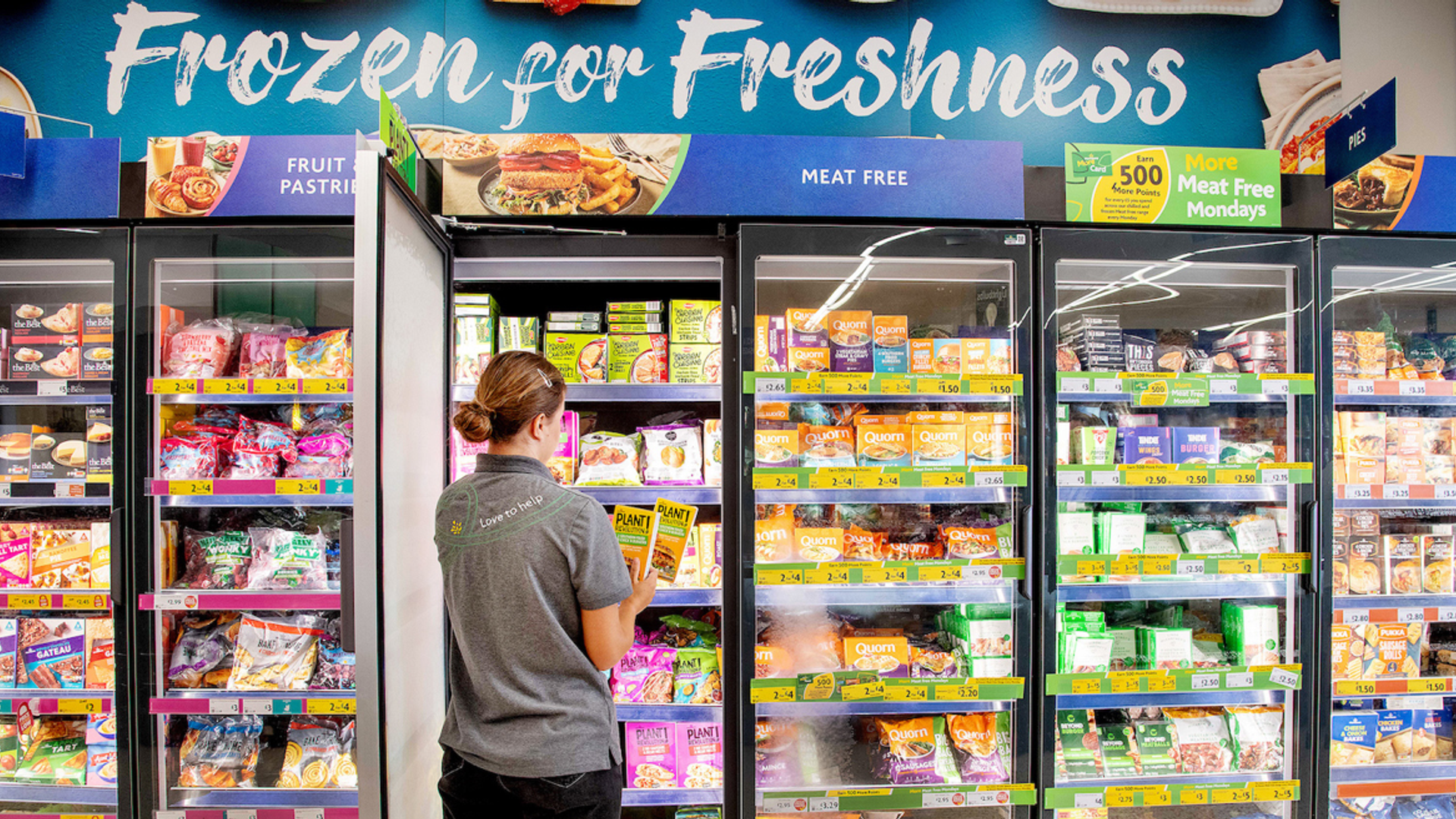
The fluorescent lights of a supermarket at 11:45 PM don’t buzz; they hum. It is a low, vibrational sound that you only notice when the music switches off and the last customer pushes their trolley through the automatic sliding doors. For twelve years, that hum was the soundtrack to Arthur’s life. He knew which wheels on the bakery racks rattled. He knew that if you stacked the soup cans three high instead of four, they wouldn’t topple when the kids ran down aisle four on a Saturday morning.
Arthur doesn’t work there anymore. Neither do his colleagues. For a more detailed analysis into this area, we recommend: this related article.
When Morrisons announced the closure of 100 loss-making stores, the financial pages treated it like a bloodless math problem. Numbers on a spreadsheet. A calculated subtraction to protect the bottom line of Britain’s fourth-largest supermarket chain. The analysts spoke of shifting consumer habits, inflationary pressures, and the aggressive expansion of German discounters eating away at market share. They talked about profit margins.
They didn’t talk about Arthur. They didn’t talk about the elderly women who walked to the store every Tuesday morning, not just for a loaf of sliced white and a pint of semi-skimmed, but because the cashier named Sarah was the only person who would speak to them all week. For further context on this issue, in-depth analysis is available on Financial Times.
When a supermarket closes in a major city, it is an inconvenience. When it closes in a market town or a working-class suburb, it is an amputation.
The Calculus of Subtraction
Corporate restructuring always arrives wrapped in the vocabulary of necessity. A spokesperson issues a statement filled with phrases like "optimising the estate" and "ensuring long-term viability."
The reality is much starker. Morrisons, a staple of the British high street since William Morrison started a humble egg and butter stall in Bradford in 1899, has been caught in a brutal pincer movement. On one side, the skyrocketing costs of energy, supply chain disruptions, and rising wages have made running large physical spaces incredibly expensive. On the other side, a cost-of-living crisis has turned consumers into economic nomads, wandering from aisle to aisle in search of the absolute lowest price point.
Consider what happens when a giant retailer decides a location is "loss-making."
The decision isn't made overnight. It begins with months of dwindling footfall metrics. The data analysts notice that while people are still coming through the doors, their baskets are lighter. They are buying the essentials—the milk, the bread, the yellow-sticker reduced items—but bypassing the premium ranges, the clothing sections, and the instore cafés. The profit margins on a loaf of bread are razor-thin. The real money is made on the extras, the impulse buys, the Friday night treats. When those dry up, the store begins to bleed.
But looking at a store purely through the lens of a profit-and-loss statement misses the invisible infrastructure that a supermarket provides to a community.
A British supermarket is a modern town square. It is where neighbors bump into each other over the frozen peas. It is where teenagers get their first taste of financial independence through a Saturday job, learning how to look adults in the eye and count back change. It is where the local food bank collects eighty percent of its donations via the wire cage positioned just past the checkouts.
When you pull that anchor out of a local economy, the hole fills with water fast.
The Domino Effect on the Asphalt
The damage doesn't stop at the supermarket doors.
Imagine a local high street as an ecosystem. The supermarket is the apex predator, the entity that draws the crowd. People drive to the town center because they need to do the weekly shop. Once they park their car, they decide to walk down the road to the local butcher for a specific cut of meat. They stop at the independent card shop to buy a birthday card. They buy a coffee from the café across the street.
When the supermarket goes dark, the reason to visit the town center vanishes.
The footfall drops like a stone. Within six months, the card shop notices a thirty percent dip in revenue. The café owner realizes they can no longer afford to keep their assistant on for the afternoon shift. The car park, once a bustling hive of slamming doors and rattling trolleys, becomes an empty expanse of cracked asphalt where weeds grow through the fissures.
This isn't a hypothetical scenario. It is a pattern that has repeated across towns up and down the country for the past decade, a slow-motion hollowing out of communities that leaves behind ghost buildings—vast, empty concrete shells with faded signage where life used to be.
The Human Balance Sheet
We have become accustomed to treating these corporate shifts as inevitable, a natural byproduct of progress. We are told that everyone shops online now, that the future is digital, that convenience is the ultimate metric of human happiness.
But convenience is a lonely metric.
Shopping online is an exercise in isolation. It strips away the friction of human interaction, but it also strips away the warmth. It replaces the smile of a cashier with a progress bar on a screen. For a younger generation raised on smartphones, this might seem like a fair trade. For the millions of people who rely on the physical world for their sense of connection, it feels like the world is shrinking.
The loss of 100 stores means thousands of individual tragedies played out in living rooms over cups of tea. It means parents wondering how they will cover the rent next month. It means older workers, who have spent decades mastering the specific logistics of retail, suddenly finding themselves thrust into a job market that values digital literacy over loyalty and customer service.
The corporate executives will point to their balance sheets in the next quarterly meeting. They will show the investors that by cutting the dead wood, the company's overall health has improved. The stock price might tick up by a few percentage points. The institutional shareholders will nod approvingly.
But a balance sheet is an incomplete document. It has no line item for community cohesion. It has no column for the psychological impact of watching your local area lose its vitality. It cannot calculate the value of a familiar face on a rainy Tuesday afternoon.
The true cost of these closures is carried not by the corporation, but by the people left behind in the quiet zones. The lights go out, the doors are locked, and a neighborhood loses a little bit more of its shared gravity.
Arthur still walks past the old building sometimes on his way to the bus stop. The grand Morrisons sign has been taken down, leaving behind a dark stain on the brickwork where the letters used to protect it from the weather. Through the glass doors, you can see the empty rows where the tills used to stand. There are no rows of bright apples, no smell of rotisserie chicken, no hum. There is only the silence of a space that has forgotten its purpose, waiting for a future that might never arrive.