Stop crying for the Cuban power grid. Every time a transformer blows in Havana or a boiler fails at the Antonio Guiteras plant, the international press trots out the same tired narrative. They talk about "collapse," "infrastructure decay," and "humanitarian crisis" as if a centralized, 20th-century fossil fuel grid was ever the solution for a Caribbean island.
The grid didn't just fail three times this month. It has been a walking corpse for decades. The real story isn't that the lights went out; it’s that we are still pretending they should have been on in the first place using a model designed for 1950s Chicago.
The Myth of the "Fixable" Grid
The "lazy consensus" among analysts is that Cuba just needs more spare parts, more Russian oil, or a lifted embargo to make the electricity flow. This is a fundamental misunderstanding of energy physics and island economics.
Centralized grids are inherently fragile. When you rely on a few massive, aging thermoelectric plants connected by thousands of miles of vulnerable copper wire, a single tree branch or a surge in demand becomes a systemic threat. In Cuba, the "system" is a series of bottlenecks held together by spit and prayer.
The Guiteras plant—the crown jewel of the Cuban system—is a thermodynamic nightmare. It’s a 330-megawatt beast that requires constant, high-grade maintenance it never receives. When it trips, the frequency drop across the entire island is so violent that it forces every other smaller plant to disconnect to avoid self-destruction. This isn't a "glitch." It is the inevitable result of a "hub-and-spoke" architecture in a resource-constrained environment.
We keep asking, "How do we fix the grid?"
The better question is: "Why are we still trying to save it?"
Efficiency is the Great Deception
Policy wonks love to talk about thermal efficiency. They look at Cuba’s heat rate—the amount of fuel burned per kilowatt-hour—and shudder. But efficiency is a metric for stable, wealthy nations. For an island under constant economic pressure, the only metric that matters is resilience.
A highly efficient, centralized plant is a single point of failure. A collection of "inefficient," distributed microgrids is a survival strategy.
In the early 2000s, Cuba actually led the world in "Energy Revolution" tactics by installing thousands of small diesel and fuel-oil generators (grupos electrógenos) across the country. The goal was to decentralize. But they didn't go far enough. They kept those generators tied to the same failing umbilical cord of the national grid.
If you want to understand the future of energy, stop looking at the Tesla Gigafactory and start looking at the illegal battery banks in Havana back-alleys. Cubans aren't waiting for the government to fix the grid; they are building their own fragmented, off-grid reality. This isn't "poverty"—it’s a rough draft of the post-grid world.
The False Promise of Liquid Gold
The media obsesses over oil shipments from Venezuela and Russia. They frame it as a geopolitical lifeline. In reality, it’s a curse that prevents evolution.
As long as Cuba receives subsidized crude, it has zero incentive to engage in the painful, necessary transition to a distributed renewable architecture. Every barrel of oil burned in a 40-year-old boiler is a subsidy for the status quo.
Imagine a scenario where the oil stops completely. Not for a week, but forever.
The first month would be chaos. The second month would see the birth of the world’s most advanced decentralized energy market. Without the "crutch" of the national grid, every municipality would be forced to prioritize local solar, wind, and biomass. The technology exists. The sun shines on Cuba 330 days a year. The only thing standing in the way is the institutional obsession with keeping the big plants running.
Why Investors Get It Wrong
I’ve seen energy firms look at the Cuban market and see a "modernization opportunity." They want to sell massive turbines and smart-grid software. They are chasing a ghost.
The ROI on a centralized grid in a climate-vulnerable zone is negative. Between intensifying hurricanes and the rising cost of transmission maintenance, the math doesn't work. The smart money isn't in "repairing" the grid; it’s in liquidating it.
The real business opportunity in Cuba isn't the utility company (UNE). It’s the "Behind-the-Meter" market.
- Energy as a Service (EaaS): Providing localized power to specific neighborhoods or industrial parks.
- Virtual Power Plants (VPPs): Networking individual household batteries into a collective resource.
The "collapse" the media reports on is actually a market clearing event. It is the physical world telling the political world that the current model is bankrupt.
Dismantling the "Humanitarian" Narrative
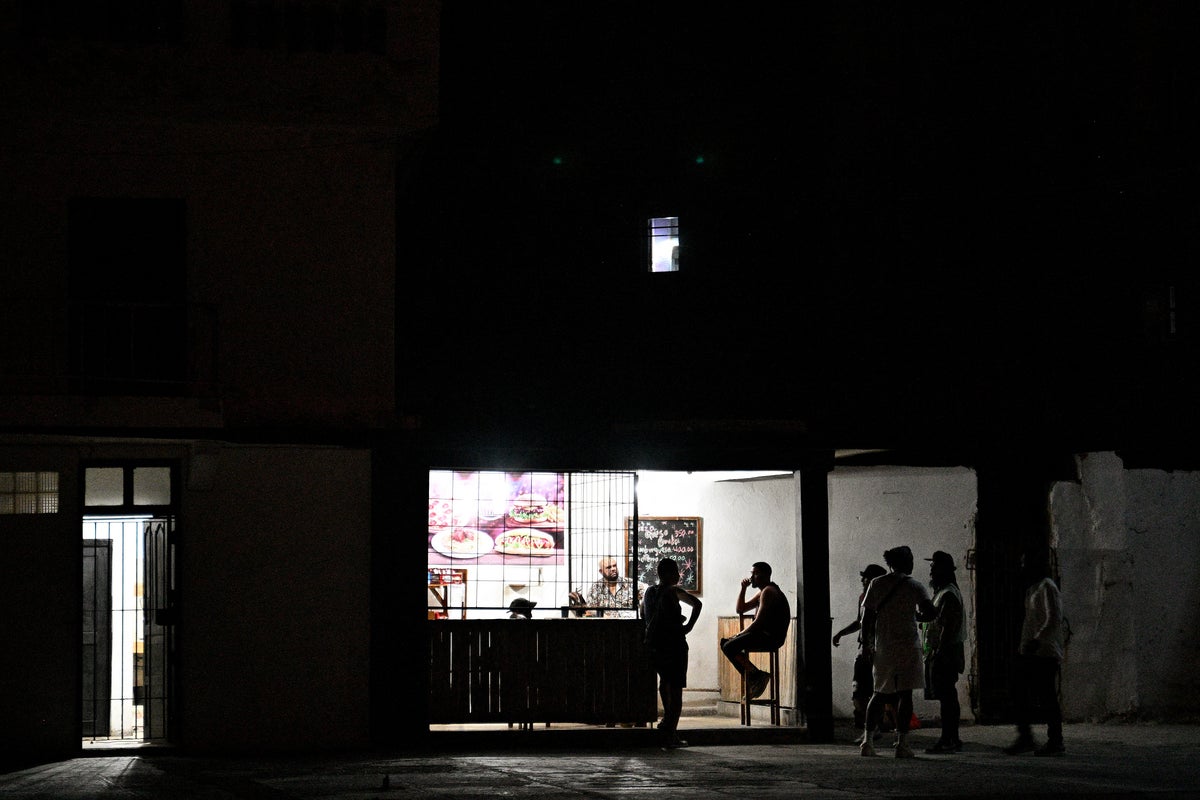
Whenever the grid fails, we see photos of dark streets and people cooking with charcoal. The narrative is always one of "regression."
Is it?
Living on a dying grid is like being tied to a sinking ship. You spend all your energy trying to plug the leaks. When the ship finally sinks, you’re forced to swim. The "humanitarian" move isn't to send more fuel to the UNE; it’s to flood the island with small-scale solar panels, charge controllers, and LFP batteries.
The current "collapse" is the only thing that will break the psychological dependence on the state as the sole provider of electrons. In a weird, brutal way, the blackout is the most honest thing about the Cuban economy. It reveals exactly where the power lies: not in the hands of the bureaucrats at the Ministry of Energy and Mines, but in whoever has a charged 12V battery and a dream.
The Physics of Failure
Let's get technical for a moment. Most people think a blackout is just "no power." It’s actually a failure of inertia.
In a traditional grid, massive spinning turbines provide physical inertia. If a load increases, the momentum of those turbines keeps the frequency stable for a few seconds—enough time for governors to react.
Cuba’s problem is that its "big iron" is so unreliable that the grid has no inertia. It’s "twitchy." A single lightning strike can cause a frequency excursion that the system can’t recover from.
$f = \frac{ns}{120}$
When the rotational speed ($n$) of those old Soviet and European turbines drops because of a boiler leak, the frequency ($f$) plummets. In a healthy grid, you have reserves. In Cuba, you have nothing. Adding more "smart" tech to this "dumb" iron is like putting a flight computer on a paper airplane. It won't help you stay in the air.
The Decentralization Mandate
If we want to stop writing these articles every month, we have to accept three uncomfortable truths:
- The national grid is a liability, not an asset. It is too expensive to maintain and too easy to break.
- Sovereignty is energy independence. As long as Cuba depends on a central grid fueled by foreign oil, it is never truly sovereign.
- The "Third World" is the laboratory for the "First World." What is happening in Cuba—the total failure of 20th-century infrastructure—is a preview for what happens when any aging system meets a resource crunch.
We should stop viewing the Cuban blackout as a failure of a specific government and start viewing it as the inevitable failure of a specific geometry. The line is dead. The circle—the local, closed-loop microgrid—is the only thing that survives.
The grid isn't failing. It’s being selected against by reality.
Quit trying to turn the lights back on. Start building a system where they can't be turned off.
Stop mourning the 20th century. It’s over.