The Convenience of a Foreign Boogeyman
Politicians do not throw tantrums on courthouse steps out of pure, unadulterated patriotism. They do it when their internal tracking numbers look like an elevator with snapped cables.
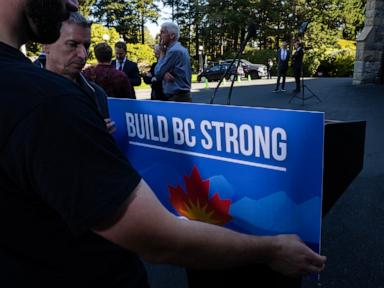
When British Columbia Premier David Eby strode onto the grounds of Government House to dissolve a legislature where his New Democratic Party sat comfortably with a majority, he offered voters a fairy tale. He pointed south across the border, invoked the name of Donald Trump, and declared that British Columbians needed to rally behind an emergency ballot to construct a political "firebreak" against an existential trade war.
The lazy consensus in the mainstream press swallowed this narrative with zero mastication. Pundits nodded along, writing breathless op-eds about the brave premier standing tall against the American storm. It was garbage then, and history has already exposed it as a desperate exercise in electoral misdirection.
Let us dismantle the fiction.
The Anatomy of a Manufactured Panic
A snap election requires an actual constitutional crisis, a legislative deadlock, or an undeniable mandate question that cannot wait until the legally mandated calendar date. None of those conditions existed in British Columbia. The NDP held the steering wheel. They had the numbers. They had the legislative runway.
So why pull the fire alarm?
Because time was the one asset the government was running out of. British Columbia is buckling under compounding pressures: runaway housing costs, a health care system running on spiritual fumes, and a public growing increasingly exhausted by rising living costs. Governments governing through structural decline do not wait for the inevitable accumulation of voter resentment. They manufacture a flashpoint. They change the subject.
By framing an early provincial vote as an urgent referendum on Washington politics, Eby attempted a brilliant sleight of hand. He tried to transform a referendum on hospital wait times and skyrocketing rents into a proxy war over foreign affairs.
It is a remarkably cynical playbook. If you cannot defend your record on emergency room closures, talk about tariffs. If your housing strategy has failed to dent rent prices, invoke an external enemy.
The Jurisdictional Illusion
Any student of Canadian constitutional law understands the core absurdity at the heart of this campaign pitch. Provincial premiers do not manage international trade policy. Premiers do not negotiate federal tariffs with the White House. That is the exclusive domain of the federal government in Ottawa.
Pretending that a local member of the legislative assembly in Victoria can build a literal or figurative wall against American protectionism is an insult to voter intelligence. A provincial legislature controls health care delivery, education funding, municipal zoning, and provincial policing. It does not dictate foreign trade strategy.
When a premier uses a provincial election campaign to litigate American presidential rhetoric, he is admitting that his domestic record cannot survive a fair fight on local terms. He is asking voters to hand him another mandate based on fear rather than accomplishment.
Imagine a scenario where a corporate CEO runs a failing enterprise, misses every quarterly target, watches operational costs spiral out of control, and suddenly calls an emergency board meeting to scream about geopolitical weather patterns in another hemisphere. Shareholders would fire that CEO before the sentence finished. Yet in provincial politics, we are expected to applaud the theater.
The Mid-Campaign Pivot
You do not need to take my word for it. You only needed to watch the campaign trail two weeks after the writ dropped.
When the Trump-focused rallying cry landed with a collective thud among voters staring at their grocery receipts, the script underwent a violent rewrite. The existential threat from Washington quietly receded into the background. In its place emerged a sudden, fiery crusade against local billionaires, real estate developers, and corporate grocery executives.
Watch the whiplash. One day the election is an emergency defense of Canadian sovereignty against foreign autocrats. The next day it is a class-warfare speech about millionaires and high-income tax brackets.
This is not a coherent strategic vision. It is political improvisation in real-time. When one panic-button fails, you smash another one. If the American boogeyman does not scare enough suburban voters into line, pivot to populist class resentment.
The whiplash exposes the entire operation. A government anchored to core principles does not reinvent its reason for existing halfway through October.
The Cost of Political Opportunism
Let us talk about accountability and public trust, concepts that politicians love to invoke right up until the moment they cost them votes.
Holding an unscheduled provincial election costs taxpayers tens of millions of dollars. It forces municipal elections to collide awkwardly with provincial machinery, exhausts volunteer networks, and freezes government administration for weeks during a period when actual crises require active management.
Doing all of this while simultaneously lecturing the public about fiscal responsibility and cost-of-living pressures requires a breathtaking level of cognitive dissonance. You cannot complain that public money is tight while you light fifty million dollars on fire to capitalize on a temporary window of opponent disarray.
The opposition parties bear some blame here, of course. Conservative disarray was the primary siren song that lured the NDP into this gamble. The governing party saw an fractured opposition, calculated that a quick strike could lock in power before rival factions could organize, and pulled the trigger. Every other justification offered since then has been expensive cosmetic packaging designed to hide the raw mechanics of opportunism.
The Real Question You Should Be Asking
People often ask whether a provincial government needs a strong mandate to deal with external economic headwinds. That is the wrong question entirely. It accepts the premise that politicians are passive victims of global waves rather than architects of local reality.
The real question is why we tolerate a system where leaders can unilaterally hit reset on democracy whenever their internal polling dips below their comfort threshold.
We should stop evaluating snap elections through the lens of what politicians claim they are about. We must evaluate them through the cold math of who benefits. In this case, the only beneficiary is a political party trying to dodge an expiration date.
Voters are not stupid. They feel the disconnect between grand foreign policy speeches and the reality of an ambulance taking forty minutes to arrive. They recognize when a leader is trying to hide behind a flag to escape accountability for a plumbing leak at home.
Next time a politician tells you to look south because the sky is falling, check your wallet, check your local emergency room wait times, and ask yourself why they are so desperate to keep you from looking at the record they actually built.
Stop buying the panic. Start demanding competence.