Blaming data centers for drying up Amarillo is lazy. Emotionally satisfying. Scientifically sloppy.
Every time a hyperscaler eyes West Texas along Route 66, the same moral script plays out. Local stewards talk about stewardship of the land. Activists picture giant server warehouses sucking every last drop out of a parched aquifer so someone in San Francisco can generate a cat video or train a weights file. Headlines frame it as a biblical showdown between sacred soil and silicon greed.
I spent years sitting in site-selection war rooms and municipal water negotiations across North America. I have watched municipalities throw millions of dollars at infrastructure incentives without running a basic mass-balance check. I have watched tech giants walk into dry counties with glossy water-replenishment pledges that sounded noble on a slide deck and fell apart under drought hydrology.
They deserve plenty of heat. Just not for draining Amarillo's aquifer.
If you care about keeping water in the ground around Amarillo and the Texas Panhandle, pointing your pitchfork at data centers is a distraction that lets the real water heavyweights off the hook.
The Lazy Consensus Around Data Centers and Drought
The standard story goes like this: data centers run hot. Cooling towers evaporate millions of gallons of water. Amarillo sits over a stressed groundwater system. Therefore, building data centers in Amarillo equals ecological theft.
That chain of logic snaps the moment you look at how water is actually allocated and consumed in the Texas Panhandle.
Let us get the vocabulary straight before we argue over numbers. Water withdrawal is the total volume of water taken from a surface or groundwater source. Water consumption is the portion that does not return to that local watershed—usually lost to evaporation, transpiration, or incorporation into a product. People mix those two up constantly, and bad policy grows out of that confusion.
A typical large-scale data center using evaporative cooling can consume roughly a million to several million gallons of water per day at peak load, depending on size, climate, and power utilization. Sound big? On a residential scale, sure. Compared to the regional hydrology of the Panhandle—where irrigated agriculture and livestock operations account for the overwhelming share of groundwater extraction from the Ogallala Aquifer—a single data center campus is a fraction of regional pumping.
Even more importantly, data center cooling is not locked into one design. Facilities can use closed-loop chilled water, air-cooled chillers, or hybrid systems that slash water consumption during cooler months—at the cost of higher electricity draw and steeper capital expenditure.
Pretending data centers are the sole or primary reason West Texas water levels are falling is like blaming a leaky garden hose for a burst levee.
Why Amarillo's Real Water Fight Is About Rules, Not Just Servers
Stewardship sounds great at a town hall. Hydrology does not care about slogans.
In Texas, groundwater governance operates under the rule of capture, historically modified by local groundwater conservation districts. In plain English, landowners have broad rights to pump water beneath their property, subject to district rules and desired future conditions set through regional planning. When pumping outpaces natural recharge—and in much of the Ogallala, deep fossil water recharges at a glacial pace compared to modern extraction—the water table drops. That is basic physics, not a villain origin story.
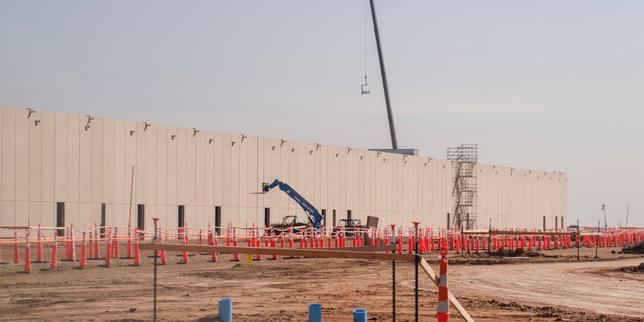
When a data center shows up in a community like Amarillo, it triggers a very real friction point: visible industrial demand colliding with finite local supply. Residents see concrete walls, substation transformers, and tax abatements. They worry about municipal supply pressure, future drought restrictions, and whether a wealthy corporation gets preferential treatment while families watch their lawn or well levels.
Those fears are not crazy. Municipal water systems have finite treatment capacity and pressure zones. If a utility commits huge peak volumes without ironclad curtailment agreements or dedicated industrial supply, local stress can follow.
The mistake is treating any water use by a tech facility as inherently immoral while treating legacy extraction as sacred tradition. Stewardship means looking honestly at the entire water budget—who pumps what, how fast it replenishes, and who bears the cost when the dry years hit.
A moral stance that ignores water accounting is just sentimentality with a megaphone.
💡 You might also like: Why Global Tech Investors Are Betting on India as an Innovation Provider
What People Also Ask (And Why the Premise Is Often Flawed)
"Do data centers use more water than farms?"
Across regions like the Texas High Plains, irrigated agriculture dwarfs data center water consumption at the regional basin scale. Asking that question as a binary often misses the sharper point: farming feeds people and anchors rural economies, while data centers bring tax base and grid load—yet neither gets a free pass to pump beyond sustainable limits. The real question is efficiency per unit of value and sustainability of the source, not a tug-of-war between two slogans.
"Can data centers run without using water at all?"
Yes, through air-cooled or closed-loop systems, but there is no free lunch in thermodynamics. Rejecting heat into warm Texas air requires more electricity and can reduce cooling efficiency during hot afternoons, which increases stress on the electric grid and power-plant cooling. Trading water for megawatts on a tight regional grid is a trade-off, not a magic trick.
"Should towns ban water-cooled data centers in dry areas?"
A blanket ban feels decisive and usually solves the wrong problem. A municipality with brackish groundwater, treated effluent reuse options, or strict drought-curtailment contracts can sometimes manage industrial cooling far better than an unmonitored patchwork of high-volume agricultural wells. Rules based on net depletion and source quality beat blanket bans every time.
The Battle Scars of Bad Deals (And What Heavy Hitters Actually Watch)
I have seen economic development boards sign off on industrial water hookups without stress-testing a ten-year drought scenario. I have also seen tech operators promise "water positive" neutrality by funding off-site restoration projects hundreds of miles away while drawing fresh potable or scarce groundwater locally. Off-site offsets do not put water back into a local pipe during a July heatwave.
Serious water analysts and infrastructure leaders—from researchers at the Texas Water Resources Institute and the U.S. Geological Survey to utility engineers managing municipal supply—focus on unglamorous details:
- Source quality: Is the facility using treated wastewater effluent or brackish water, or competing directly for fresh municipal and aquifer supplies?
- Peak vs. average draw: Hot weather spikes cooling demand right when local water systems are already stretched.
- Replenishment rate: Pumping from a fast-recharging river basin behaves very differently from mining ancient groundwater in the Ogallala.
- Binding curtailment: Does the utility have enforceable authority to throttle non-essential industrial cooling during severe drought stages?
Imagine a scenario where a city along Route 66 requires a new data center campus to fund a closed-loop or reclaimed-water pipeline, meter every gallon transparently, and accept mandatory step-downs during Stage 3 or Stage 4 drought restrictions. Suddenly the conversation shifts from righteous outrage to enforceable engineering.
The Downsides of Taking This Contrarian Line
Let me be candid about where my pushback can go too far.
First, downplaying data center water use can sound like carrying water for trillion-dollar corporations. Hyperscalers have massive balance sheets and plenty of hype around sustainability; letting them skate on basic local accountability is bad practice. Even a "small" share of a stressed local supply matters if a specific well field or municipal treatment plant is already near capacity.
Second, bringing up agriculture often triggers defensiveness in farming communities where multi-generational families are trying to survive volatile commodity prices and shifting weather. Pointing out agricultural water math should never mean demonizing farmers—it means recognizing that everyone shares the same finite bucket.
Third, focusing strictly on water can blind you to the bigger bottleneck in West Texas: power and transmission. Data centers do not just cool; they compute at massive electrical scale. Where that power comes from, how transmission lines get built, and how grid reliability holds up in extreme weather are often tougher problems than cooling water alone.
Actionable Moves That Actually Protect Water
If you are a local official, landowner, or voter along Route 66 who actually wants sustainable water instead of performative outrage, skip the theater and demand concrete terms:
- Separate consumption from withdrawal in every public report. Insist on clear numbers showing how much water enters a site, how much evaporates or leaves the basin, and what goes back.
- Push for non-potable and closed-loop standards first. Require engineered water efficiency and reclaimed or alternative water sources where feasible before approving fresh groundwater draws.
- Write drought triggers into contracts before groundbreaking. Make water curtailment legally binding and auditable, not a voluntary press-release promise.
- Audit the whole basin, not just the shiny new project. Track groundwater levels, agricultural irrigation efficiency, municipal leaks, and industrial permits side by side so no single sector hides behind another.
Stop fighting a proxy war against servers while the aquifer keeps dropping. Demand real water math, enforceable limits, and honest accounting from every single user on the map.