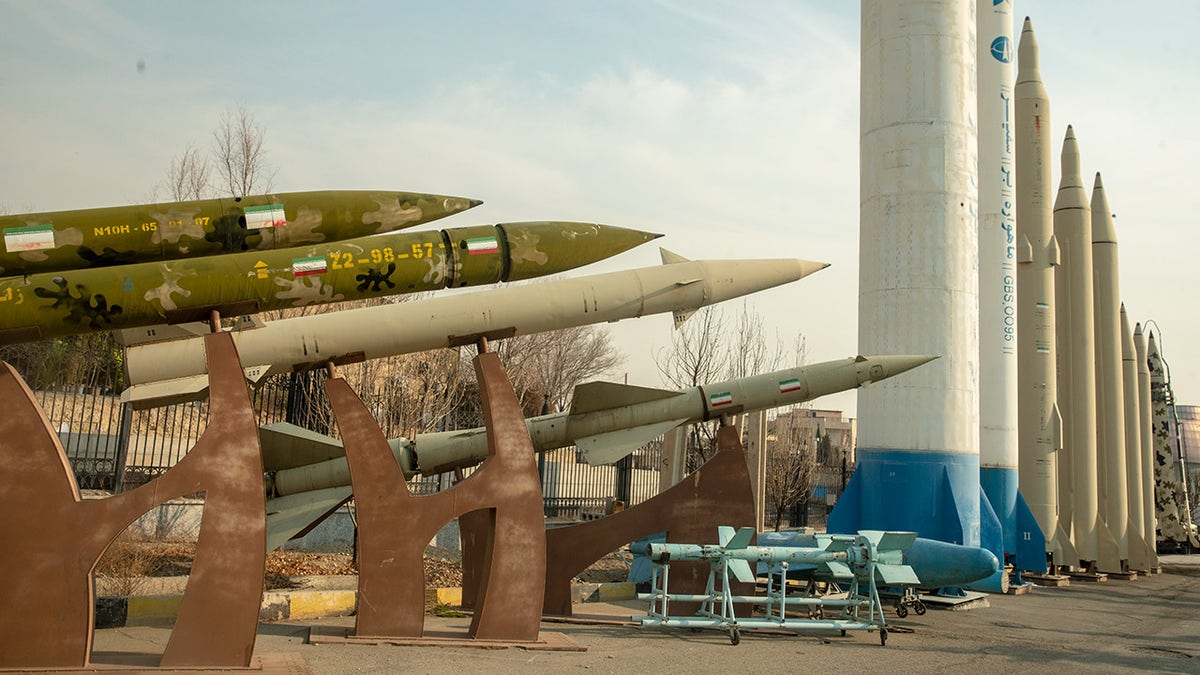
The defense industry loves a good ghost story. Right now, that story is the Sejjil—Iran’s "dancing missile." Media outlets are currently vibrating with anxiety over its solid-fuel engines and "unpredictable" flight paths. They want you to believe we are witnessing a physics-defying leap in Persian engineering that leaves regional missile shields obsolete.
They are wrong.
The "dancing missile" narrative isn’t a report on a technological breakthrough; it’s a masterclass in psychological operations and technical misunderstanding. If you’re losing sleep over a missile that shakes its hips on the way to a target, you’re falling for the theater. The reality of ballistic trajectory is far more stubborn than a press release from Tehran.
The Solid Fuel Obsession is Decades Late
The loudest argument for the Sejjil’s superiority is its solid-fuel motor. Critics point to the fact that it doesn’t require the cumbersome, hours-long fueling process of liquid-propellant predecessors like the Shahab-3. They claim this makes it a "snap-response" weapon that can be fired before a pre-emptive strike can find it.
Let’s be clear: Solid-fuel technology is 1960s tech. The US Minuteman III and the Soviet-era precursors were doing this while black-and-white television was still the standard. Transitioning to solid fuel isn't a "quantum leap"—it’s catching up to the baseline of 20th-century warfare.
While solid fuel increases readiness, it introduces a massive manufacturing headache: grain consistency. In a solid motor, the fuel is cast into a specific shape. If there is a single microscopic crack or air bubble in that fuel "grain," the internal surface area increases instantly upon ignition. The result? The pressure spikes, and the missile becomes an expensive pipe bomb on the launch pad. Iran’s ability to mass-produce high-quality, large-diameter solid motors under heavy sanctions is a logistical nightmare they rarely discuss. It is much easier to build one for a parade than it is to build a hundred that won’t explode in the tube.
The Myth of the Unpredictable Path
Then there is the "dancing" label. This refers to Maneuverable Reentry Vehicles (MaRVs). The idea is that the warhead can shift its trajectory during the terminal phase to dodge interceptors like the Arrow-3 or the Patriot PAC-3.
Physics doesn’t care about your branding.
A missile traveling at several times the speed of sound—hypersonic speeds—possesses massive kinetic energy. To "dance" or change direction, that warhead must exert force against the atmosphere using fins or thrusters. Every time a warhead maneuvers, it bleeds energy. It slows down.
If a Sejjil warhead "dances" too much, it becomes a slower, hotter, and more visible target for ground-based radar. Modern interceptors don't need to guess where the missile is going to be in five minutes; they use high-update-rate X-band radar to track the "dance" in real-time. The math for an interceptor is a simple calculation of $F=ma$ and aerodynamic drag. You aren't dodging a computer that calculates trajectories thousands of times per second just by wobbling.
The Precision Trap
We see the videos of precision strikes on mock-up targets in the desert. We hear the claims of "pinpoint accuracy." But accuracy in a vacuum is different from accuracy under fire.
The Sejjil relies on inertial navigation systems (INS) often augmented by GPS or GLONASS. In a high-intensity conflict with a peer or near-peer adversary like Israel or the US, the first thing to go is the satellite signal. Electronic Warfare (EW) suites will blanket the region in "noise."
Without satellite correction, a ballistic missile depends entirely on its internal gyroscopes. Over a 2,000-kilometer flight, even a tiny drift in those instruments leads to a "Circular Error Probable" (CEP) measured in hundreds of meters. A "dancing" missile that misses its target by half a mile isn't a strategic threat; it's a very loud waste of money.
The Interceptor Economics
The common "lazy consensus" says that it’s cheaper to build a missile than it is to intercept one. This is the "cost-imposition" argument. People say, "Iran can build ten Sejjils for the price of one Arrow-3 battery."
This ignores the infrastructure of failure.
To launch a Sejjil, you need a Transporter Erector Launcher (TEL), a trained crew, a secure hardened silo or a hidden mountain base, and a sophisticated command-and-control link. If a $3 million interceptor destroys a $5 million missile—plus its $20 million launcher and its irreplaceable specialized crew—who is winning the economic war?
The "dancing" capability is actually an admission of weakness. You only try to make a missile maneuver if you are terrified of the opponent's sensors. If the Sejjil were truly the unstoppable force the headlines suggest, it wouldn't need to "dance." It would simply fly fast enough to overwhelm. It doesn't.
The Range Paradox
The Sejjil is cited as having a 2,000 to 2,500-kilometer range. This puts Southern Europe in its crosshairs. This is used as a political crowbar to move European diplomats.
However, the longer the range, the higher the apogee (the highest point of flight). The higher the apogee, the longer the missile spends in the "mid-course" phase—drifting through the vacuum of space. This is where ballistic missiles are most vulnerable. They are predictable, cold against the backdrop of space, and easily tracked by satellite-based infrared sensors like the SBIRS (Space-Based Infrared System).
The "dancing" only happens at the very end. For 80% of its flight, the Sejjil is a sitting duck for mid-course interceptors. It is a bus traveling on a highway with no exits.
Stop Buying the Theater
When you see a "new" Iranian missile with a catchy nickname, look at the bolts, not the paint job. Look at the atmospheric friction limits, not the "dance" moves. The Sejjil is a formidable regional weapon, but it is not a "game-changer" (to use a term I despise). It is a calculated evolution of 20th-century tech designed to create "deterrence through headlines."
The real threat isn't a missile that can wiggle its nose. The real threat is the saturation of low-tech drones and cruise missiles that fly under the radar while everyone is busy looking up at the "dancing" giants.
If you want to understand modern warfare, stop looking at the shiny objects the magicians want you to watch. The "dancing missile" is the distraction. The real move is happening somewhere else entirely.
Burn the brochure. Watch the physics.
Go look at the deployment patterns of the "Haj Qasem" or the "Kheibar Shekan" if you want to see where the actual engineering risks are being taken. The Sejjil is the legacy act—it’s just got better lighting this year.