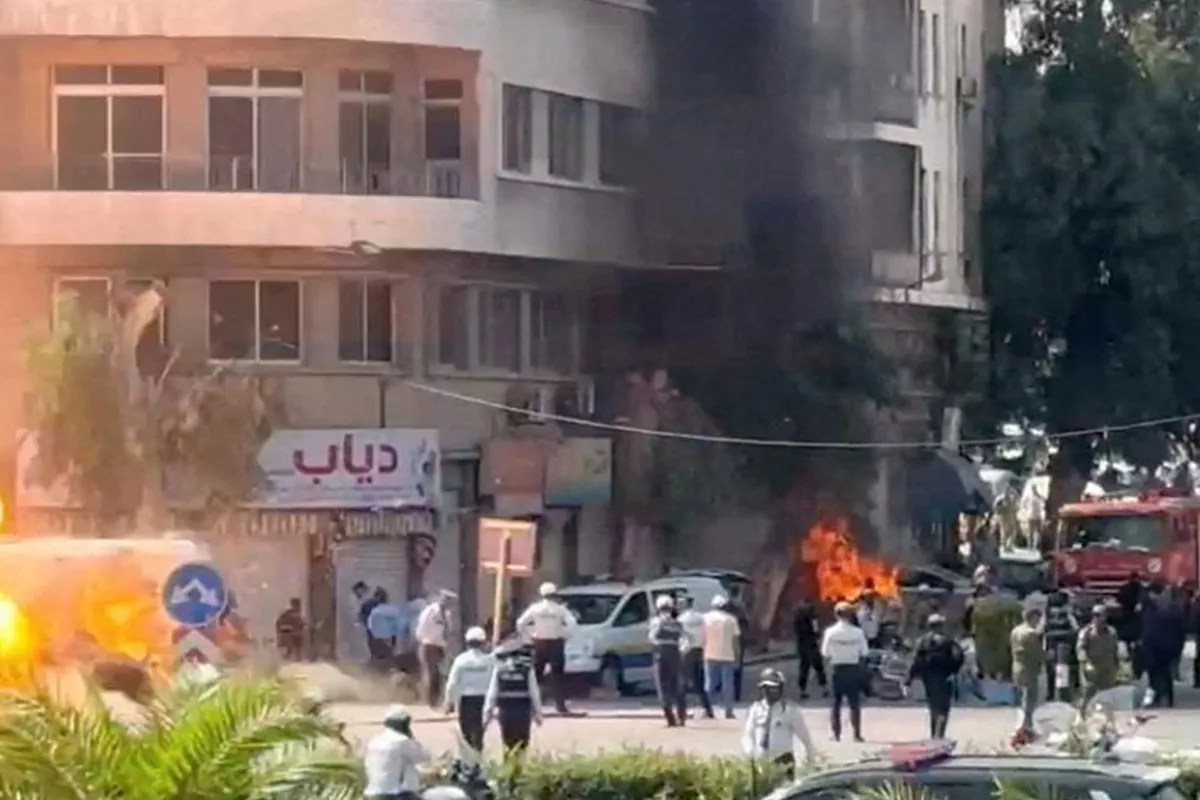
French President Emmanuel Macron just stared down a massive security nightmare in Syria. On July 7, 2026, two coordinated bombs tore through a busy district in Damascus, right outside the Four Seasons Hotel where Macron had spent the night. The timing wasn't accidental. The first bomb exploded shortly after the French presidential motorcade pulled away toward the People’s Palace.
Eighteen people were injured, including four police officers, as the blasts scorched vehicles and filled the streets with thick black smoke. Despite the proximity, Macron didn't flinch. He pushed ahead with his scheduled high-stakes meeting with Syrian President Ahmed al-Sharaa, sending a blunt message on social media that nothing would derail his diplomatic mission.
Here is exactly what went down on the ground, why Macron is taking such a massive gamble, and what these explosions reveal about the highly volatile post-Assad era.
Inside the Damascus Security Breach
The Syrian Interior Ministry confirmed that the attack involved two crudely made explosive devices planted just outside the official security cordon of the French delegation. The first device was packed into a roadside vehicle parked near the Syrian Tourism Ministry and the National Museum. The second was tucked inside a regular trash can just a few meters away.
A crowd gathered after the first explosion, only for the second bomb to detonate right next to an emergency ambulance. Reuters video captured the moment flames ripped through the commercial storefronts behind the hotel, turning a highly monitored diplomatic zone into a chaotic crime scene within seconds.
Macron didn't hear the blasts himself. His convoy was already speeding down the highway toward the presidential palace. While the French leader escaped harm, the attack exposes massive vulnerabilities in Damascus, proving that clearing out a dictator doesn't automatically secure the capital city.
Casualties and Immediate Fallout
- Injuries: 18 individuals hospitalized, mostly traffic police and nearby civilians.
- Property Damage: Multiple vehicles incinerated, storefront windows shattered across a 150-meter radius.
- Attribution: No extremist group or political faction has claimed responsibility yet, though local forces have detained suspects for questioning.
Why Macron Refuses to Pack Up and Leave
Any regular diplomatic script suggests a western leader should cut a trip short after bombs go off near their bed. Macron did the opposite. He explicitly doubled down, stating that France is ready to help rebuild Syria’s fractured economy and crippled banking infrastructure.
You have to look at the geopolitical context to understand why he's acting so stubborn. Macron is the first Western European head of state to step foot in Syria since rebels led by Ahmed al-Sharaa overthrew Bashar al-Assad in December 2024. This trip was kept strictly confidential, hidden from global media until the French presidential plane literally touched down on Monday.
Macron isn't just visiting; he’s claiming a first-mover advantage for Europe in the new Middle East. France hosted Sharaa back in May 2025, a move that set up Sharaa's subsequent trip to Washington to meet U.S. President Donald Trump. By sticking around after a bombing, Macron wants to show the world that France is a reliable partner that doesn't run when things get messy.
The Grim Reality of Post Assad Damascus
Let's look at what the mainstream press keeps glossing over. Damascus is sliding back into urban guerrilla warfare. This hotel bombing is the second major strike in the capital in less than a week. Just days earlier, an improvised explosive device (IED) ripped through a crowded café near the Justice Palace, killing 10 people and wounding 20 others.
President Sharaa, a former Islamist commander turned state leader, is trying to project an image of a stabilizing, pluralistic government ready for international investment. The reality on the ground is a mess of competing factions, leftover insurgent cells, and disgruntled remnants of the old regime.
Think-tank analysts argue these attacks won't overthrow Sharaa's government, but they completely destroy any immediate hope for economic normalization. Foreign corporations aren't going to build offices in a city where trash cans explode outside five-star hotels.
Next Steps for International Security Teams
If you're tracking diplomatic movements or regional security, the playbook for high-profile visits to Syria just fundamentally changed. Expect these shifts immediately:
- Scrapping Stationary Lodging: Foreign delegations will likely stop staying in high-profile public hotels like the Four Seasons, opting instead for heavily fortified military compounds or immediate fly-in, fly-out schedules.
- Aggressive Perimeter Sweeps: Local security forces failed to sweep basic municipal infrastructure like trash cans within 150 meters of a G7 leader. Expect future visits to require total lockdowns of entire commercial districts.
- Intel Sharing Overhaul: French intelligence will likely demand deeper access to Syrian internal databases to vet local security personnel, especially after four local officers were caught directly in the blast zone.
Macron is heading straight from Damascus to Ankara for a crucial NATO summit. You can bet this close call will dominate behind-the-scenes talks as European leaders figure out how to handle a highly unstable Syria that sits right on their doorstep.