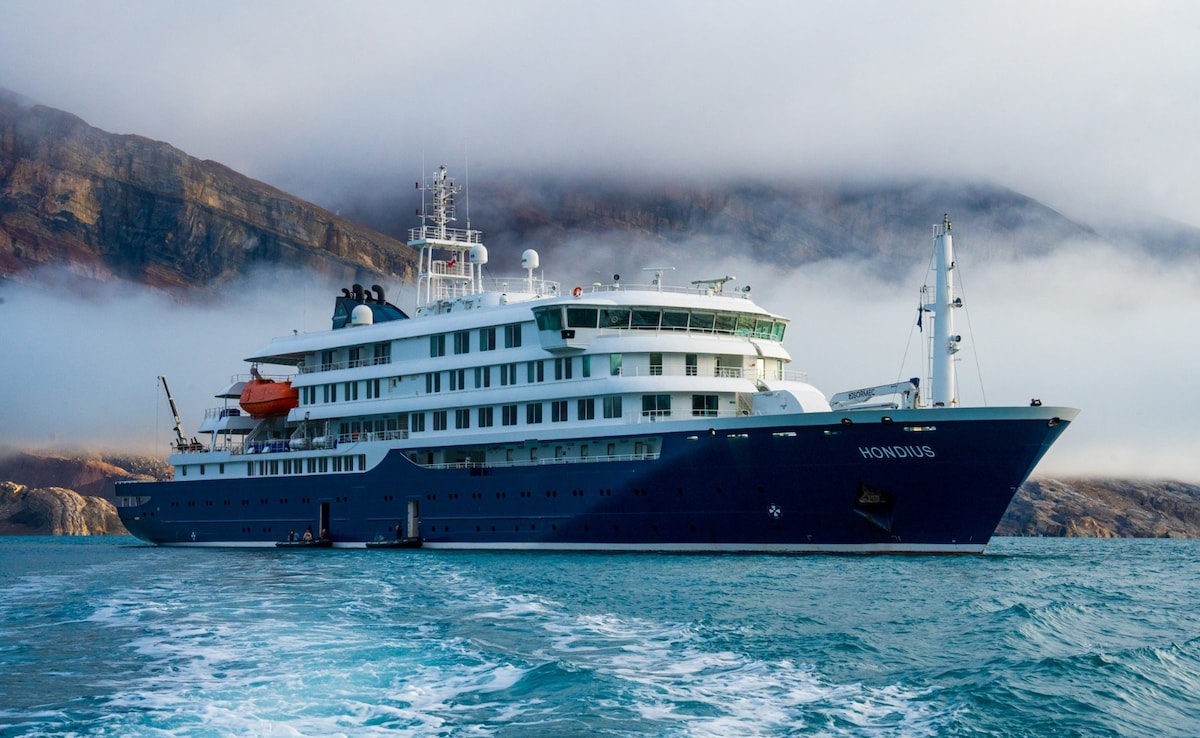
Cruise ships are not floating petri dishes. They are the most scrutinized public health environments on the planet. If you want to find a real biohazard, stop looking at the Princess Cruises manifest and start looking at your local suburban high school, your favorite corner bistro, or the last "wellness retreat" you attended in the desert.
The media loves the "Plague Ship" narrative because it’s easy. It’s a closed loop. It has a manifest. It provides a tidy data set for lazy journalists to point at and scream about Norovirus. But here is the reality: you are statistically safer from a viral outbreak on a cruise ship than you are at a crowded wedding in a Marriott ballroom. Expanding on this topic, you can find more in: The Brutal Truth Behind Flight 288 and the Fragile State of Runway Safety.
We need to stop asking why cruise ships are "prone" to disease and start asking why our land-based institutions are so pathetic at tracking it.
The Reporting Bias Fallacy
The "Petri Dish" reputation exists for one reason: The Vessel Sanitation Program (VSP). Experts at The Points Guy have also weighed in on this situation.
Managed by the CDC, the VSP requires every single commercial cruise ship with a foreign itinerary calling on a U.S. port to report every case of gastrointestinal illness (GI) that hits a specific threshold. If 2% or 3% of the ship gets the "stomach flu," it’s a federal record. It’s a headline.
Compare this to your local community. When Norovirus rips through a neighborhood or a corporate office park, who reports it? Nobody. You stay home, you suffer, you go back to work. There is no central database for "People who threw up in Cincinnati on Tuesday."
Cruise lines are punished for their transparency. They operate under a microscope that land-based resorts, hotels, and theme parks simply don't have to deal with. I’ve seen hotel chains ignore massive mold issues and Legionella risks for years because the reporting requirements are a joke compared to the maritime industry. On a ship, if the chlorine levels in the whirlpool drop for ten minutes, it’s logged, audited, and potentially penalized. At your local gym? You’re lucky if they’ve changed the filter this year.
The Myth of the "Airborne" Ship
People love to blame the HVAC systems. They imagine "recycled germs" being pumped into every cabin. This is a fundamental misunderstanding of modern maritime engineering.
Post-2020, the industry underwent a massive, expensive, and largely silent overhaul of air filtration. Most modern vessels utilize High-Efficiency Particulate Air (HEPA) filtration and Ultraviolet Germicidal Irradiation (UVGI). They aren't just moving air; they are scrubbing it.
The risk isn't the air. It’s the human. Specifically, it’s the human who refuses to wash their hands after the buffet. The "closed environment" argument is a red herring. A Boeing 747 is a closed environment. A New York City subway car is a closed environment. The difference is that the cruise ship actually has a medical team on board to intercept the patient zero, whereas the subway passenger just sneezes on the handrail and disappears into the crowd.
Norovirus is a People Problem, Not a Boat Problem
The cruise industry didn't invent Norovirus. Humans did. It is the most contagious virus known to man. It takes as few as 18 viral particles to infect you. To put that in perspective, a single gram of feces from an infected person can contain five billion particles.
The "lazy consensus" says ships are prone to outbreaks because of "crowding." Wrong. Ships are prone to outbreaks because they are the only places that actually track the behavior of the people who bring the virus on board.
In a land-based restaurant, if a cook has Norovirus, he might infect fifty people. Those fifty people go home to fifty different zip codes. The "outbreak" is never identified because the data points are too scattered. On a ship, those fifty people are all in the same 1,000-foot hull. We see the pattern, so we blame the hull. It’s a classic case of confusing the cage with the tiger.
Legionnaires’ and the Scapegoat of the Seas
Whenever a case of Legionnaires’ disease pops up near a coast, the fingers point to the nearest funnel. Legionella bacteria thrive in warm, stagnant water. Yes, cruise ships have lots of water. But they also have the most aggressive water chemistry protocols in the world.
I have consulted for land-based municipal water systems that would fail a basic cruise ship inspection within five minutes. Most outbreaks of Legionnaires’ actually originate in cooling towers of aging office buildings or poorly maintained decorative fountains in hotel lobbies. But "Man Gets Sick at Office" isn't a story. "Cruise Ship Death Trap" is.
Ships use automated, 24/7 monitoring of halogen levels (chlorine or bromine) and pH. If the levels deviate, the system compensates or shuts down. This level of precision is virtually non-existent in the residential or commercial real estate sectors. We are hyper-focused on the ship because the ship is a visible, wealthy target.
The Hantavirus Hysteria
The inclusion of Hantavirus in the "cruise ship disease" conversation is the pinnacle of fear-mongering. Hantavirus is primarily spread by the droppings of deer mice and other rodents. Unless you are sailing on a literal ghost ship from the 1800s, the chances of a rodent infestation on a modern, high-turnover cruise ship reaching the level of a Hantavirus outbreak are statistically zero.
By including "exotic" diseases in the narrative, critics attempt to make ships feel like "other" spaces—alien, dangerous, and biologically unstable. In reality, the "threats" on a ship are the same threats you face at a Costco on a Saturday morning. You just happen to have a better chance of seeing a doctor on the ship.
Stop Washing the Walls, Start Judging the Passengers
The industry’s obsession with "deep cleaning" is partly theater. While disinfecting high-touch surfaces is necessary, it won't stop an outbreak if passengers continue to behave like biological terrorists.
If you want to solve the disease problem on ships, stop looking at the bleach concentration and start looking at the "fit to fly" (or sail) declarations. Passengers routinely lie on their health questionnaires because they don’t want to lose the $3,000 they spent on the trip. They board ships while actively symptomatic, masking their fevers with Tylenol and their GI distress with Imodium.
The failure isn't in the ship's plumbing. It’s in the lack of an industry-wide, no-questions-asked "sick leave" policy for passengers. Until the financial penalty for being honest is removed, the "Petri Dish" will keep being fed by the very people who complain about it.
The Paradox of Cleanliness
There is a counter-intuitive reality here: the cleaner we make the ships, the more vulnerable the passengers become. We have created such a sterile environment on board that the moment a "wild" virus is introduced by a passenger from a region with lower hygiene standards, it moves through the population like fire through dry grass.
We are selecting for the most aggressive strains by killing off the weak ones with industrial-grade cleaners. This isn't just a cruise ship problem; it’s an urban living problem. But on a ship, the "immunological naivety" of the crowd is concentrated.
The Actionable Truth
If you are terrified of getting sick on a cruise, your problem isn't the ship. Your problem is your misunderstanding of risk.
- Skip the Buffet: Not because the food is bad, but because the tongs are handled by 500 people before you. The ship isn't the vector; the tongs are.
- Use the Cabin Bathroom: Public restrooms on ships are cleaned every hour. Your cabin is cleaned twice a day. Use your own space.
- Sanitizer is Not Soap: Norovirus laughs at alcohol-based hand sanitizer. If you aren't using soap and water to physically lift the virus off your skin, you are just giving the germs a nice alcoholic drink.
- Demand Refund Transparency: If you feel sick, stay home. If the cruise line won't let you reschedule for free, that is the health hazard you should be protesting, not the HVAC system.
The "outbreak" narrative is a distraction. It allows us to ignore the crumbling public health infrastructure on land by focusing on a few high-profile incidents at sea. The next time you see a headline about a "diseased cruise ship," remember that the ship is the only one brave enough—or regulated enough—to tell you the truth about how sick its inhabitants actually are.
The land is far dirtier. It just doesn't keep a logbook.
As it turns out, the safest place to be in a pandemic might actually be the place that’s most prepared to handle one. And that isn't your local hospital. It’s the ship you’re too afraid to board.