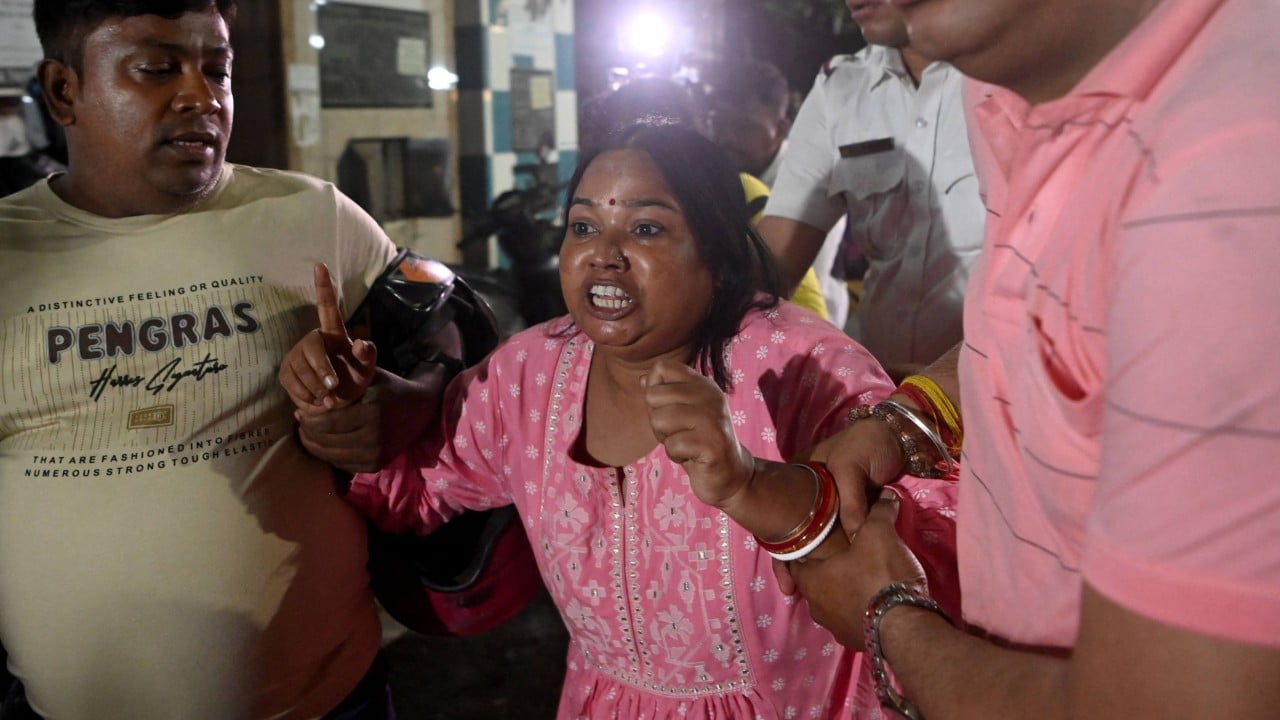
Casualty tallies like nineteen dead and twenty-five injured do not explain why a religious gathering turns lethal; crowd mechanics and spatial design do. When a competitor report stops at a headline death count and an injury tally without an underlying article body or causal model, it leaves readers with a tragic ledger instead of a systemic diagnosis. This analysis establishes a structural framework to evaluate mass-gathering crushes in India and similar high-density environments by separating verified casualty figures from unverified causal claims, mapping crowd physics onto physical chokepoints, and detailing operational interventions alongside their real-world limits.
Deconstructing Thin Event Reporting and Separating Fact from Hypothesis
Headline-driven coverage of a religious festival crush typically compresses complex, multi-hour crowd dynamics into a single moment of chaos. In the reference case, the only explicit facts available from the prompt are a fatality count of 19, an injury count of 25, and the setting of a religious festival in India. Treating a casualty count as a complete explanation confuses a lagging outcome with the generating mechanism. Most fatal crowd incidents are not caused by a sudden burst of irrational panic; instead, they arise from progressive density escalation inside constrained corridors where individuals lose independent movement long before a visible surge occurs.
To analyze such events rigorously, analysts must separate known facts from educated hypotheses. Known facts are observable, verifiable records: headcounts of fatalities and injuries, spatial dimensions of access routes, gate widths, barrier placements, and scheduled event timestamps. Educated hypotheses are inferred causal chains used to explain how those conditions interacted: how arrival rates outpaced corridor discharge rates, how temporary barricades altered pedestrian flow, or how rumors and sightline obstructions redirected movement.
Conflating the two produces two predictable reporting errors. The first error is blaming crowd psychology—labeling thousands of people "panicked" or "unruly"—when physical confinement made orderly movement geometrically impossible. The second error is treating a single trigger, such as a closed gate or a fallen person, as the sole root cause rather than the final stress point on an already overloaded system.
A disciplined incident audit tracks four operational variables:
- Arrival flux: The number of people entering a zone or approach route per minute, heavily shaped by timed rituals, auspicious hours, or transport batching.
- Service and discharge rate: The maximum number of people per minute who can pass through a gate, staircase, bridge, or sanctuary threshold without stalling.
- Effective walkable area: The usable ground space remaining after accounting for fixed walls, pillars, vendor stalls, barricades, water puddles, or uneven terrain.
- Information clarity: How accurately and early crowds receive directional guidance, queue status, and hazard warnings before reaching a high-density zone.
The Physics of Crowd Crushes and Spatial Bottlenecks
At low to moderate densities, pedestrians behave like a collection of autonomous agents choosing walking speeds and routes based on personal comfort and destination. Once crowd density climbs past roughly four to five persons per square meter, individual choice erodes. Movement shifts from walking to involuntary pushing, swaying, and wave propagation.
In fluid and pedestrian dynamics, this transition is often described through crowd turbulence or crowd quakes. When density reaches extreme levels—frequently six or more persons per square meter in confined spaces—friction between bodies and rigid surfaces transmits force laterally and longitudinally. A person does not need to be knocked down to suffer fatal mechanical asphyxia; standing upright under sustained multi-directional compression can prevent chest wall expansion, restricting breathing even while the person remains on their feet.
Bottlenecks multiply these forces because pedestrian flow depends on both density and velocity. If approach corridors feed people into a narrow constriction faster than the constriction can clear them, a queue forms upstream. As upstream arrivals continue without metering, density inside the funnel rises while forward speed drops toward zero. When a bottleneck suddenly opens—for instance, when a locked gate is thrown wide or a barrier gives way—the pressure differential can release a high-momentum surge into an already packed downstream space, compounding falls and trampling.
Consider a conceptual corridor geometry: a wide approach road funnels pilgrims toward a single narrow entry gate flanked by rigid metal barricades. Even if volunteers open the gate intermittently to control entry, holding thousands of people shoulder-to-shoulder against rigid fencing turns the waiting zone into a pressure vessel. Any slight shift in weight—someone stumbling, a backpack catching, or a surge from the rear—propagates like a shockwave through people with no lateral escape room.
Religious festivals in India present distinct structural conditions that test these physical limits:
- Synchronized peak demand: Sacred timings, darshan windows, or bathing rituals concentrate massive arrivals into narrow time slots rather than spreading them evenly across the day.
- Voluntary proximity and non-standard mobility: Participants often walk barefoot, carry children or elderly relatives, hold offerings or luggage, and press forward to maintain sightlines or proximity to a focal point.
- Hybrid permanent-temporary infrastructure: Historic temples, ghats, and rural shrines frequently combine centuries-old layouts with temporary bamboo, rope, or steel barricades erected for peak seasons.
The Three Pillars of Mass-Gathering Safety
Preventing catastrophic crush events requires treating crowd management as a coupled system of space, flow regulation, and real-time response. When any one pillar fails under peak load, the remaining two rarely absorb the shock on their own.
Spatial Geometry and Chokepoint Elimination
Physical layout sets the hard ceiling on safe capacity. Narrow staircases, sharp turns, dead-end enclosures, bi-directional counterflows, and abrupt level changes act as structural traps when volume spikes. Expanding raw square footage matters less than eliminating pinch points and creating continuous, one-way circulation loops where incoming and outgoing streams do not collide.
Flow Metering and Buffer Management
Controlling how fast people enter a critical zone is more effective than trying to steer them once they are packed inside. Effective flow metering uses staged holding areas upstream, spaced so that each holding zone can absorb arrivals without spilling onto adjacent roads or ramps. Rather than stacking a continuous wall of people directly against a final threshold, operators release measured batches matched to downstream clearing capacity.
Real-Time Sensing and Rapid Decompression
Even well-planned events experience unexpected surges from delayed trains, weather shifts, or schedule changes. Early warning depends on spotting density spikes and flow stalls before movement stops completely—using elevated observation posts, video monitoring, and on-ground radio reporting tied to clear authority. When density crosses a critical threshold, decompression measures—such as halting upstream inbound flow, opening secondary exit routes, or splitting large masses into smaller subgroups—aim to drop pressure quickly.
Operational Playbook for High-Density Festival Environments
Turning these pillars into day-to-day execution requires disciplined sequencing before, during, and after peak crowd windows.
- Map capacity and bottlenecks before arrival: Measure the narrowest constriction along every approach, exit, and viewing route, calculate realistic discharge rates rather than theoretical maximums, and identify every dead end or counterflow intersection.
- Design segregated one-way routing: Separate entry and exit paths physically wherever terrain allows, widen turning radii, and remove obstructions near gates, ramps, and stairs.
- Establish upstream holding and batch-release gates: Build staged waiting zones well back from high-sensitivity thresholds, using staggered release intervals so downstream corridors never saturate.
- Enforce density triggers for immediate hold actions: Define concrete visual or quantitative thresholds—such as movement slowing to a shuffle or bodies pressing tightly together—that automatically trigger an inbound hold at upstream gates.
- Position medical and extraction lanes outside the main stream: Place ambulances, first-aid stations, and stretchers along dedicated perimeter or bypass routes rather than inside dense crowd cores where responders cannot reach victims or carry them out.
- Maintain clear, multi-channel crowd communication: Issue calm, specific directional instructions via public address systems and visible signage before congestion peaks, correcting false rumors about gate closures or schedule shifts quickly.
Structural Limits and Trade-Offs of Crowd Interventions
No crowd-control playbook eliminates risk entirely, and every intervention carries operational trade-offs that planners must account for upfront. Physical barriers prevent uncontrolled rushes, yet rigid barricades placed too tightly or without quick-release panels can trap compressed people and block emergency extraction. Holding crowds in upstream buffer zones reduces pressure at a shrine or ghat, but overfilled holding pens can themselves become crush sites if arrivals exceed expectations or sanitation and shade are lacking.
Technology offers valuable visibility, but camera feeds and crowd-density estimates fail when power drops, network links congest, sightlines are blocked, or decision-makers lack pre-authorized command authority to halt flow immediately. Furthermore, strict crowd engineering often collides with cultural expectations and resource constraints: devotees may resist rerouting that feels distant from a sacred focal point, and local organizers may lack trained marshals across sprawling, multi-day sites.
Reducing fatalities at mass religious gatherings therefore depends on treating every high-density corridor as a dynamic flow system with strict physical limits rather than relying on improvised crowd control at the gate. Organizers and public authorities should audit their highest-risk bottleneck first, enforce upstream metering before peak ritual windows open, and pre-authorize rapid inbound holds the moment forward movement stalls.